
Men's Health Program
Advanced diagnostics & integrative treatment for men's health
The men's health program at St. George Hospital treats prostate conditions, urinary symptoms and testosterone decline under one physician, after measurement: PSA and prostate imaging, urinary function testing and a full hormone panel first, then hormone therapy or supportive treatment where the findings call for them.
Men's health
About the condition and its treatment
- About the conditionProstate health
St. George Hospital evaluates the prostate beyond a single PSA value, with a laboratory panel, transrectal ultrasound and flow measurement, and treats benign …
- About the conditionUrinary function
St. George Hospital looks for the cause of frequency, urgency, a weak stream, incomplete emptying and nocturia before treating them: prostate, bladder, …
- About the conditionHormone optimization
St. George Hospital runs a full male hormone panel before any prescription: total and free testosterone, SHBG, DHT, estradiol, DHEA-S, cortisol, thyroid and …
What the men's health program does
The program brings three things men usually manage in three different offices under one physician: the prostate, the bladder and the hormones. They are connected. An enlarged prostate changes urinary function; low testosterone changes muscle, mood, metabolism and libido; and the medication for one often affects the other. At St. George Hospital the longevity program's diagnostics are extended for men with PSA and prostate imaging, urinary function testing and a full hormone panel, and the plan is written from those results.
The program is led by Dr. Julian Douwes, Chief Medical Officer, and Dr. Daniela Hudi in hormone medicine, with the oncology physicians where prostate cancer is involved. Patients from abroad start with a short inquiry to the International Office, free of charge, and receive the proposed program and the itemized cost overview in writing before travel.
From first message to written plan
Your records
After your first message, the International Office asks for a recent PSA, any prostate imaging, your medications and a short history.
Measurement
Prostate, urinary function and hormones are measured together, including two morning testosterone levels.
A written plan
One physician reads the results together and proposes treatment only for what the measurement shows.
Treatment and follow-up
Therapies run alongside your urologist's care; levels and hematocrit are repeated during hormone therapy.
In prostate cancer the hospital complements standard treatment and does not replace it.
Who the program is for, and who it is not for
The program can be considered if
- You have urinary symptoms (frequency, urgency, weak stream, incomplete emptying, nocturia) and want them examined rather than managed with a prescription alone.
- You have been told your PSA is rising or your prostate is enlarged, and you want the full picture before deciding on treatment.
- You have symptoms of low testosterone (fatigue, loss of muscle, low libido, mood change) and want measured levels and a physician's reading of them.
- You have prostate cancer and are looking for complementary therapies alongside the treatment your urologist or oncologist leads.
- You have chronic prostatitis or pelvic pain that has not responded to antibiotics.
It is not for you if
- You want testosterone without a diagnosis. It is prescribed here only after two measured low morning levels and a prostate assessment.
- You are looking for a replacement for surgery or radiotherapy in prostate cancer. The hospital complements standard treatment and does not replace it.
What we measure
PSA and prostate imaging, urinary flow and residual volume, and a full hormone panel with the markers that decide whether hormone therapy is safe for you.
Show the tests in detail
Prostate: PSA with its free fraction, prostate imaging, and inflammation markers; where a tumor is suspected, biopsy and staging follow the standard pathway with your urologist. Urinary function: flow measurement, residual volume after voiding, a voiding diary and, where needed, further urodynamic testing. Hormones: total and free testosterone on two mornings, SHBG, LH and FSH, estradiol, DHEA-S, prolactin, thyroid and adrenal markers, plus hematocrit and the metabolic and cardiovascular markers that decide whether hormone therapy is safe. The laboratory and immune testing page lists the panels; the functional medicine work-up explains how the results are read together.
Where the examinations take place
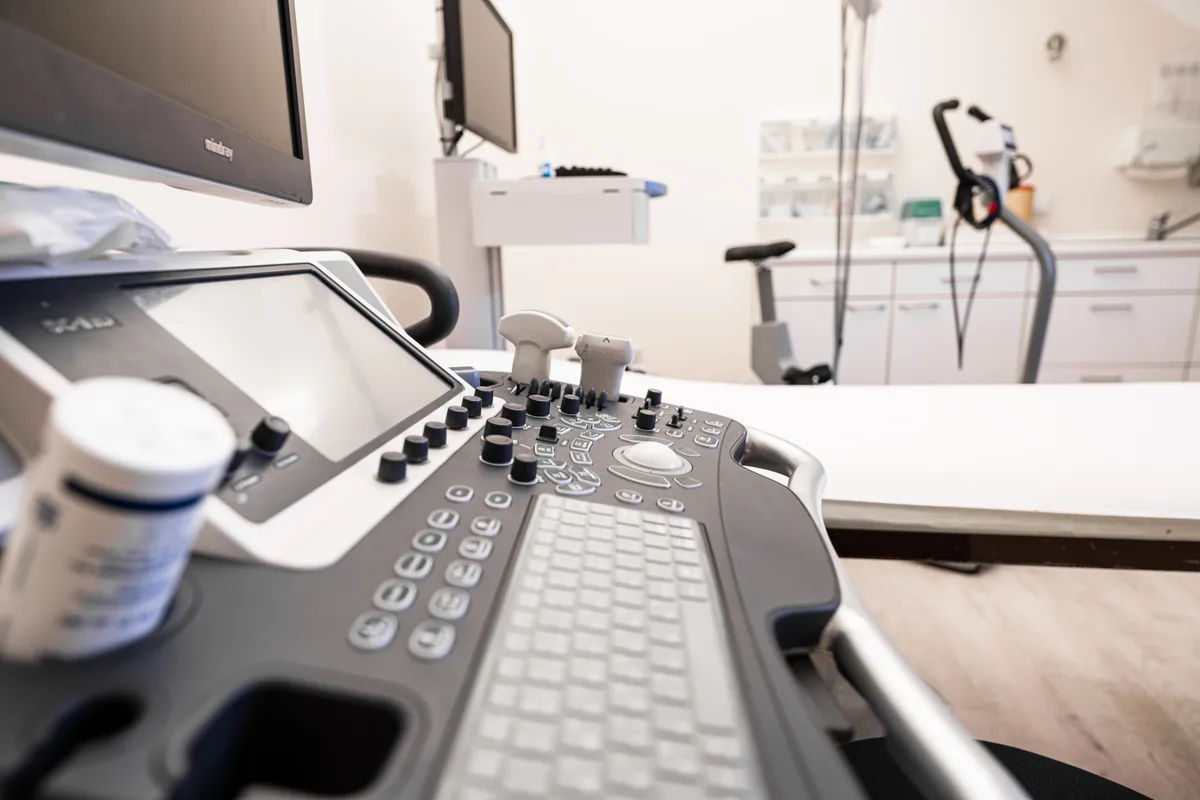
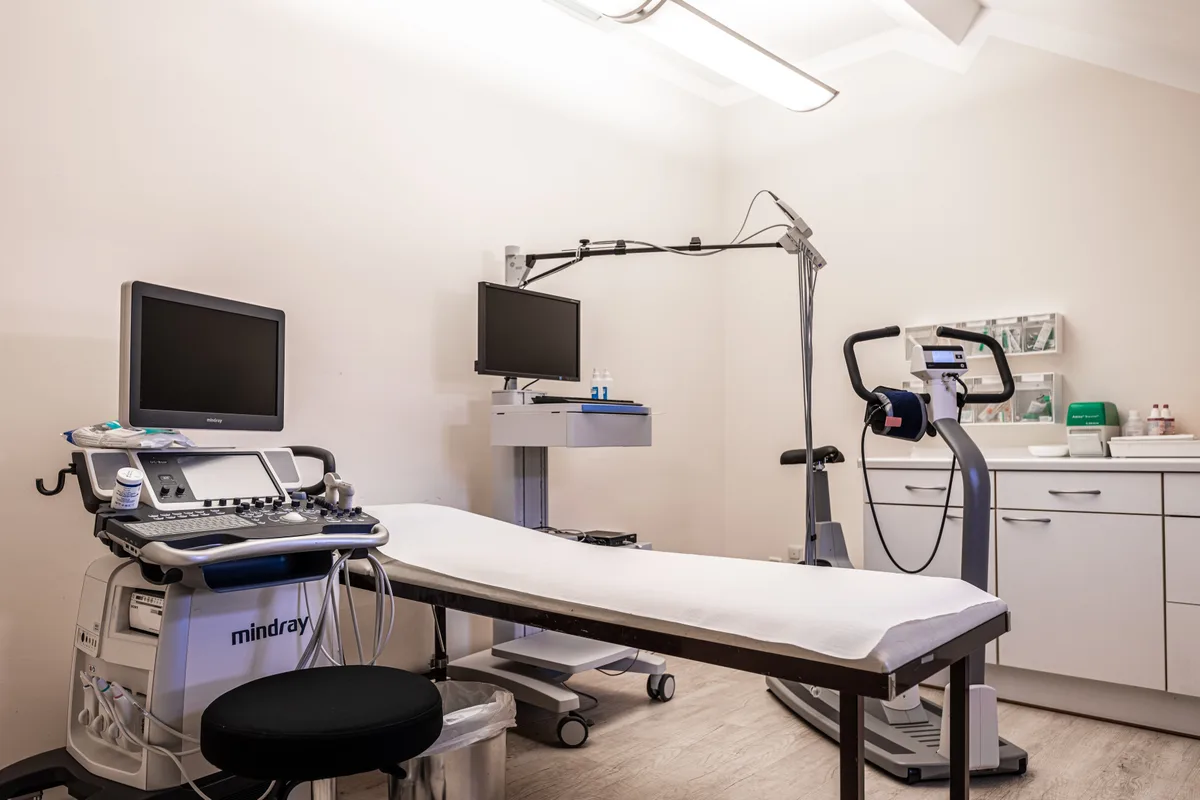
Ultrasound diagnostics · Clinicum St. Georg 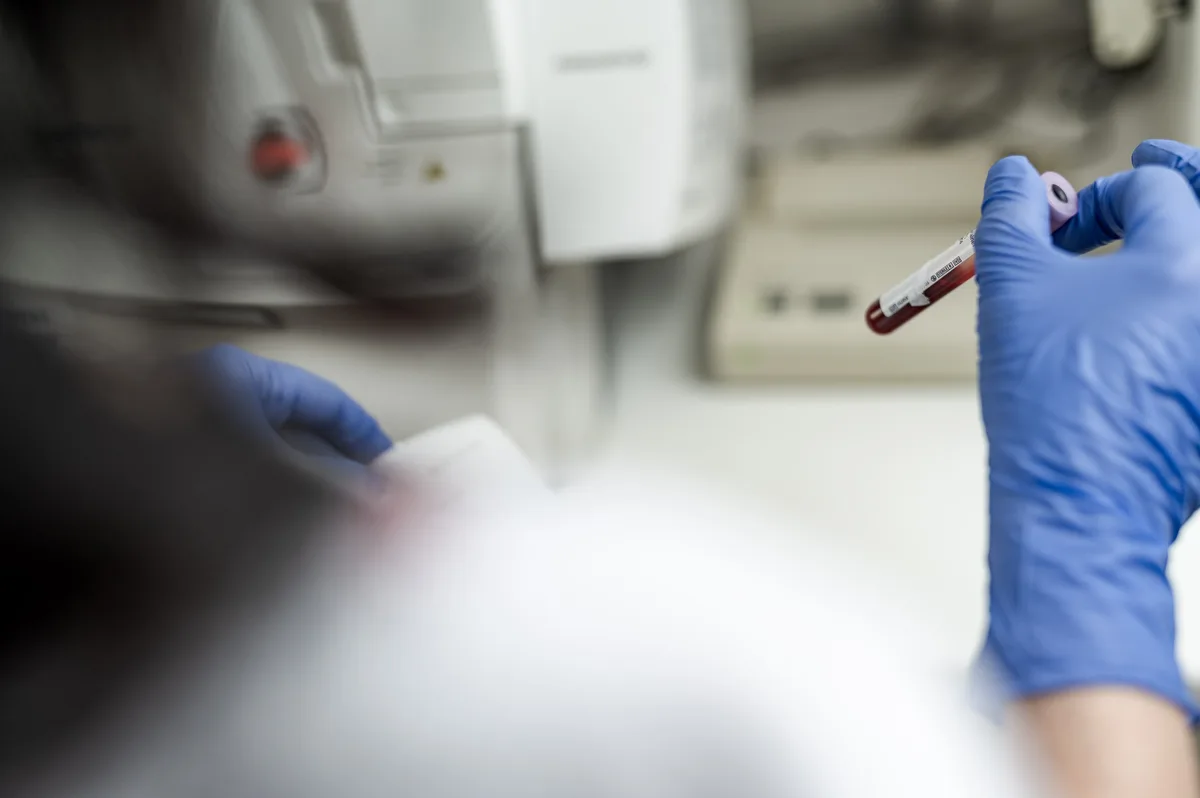
A blood sample in the clinic laboratory · Clinicum St. Georg
The three treatment areas
- Prostate healthProstate health: diagnostics and treatment
Benign prostatic hyperplasia, chronic prostatitis and prostate cancer in coordination with your urologist: diagnostics and supportive therapies.
- Urinary functionUrinary function in men
Frequency, urgency, incomplete emptying and nocturia examined with flow, residual volume and a voiding diary, then treated at the cause.
- Hormone optimizationHormone optimization for men
Measured testosterone, estradiol, DHEA and thyroid status, then bioidentical therapy within the guideline criteria and with the risks reviewed.
Prostate cancer has its own page in the oncology section, where the complementary therapies and their evidence are described: integrative prostate cancer treatment.
Therapies
Therapies used in the men's health program
- TherapyBioidentical hormone therapy
Testosterone where the Endocrine Society criteria for hypogonadism are met, with levels and hematocrit repeated.
- TherapyPRP therapy
Platelet-rich plasma from your own blood, used in selected men's health indications.
- TherapyPelvic physiotherapy
Physiotherapy and nutrition alongside the medical treatment.
- TherapyDetoxification
Detoxification protocols of the longevity program, where the findings call for them.
- TherapyInfusion therapies
Infusion protocols of the longevity program, where the findings call for them.
Evidence and limits
Testosterone therapy has strong evidence for confirmed hypogonadism. No therapy here replaces surgery or radiotherapy in prostate cancer.
Read the evidence in detail
Testosterone therapy: strong for defined hypogonadism. The Endocrine Society guideline recommends testosterone therapy for men with symptoms and consistently low measured levels, after a prostate assessment and with monitoring (Bhasin et al., J Clin Endocrinol Metab, 2018). The TRAVERSE randomized trial found testosterone replacement non-inferior to placebo for major adverse cardiac events in men with hypogonadism and cardiovascular risk (Lincoff et al., N Engl J Med, 2023), and the Testosterone Trials showed modest benefits for sexual function and some other outcomes in older men with low testosterone (Snyder et al., N Engl J Med, 2016). Treatment of men with normal levels is not supported, and the hospital does not offer it.
What the evidence does not show. No therapy on this page replaces surgery or radiotherapy in prostate cancer, and none is shown to prevent it. The program's value is in the measurement and in treating what the measurement shows.
Common questions about the men's health program
Which conditions does the men's health program treat?
Benign prostatic hyperplasia (BPH), chronic prostatitis and prostate cancer in coordination with your urologist or oncologist; urinary symptoms such as frequency, urgency, incomplete emptying and nocturia; and hormonal decline, above all low testosterone, with its metabolic effects. Each has its own page with the diagnostics and therapies named.
How do you assess prostate health?
With PSA and its free fraction, prostate imaging, urinary flow and residual volume, and inflammation and hormone markers, read together by one physician. Where a tumor is suspected, biopsy and staging follow the standard pathway with your urologist; the hospital does not replace that pathway.
Which treatments are used?
Bioidentical hormone therapy for measured testosterone deficiency, PRP therapy, and supportive measures such as pelvic physiotherapy and nutrition. For prostate cancer the therapies are complementary to the treatment your urologist or oncologist leads.
Is testosterone therapy safe?
In men with confirmed hypogonadism, the TRAVERSE randomized trial found testosterone replacement non-inferior to placebo for major adverse cardiac events. It is prescribed here only after two measured low morning levels, a prostate assessment and a review of the individual risks, with levels and hematocrit repeated during treatment.
What does the program cost?
Costs are individual: a package price plus individual add-ons. After a physician has reviewed your findings, you receive a written, itemized cost overview: a package price plus individual add-ons. Treatment is self-pay; the itemized invoice can be submitted to a US insurer for out-of-network review. We cannot promise reimbursement.
Write to the International Office
The International Office handles your inquiry, records, travel and follow-up questions.
Step 1: Initial inquiry
A short message by online form, email or phone. The initial inquiry is free of charge.
Free of charge
Step 2: Reply from the International Office
The International Office reviews your message and your case directly and gets back to you.
Step 3: Secure transfer of records
After the first contact, the International Office requests your medical records and tells you how to send them securely.
Step 4: Medical review and video call
Your records are reviewed medically. A video call with a medically trained member of the International Office is free of charge; a video consultation with a physician is usually charged, and the International Office explains the fee before booking.
Video call with the International Office: free of charge
Step 5: Treatment proposal and cost overview
You receive an individual treatment proposal and an itemized cost overview in writing.
Step 6: Travel, stay and aftercare
The International Office helps you plan travel and your stay. You go home with detailed written plans for your doctor; follow-up questions go to the International Office.
A recent PSA, any prostate imaging, your medication list and a short history are enough for the first review. A physician reads them before the video consultation and proposes the diagnostics, or tells you which results from home already answer the question. Information for international patients, costs and insurance.
Therapeutic plasma exchange within an individual plan
Therapeutic plasma exchange (TPE) is available for assessment across our condition programs, including longevity. Your physician checks the specific indication, risks and alternatives. Availability does not establish a benefit for every condition or a preventive anti-aging benefit.
Costs, in plain terms
- Self-pay: package price plus individual add-ons; no prices online.
- An itemized cost overview in writing before you travel; airport transfers are charged extra.
- No reimbursement promise; US patients can be put in touch with an independent US reimbursement office.
- Deposit before admission; the payment process is explained with your cost overview.
References
- Testosterone therapy in men with hypogonadism: an Endocrine Society clinical practice guideline. Journal of Clinical Endocrinology and Metabolism 2018. PMID 29562364
- Cardiovascular safety of testosterone-replacement therapy. New England Journal of Medicine 2023. PMID 37326322
- Effects of testosterone treatment in older men. New England Journal of Medicine 2016. PMID 26886521
From the journal
Reading on Longevity, hormones and men's health
- Hormone therapy · · 7 min read
Hormone replacement therapy for men: A comprehensive medical guide
Is it low testosterone, or just being 50? What hormone decline in men looks like, how it is tested properly, and what replacement therapy involves and requires.
- Hormonal health · · 7 min read
Testosterone and estrogen balance in men: Why it matters and how to optimize it
Why does a man need estrogen at all? How the testosterone-estrogen ratio works, what throws it off, and how it is tested and corrected.
- Hormonal health · · 9 min read
Progesterone in men: Levels, benefits, deficiency signs & treatment
Progesterone in men: why would you need it? What this hormone does for prostate, brain and sleep in men, how it differs in women, and when testing and replacement make sense.
Send a free inquiry
The initial inquiry is free of charge. The International Office reviews your message and your case directly and gets back to you.
- Phone
- +49 8061 398-0
- Hours
- Mon–Thu 08:00–17:00, Fri 08:00–14:00 German time (CET/CEST); in the US Mon–Thu 2–11 a.m. ET, Fri 2–8 a.m. ET.
Munich Airport (MUC), about 60 minutes by car.