



Julian Douwes M.D.
Chief Medical Officer
Rosenheimer Str. 6-8, 83043 Bad Aibling, Germany · info@clinicum-stgeorg.de
St. George Hospital · Bavaria, Germany
Hospital care for chronic Lyme disease, Long COVID, ME/CFS and cancer. We start with your findings, explain your options, and plan the next steps with you.
Start with a brief inquiry. Our International Office will guide you.
Find the information relevant to you, including treatment options, suitability and limitations.
Neurological and psychiatric assessment with the Douwes Brain Center.
Assessment, treatment options and the evidence behind them.
Diagnostic assessment and an individual treatment proposal.
Explore care coordinated with your treating oncologist.
Understand the assessments and approaches offered here.
Preventive diagnostics and individual health planning.
Prostate care, hormone diagnostics and urinary function.
See the spaces before you arrive. Explore a treatment room, a patient room and the town around the hospital.
Plan your first visit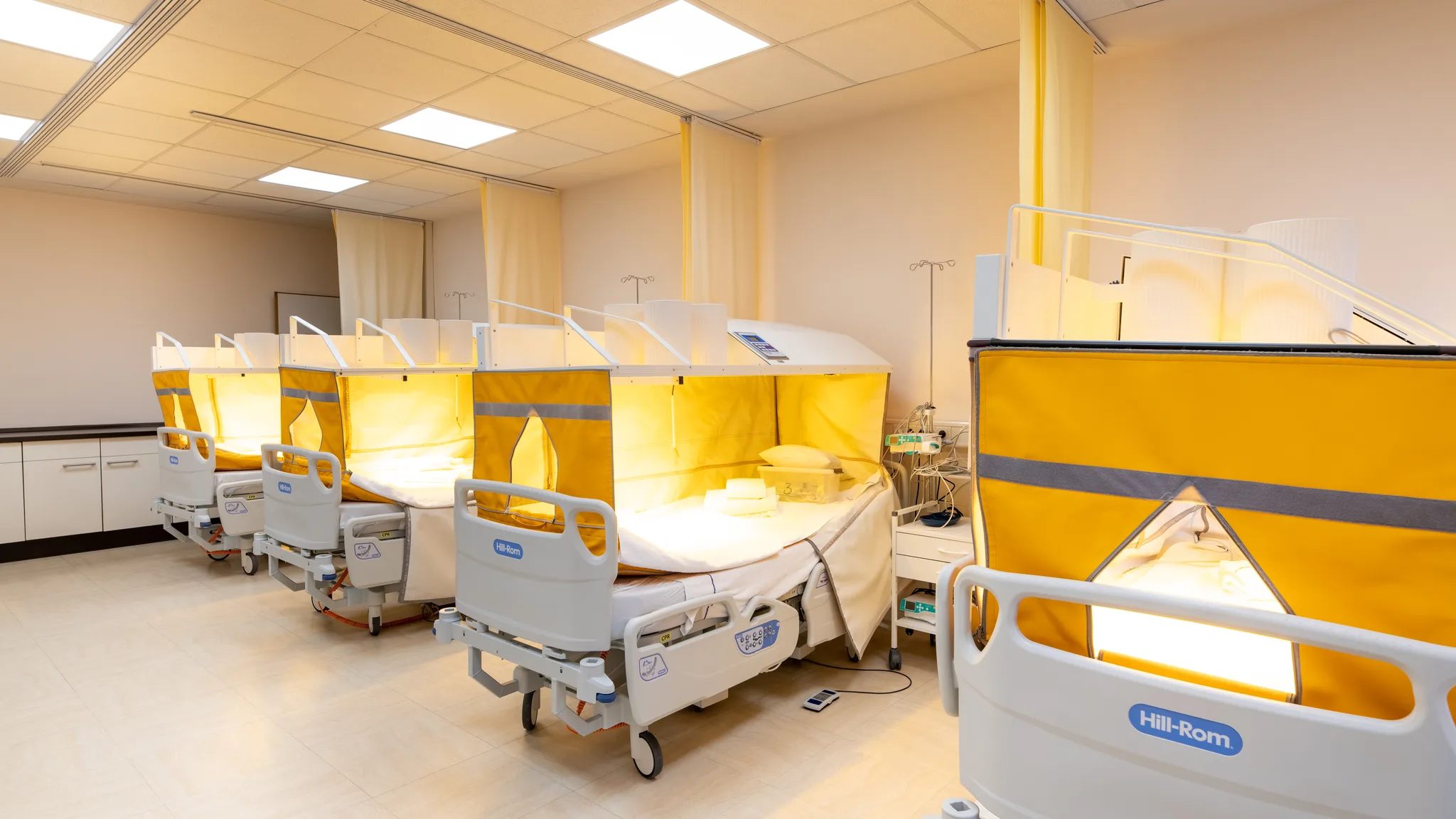
One of the treatment spaces at St. George Hospital. Your medical team will explain which treatments are appropriate for your individual plan.
Photograph: Clinicum St. Georg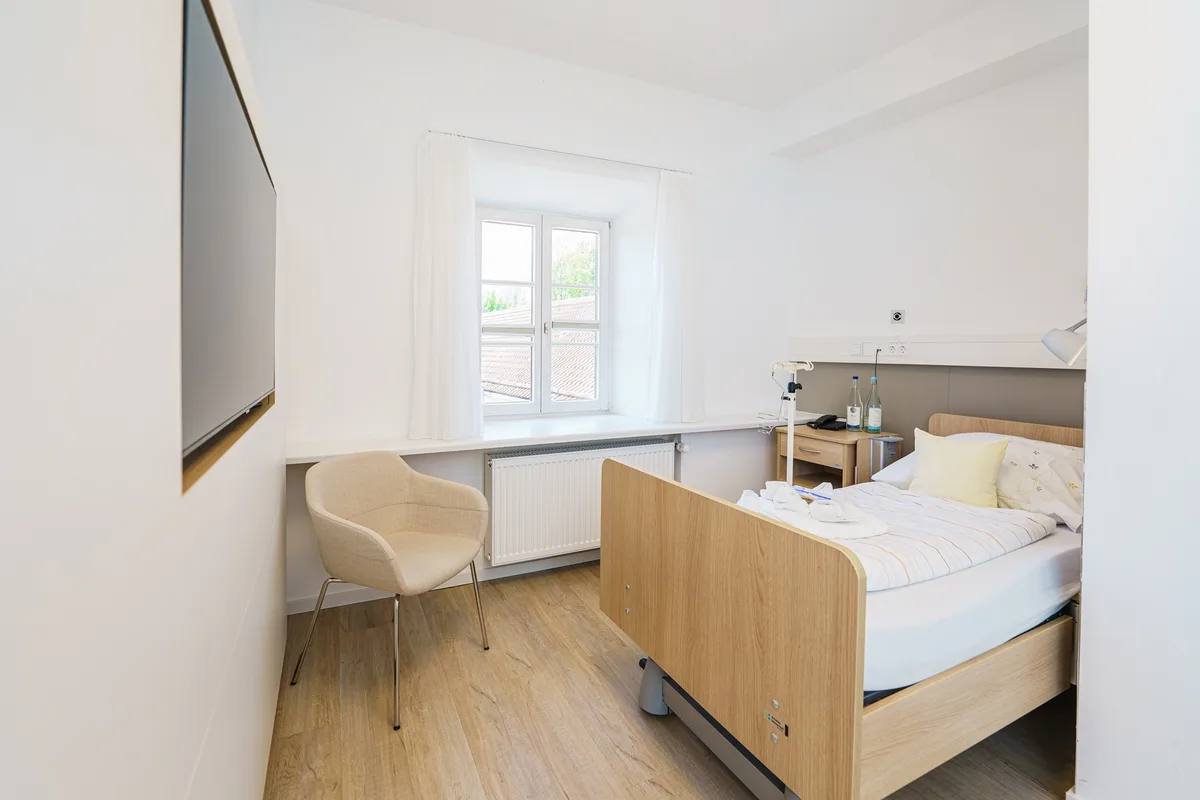
A look inside one of our patient rooms. Ask the International Office about room arrangements when planning your stay.
Photograph: Clinicum St. Georg
The International Office can help you plan your arrival. Airport transfers can be arranged and are charged separately.
Photograph: Flodur63 / Wikimedia Commons · CC BY-SA 4.0 · Cropped to fitThe International Office handles your inquiry, records, travel and follow-up questions.
Before arrival
Your inquiry, records and written treatment proposal.
At hospital
A planned admission and your individual stay.
Back home
Written plans for your doctor, with follow-up questions through the International Office.
Select a step to see what happens.
A short message by online form, email or phone. The initial inquiry is free of charge.
Free of charge
The International Office reviews your message and your case directly and gets back to you.
After the first contact, the International Office requests your medical records and tells you how to send them securely.
Your records are reviewed medically. A video call with a medically trained member of the International Office is free of charge; a video consultation with a physician is usually charged, and the International Office explains the fee before booking.
Video call with the International Office: free of charge
You receive an individual treatment proposal and an itemized cost overview in writing.
The International Office helps you plan travel and your stay. You go home with detailed written plans for your doctor; follow-up questions go to the International Office.
Julian Douwes M.D. provides medical direction and develops the treatment protocols. Chief Physician Martin Rößner M.D. leads day-to-day patient care, supported by Gabriele Zabel M.D. and the inpatient team.
Meet all physiciansChief Medical Officer
Chief Physician

Attending Physician
Founded by Friedrich Douwes M.D. in 1991. Get to know our history and the hospital today.
About St. GeorgeExplore a program’s schedule, assessments and practical arrangements.
Information for international patientsTreatment is self-pay. You receive an itemized cost overview before travel, with a deposit due before admission. Reimbursement is never promised.
Costs and insuranceThe initial inquiry is free of charge. The International Office reviews your message and your case directly and gets back to you.
Munich Airport (MUC), about 60 minutes by car.