

Is this you?

Something happened to you two summers ago, and it never left.

A flu that did not behave like the flu. A knee that swelled with no injury. Then the fatigue, the word-finding, the tingling, a heart that flutters at rest. You have searched your symptoms often enough to have seen the word Lyme, and often enough to have been told it is unlikely.

How it shows up

Recognizing Lyme disease

Lyme disease presents with a wide range of symptoms that can mimic dozens of other conditions. The classic erythema migrans, the expanding bull's-eye rash, appears in most but not all cases, so many patients never get the early warning sign that would lead to prompt treatment.

Symptoms develop in stages: the rash and flu-like illness of early infection, then weeks to months later the disseminated stage with nerve, joint or heart involvement, then the late stage. In chronic Lyme disease several symptom clusters overlap at once:

Common symptoms

  • Persistent fatigue that does not improve with rest
  • Migratory joint pain and muscle aches
  • Cognitive difficulties: brain fog, memory loss, difficulty concentrating
  • Headaches, neck stiffness, and facial nerve palsy
  • Heart palpitations and chest pain
  • Numbness, tingling, and neuropathic pain
  • Sleep disturbances and night sweats
  • Anxiety, depression, and mood changes
  • Gastrointestinal symptoms and food sensitivities
  • Light and sound sensitivity

How common are persistent symptoms? In a prospective Dutch cohort, a share of patients still had persistent symptoms after treatment for Lyme borreliosis, more than in matched controls (Ursinus et al., 2021). That group, whatever name is used for it, is who the Lyme treatment program is written for.

Lyme disease treatment program at St. George Hospital Germany
How Lyme Disease Is Transmitted

How do you get Lyme disease?

Through the bite of an infected tick. That is the established route, and it accounts for the great majority of cases. Other routes are discussed, and the honest state of the evidence for each is given below, because it matters for family screening and for prevention.

Tick bites

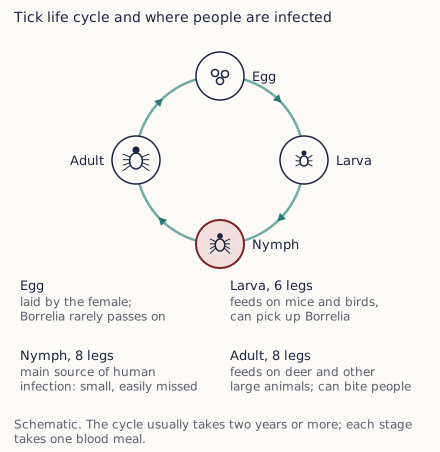
The documented route. Ixodes ticks carry Borrelia in their gut and transmit the spirochetes during feeding, usually after the tick has been attached for more than a day. Nymphal ticks are the size of a poppy seed, which is why many patients never saw the tick. The same ticks carry the co-infections Babesia, Anaplasma and others, often in the same bite (Sanchez-Vicente et al., 2019).
Transmission in pregnancy

Borrelia can cross the placenta, and case reports describe infection of the fetus. A systematic review of the literature on gestational Lyme disease found the evidence limited and inconclusive on how often this happens and what it does to the newborn (Waddell et al., 2018). A pregnant patient with known infection is treated, and the newborn is followed.

Other biting insects

Borrelia DNA has been found in mosquitoes and horse flies, and transmission by them is sometimes claimed. Transmission to humans by these insects has not been demonstrated, and we do not treat it as a route. Prevention effort belongs on ticks.

Person-to-Person transmission

Not established. We have treated families in which several members, parents and children, were infected with Borrelia; the usual explanation is shared exposure to the same tick habitat, not transmission between people. When one family member is diagnosed, screening the others is sensible for that reason.

Why tests miss it

Why so many patients go undiagnosed

Standard Lyme testing has limitations that leave many patients without answers. Knowing them is the first step toward proper care.

The limits of antibody tests

The two-tier test (an ELISA followed by a Western blot) measures the antibody response, not the bacterium. A meta-analysis of North American studies found its sensitivity low in the first weeks of infection, before antibodies have formed, and higher in late disease (Waddell et al., 2016). It also cannot distinguish a past infection from an active one. The diagnosis page explains which tests the hospital adds.

The great imitator

Lyme disease has been called "the great imitator" because its symptoms overlap with fibromyalgia, ME/CFS, multiple sclerosis, rheumatoid arthritis, lupus and depression. Patients are often diagnosed with one of these and treated for the symptom for years before anyone investigates an infectious cause.

Medical controversy

The 2020 guideline of the Infectious Diseases Society of America attributes most persistent symptoms after treatment to a post-infectious process and advises against prolonged antibiotics (Lantos et al., 2021). Other clinicians and researchers see persistent infection in a subset of patients. The practical effect of the divide is that many patients who completed a standard course and remain ill are told nothing more can be done.

Diagram of the tick life cycle: egg, larva, nymph and adult, with the nymph marked as the main source of human infection
Tick life cycle and where people are infected. Schematic, not to scale.
The Condition Explained

How Borrelia causes chronic illness

Borrelia burgdorferi is an unusual bacterium. It has several mechanisms for evading the immune system and surviving antibiotic treatment, and each has been studied in the laboratory.

Immune evasion

Borrelia spirochetes change their outer surface proteins to avoid immune detection, a process called antigenic variation, and can dampen immune pathways that would otherwise clear them. This is one reason antibody tests can stay negative in a long-standing infection.

Biofilm formation

In the laboratory Borrelia forms biofilms, communities of bacteria in a protective matrix that shields them from antibiotics and from immune cells (Sapi et al., 2012). Bacteria inside a biofilm tolerate far higher antibiotic concentrations than free-swimming spirochetes.

Persister cells and tissue persistence

Borrelia forms drug-tolerant persister cells that survive antibiotic exposure in vitro (Sharma et al., 2015), and in rhesus macaques spirochetes were found in tissue after antibiotic treatment of disseminated infection (Embers et al., 2012). Whether, and how often, the same happens in people is the open question at the center of the controversy.

Systemic inflammation

Chronic Borrelia infection sets off inflammatory cytokines that act on the brain, nerves, joints, heart and gut. This inflammation accounts for much of what patients feel: fatigue, cognitive impairment, pain and mood changes. Over time it can become self-sustaining even as the bacterial burden falls, which is why the plan treats the inflammation as well as the infection.

How we work

Why integrative treatment

Given the biology above, a single-modality approach, antibiotics alone or alternative therapies alone, is rarely enough in established chronic Lyme disease. At St. George Hospital the plan since 1995 has addressed the dimensions of the illness together, chosen per patient from the work-up.

The plan targets:

  • Active Borrelia infection in its different forms
  • Co-infections that complicate the picture
  • Immune dysregulation and suppression
  • Systemic inflammation and cytokine imbalance
  • Toxin accumulation and impaired detoxification
  • Neurological involvement and brain inflammation
  • Nutritional deficiencies and mitochondrial dysfunction
  • The psychological burden of a long illness

Where Lyme treatment happens

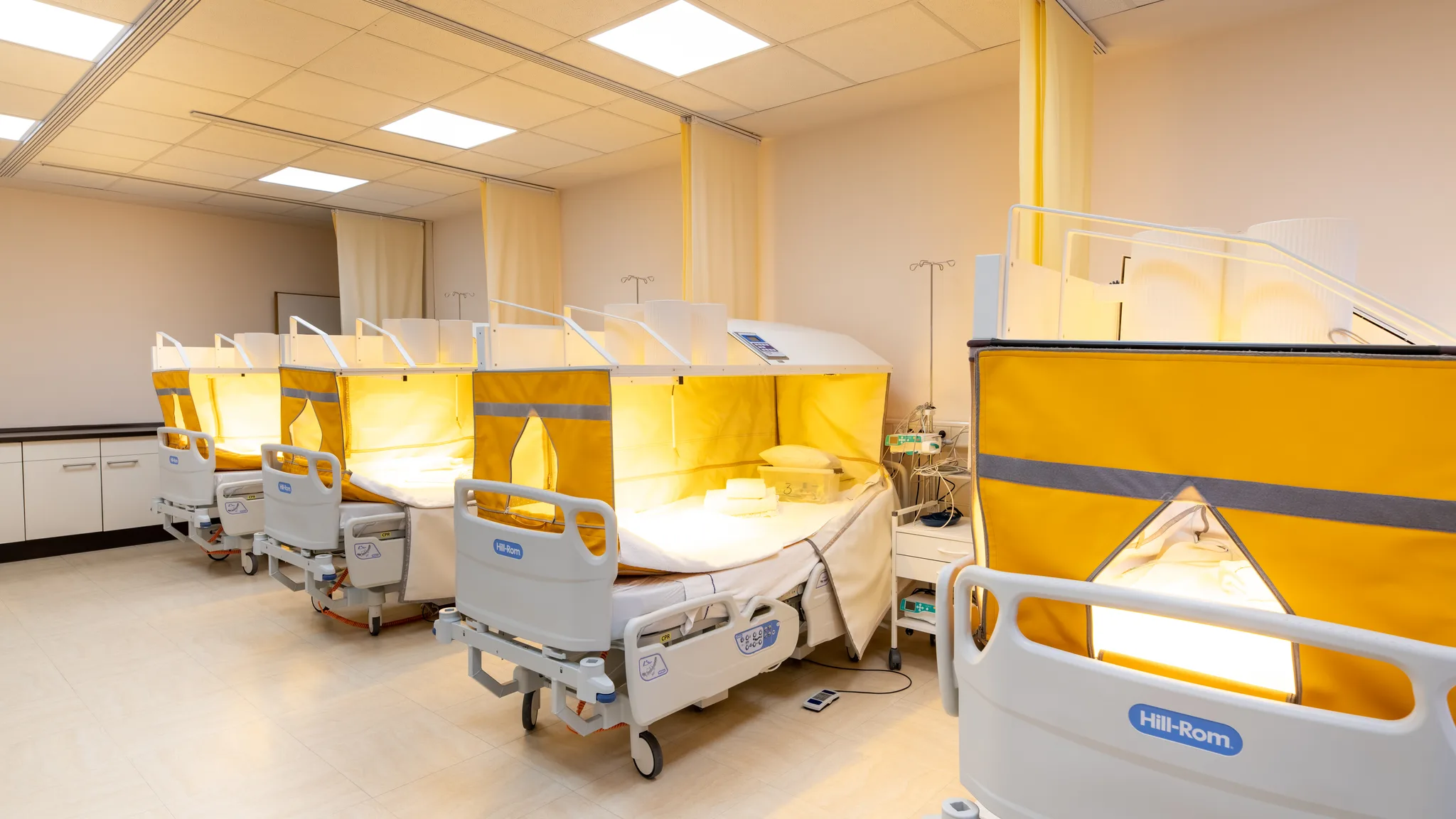
  • Four hospital beds in the whole-body hyperthermia room, each under a yellow infrared canopy lit from within
    The whole-body hyperthermia room · Clinicum St. Georg
  • Fibre applicator in a forearm cannula during intravenous laser therapy
    Intravenous laser therapy · Clinicum St. Georg
Treatment Overview

Key treatment modalities for Lyme disease

The program combines the following therapies into one coordinated plan, written from the individual findings. For patients from abroad it runs as inpatient Lyme disease treatment in Germany, two to five weeks on the ward with a video consultation in English before travel.

Whole-Body hyperthermia

Controlled elevation of the core body temperature to 41.6–42.0 °C / 106.9–107.6 °F with antibiotics given during the session. Borrelia is heat-sensitive in the laboratory, and heat improves the penetration of antibiotics into tissue.

What a whole-body hyperthermia session involves →

Targeted antimicrobials

Intravenous and oral antibiotic protocols chosen for the forms of Borrelia found and for the specific co-infections, as described on the treatment page.

How we treat chronic Lyme disease →

H.E.L.P. apheresis

Blood filtration that removes inflammatory proteins, immune complexes and fibrinogen from the plasma when the work-up shows them raised.

What H.E.L.P. apheresis involves →

Immune modulation

Therapies to support balanced immune function, including thymus peptides, micronutrient infusions and immune-stimulating protocols.

What immune therapy involves →

Detoxification

Protocols for Herxheimer reactions and the endotoxins released during bacterial die-off: IV glutathione, liver support and binders.

Our detoxification therapies →

Supportive therapies

Physical therapy, psychotherapy, nutritional support and pain management for the full impact of chronic Lyme disease on daily life.

How the Lyme therapies combine →
Evidence

What the research shows

The persistence of Borrelia after antibiotic treatment has been shown in the laboratory and in animals: drug-tolerant persister cells in culture (Sharma et al., 2015), biofilms in vitro (Sapi et al., 2012), spirochetes in the tissue of treated macaques (Embers et al., 2012). The evidence for persistence in humans is indirect, and that is the limit we state plainly.

What the trials show on the other side: two controlled trials of prolonged antibiotics in patients with persistent symptoms found no benefit over placebo (Klempner et al., 2001), and a later trial found no effect of prolonged antibiotics on cognition (Berende et al., 2019). More of the same antibiotic, on its own, is not the answer for most patients; that finding is one reason the hospital's plan has more than one component. Heat raises the vulnerability of Borrelia to antibiotics in vitro (Reisinger et al., 1996), which is the rationale for combining hyperthermia with antibiotics; clinical trials of that combination do not yet exist, so it is an individual treatment attempt, decided with the patient after medical consultation, and its course is measured in the follow-up.

In our clinical experience since 1995, with more than 12,000 Lyme patients, the combined program is what we offer the patient for whom the standard course has not been enough. What it does for an individual shows in the follow-up measurements, which is why they are taken before, during and after the stay.

Key research findings

FREQUENTLY ASKED QUESTIONS

Common questions about Lyme disease

What are the treatments for Lyme disease?

Early Lyme disease is treated with a two to four week course of antibiotics, usually doxycycline, amoxicillin or cefuroxime, and most patients recover. For chronic Lyme disease St. George Hospital combines antimicrobial therapy with whole-body hyperthermia, apheresis, immune support and detoxification in an inpatient program written from the individual work-up; the combination is an individual treatment attempt decided after medical consultation.

Can you recover from Lyme disease without treatment?

Some early infections are cleared by the immune system, but there is no way to know in advance who will clear it and who will go on to arthritis, nerve or heart involvement months later. Untreated Lyme disease is the usual route into the late and chronic forms. A tick bite with a rash or flu-like illness should be treated.

Can Lyme disease come back after treatment?

Symptoms can return. Three explanations are discussed in the literature: a new tick bite, persistence of the bacterium or its remnants in tissue, and an inflammatory or autoimmune process set off by the infection. The work-up at St. George Hospital looks at all three, because the treatment differs for each.

Is Babesia the same as Lyme disease?

No. Babesia is a parasite of red blood cells carried by the same ticks, and it is treated with different drugs. It is one of the co-infections that often travel with Borrelia and complicate the picture; the co-infections page describes Babesia, Bartonella, Anaplasma and Ehrlichia and how they are tested.

Why was my Lyme test negative?

The standard two-tier antibody test is least sensitive in the first weeks, before antibodies form, and it cannot tell a past infection from an active one. In late disease it is more sensitive, but a negative result in a patient with a typical history still does not exclude Lyme. The diagnosis page explains which additional tests the hospital uses.

References

  1. The Accuracy of Diagnostic Tests for Lyme Disease in Humans, A Systematic Review and Meta-Analysis of North American Research. PLoS One 2016. PMID 28002488
  2. Clinical Practice Guidelines by the Infectious Diseases Society of America (IDSA), American Academy of Neurology (AAN), and American College of Rheumatology (ACR): 2020 Guidelines for the Prevention, Diagnosis and Treatment of Lyme Disease. Clin Infect Dis 2021. PMID 33483734
  3. A systematic review on the impact of gestational Lyme disease in humans on the fetus and newborn. PLoS One 2018. PMID 30419059
  4. Characterization of biofilm formation by Borrelia burgdorferi in vitro. PLoS One 2012. PMID 23110225
  5. Borrelia burgdorferi, the Causative Agent of Lyme Disease, Forms Drug-Tolerant Persister Cells. Antimicrob Agents Chemother 2015. PMID 26014929
  6. Persistence of Borrelia burgdorferi in rhesus macaques following antibiotic treatment of disseminated infection. PLoS One 2012. PMID 22253822
  7. Prevalence of persistent symptoms after treatment for lyme borreliosis: A prospective observational cohort study. Lancet Reg Health Eur 2021. PMID 34557833
  8. Two controlled trials of antibiotic treatment in patients with persistent symptoms and a history of Lyme disease. N Engl J Med 2001. PMID 11450676
  9. Effect of prolonged antibiotic treatment on cognition in patients with Lyme borreliosis. Neurology 2019. PMID 30796143
  10. Antibiotics and increased temperature against Borrelia burgdorferi in vitro. Scand J Infect Dis 1996. PMID 8792482
  11. Decreased CD57 lymphocyte subset in patients with chronic Lyme disease. Immunol Lett 2001. PMID 11222912
  12. Natural killer cell counts are not different between patients with post-Lyme disease syndrome and controls. Clin Vaccine Immunol 2009. PMID 19515868
  13. Polymicrobial Nature of Tick-Borne Diseases. mBio 2019. PMID 31506314

Send a free inquiry

The initial inquiry is free of charge. The International Office reviews your message and your case directly and gets back to you.

Hours
Mon–Thu 08:00–17:00, Fri 08:00–14:00 German time (CET/CEST); in the US Mon–Thu 2–11 a.m. ET, Fri 2–8 a.m. ET.

Munich Airport (MUC), about 60 minutes by car.

CallSend a free inquiry