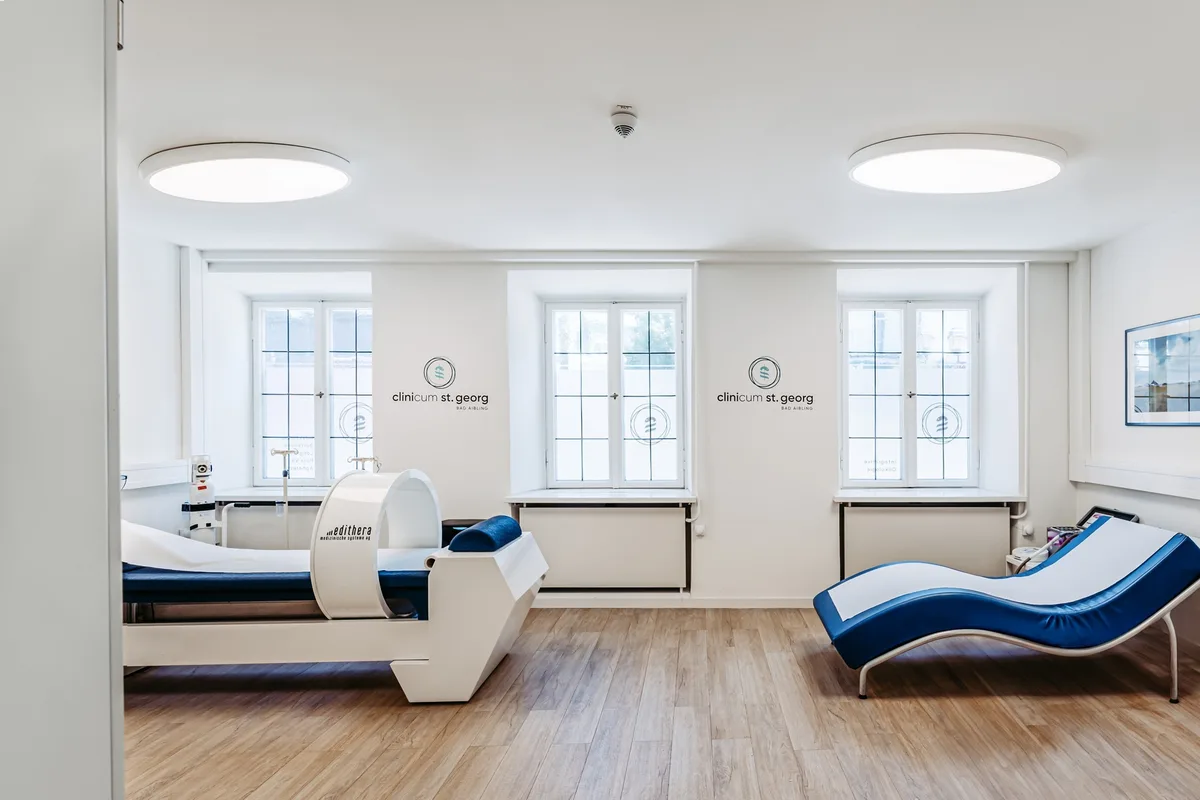
A bright treatment room at St. George Hospital in Bad Aibling

Brain health and rehabilitation

Brain health and rehabilitation

Explore the conditions assessed through St. George Hospital and the Douwes Brain Center, our outpatient neuromodulation department in Bad Aibling. Your diagnosis, symptoms and treatment goals guide the next step.

Brain health & rehabilitation

About the condition and its treatment

  • About the conditionDepression & mood

    When mood symptoms persist, the next step starts with a careful review of the diagnosis and the treatments you have already tried.

  • About the conditionMemory & cognition

    Memory changes deserve an explanation before a treatment is chosen.

  • About the conditionStroke & brain injury

    After the initial treatment and rehabilitation, the next question is often practical: what can help with movement, speech, concentration or daily tasks now?

  • About the conditionBrain fog & fatigue

    Difficulty thinking clearly can accompany Long COVID, ME/CFS, treated infections, disturbed sleep or cancer treatment.

  • About the conditionPain & migraine

    A neurological assessment can help clarify persistent pain, headache patterns and the effect on sleep and daily life.

  • About the conditionNeurological disease support

    For an established neurological diagnosis, an additional programme should fit around specialist treatment and the realities of daily life.

Find your starting point

Guides for your next decision

Each guide explains what to bring, what assessment can clarify, and where the evidence has limits.

Memory and cognitive health

Memory changes deserve an explanation before a treatment is chosen. Assessment distinguishes everyday forgetfulness, potentially treatable contributors, mild cognitive impairment and an established neurological diagnosis.

Read the guide

Brain fog and fatigue

Difficulty thinking clearly can accompany Long COVID, ME/CFS, treated infections, disturbed sleep or cancer treatment. The pattern of symptoms and your activity tolerance determine how assessment should be paced.

Read the guide

Chronic pain and migraine

A neurological assessment can help clarify persistent pain, headache patterns and the effect on sleep and daily life. The next step depends on the diagnosis and the treatments already in place.

Read the guide

Support for neurological disease

For an established neurological diagnosis, an additional programme should fit around specialist treatment and the realities of daily life. The focus is a clear goal, a realistic evidence discussion and coordinated care.

Read the guide

Care starts with your diagnosis

Dr. Julian Douwes leads infectiology, neurorehabilitation and complementary oncology and develops the treatment protocols. Dr. Martin Rößner, Chief Physician, is responsible for day-to-day clinical care and sees patients. Assessment may lead to a hospital program, outpatient care at the Douwes Brain Center, or advice to continue with another specialist.

The directory describes the conditions we assess. It does not mean that every neuromodulation method is suitable or established for every diagnosis. For progressive neurological diseases, goals may focus on symptoms and daily function; we do not claim to stop or reverse the disease.

A plan shaped around your needs

  1. Understand

    Share your diagnosis, specialist reports, medication and the difficulties that matter most to you.

  2. Assess

    The team reviews suitability, existing care and whether hospital or outpatient assessment is appropriate.

  3. Plan

    Agree realistic goals, the proposed methods, evidence, risks and review points before treatment begins.

Conditions assessed at the Douwes Brain Center

Find your diagnosis or the symptom group closest to your experience. The medical team reviews each inquiry individually.

Sleep, fatigue and exhaustion

  • Insomnia and sleep disorders
  • ME/CFS
  • Burnout
  • Stress and exhaustion

Infection-related neurological symptoms

  • Lyme disease and neuroborreliosis

A setting for planned care

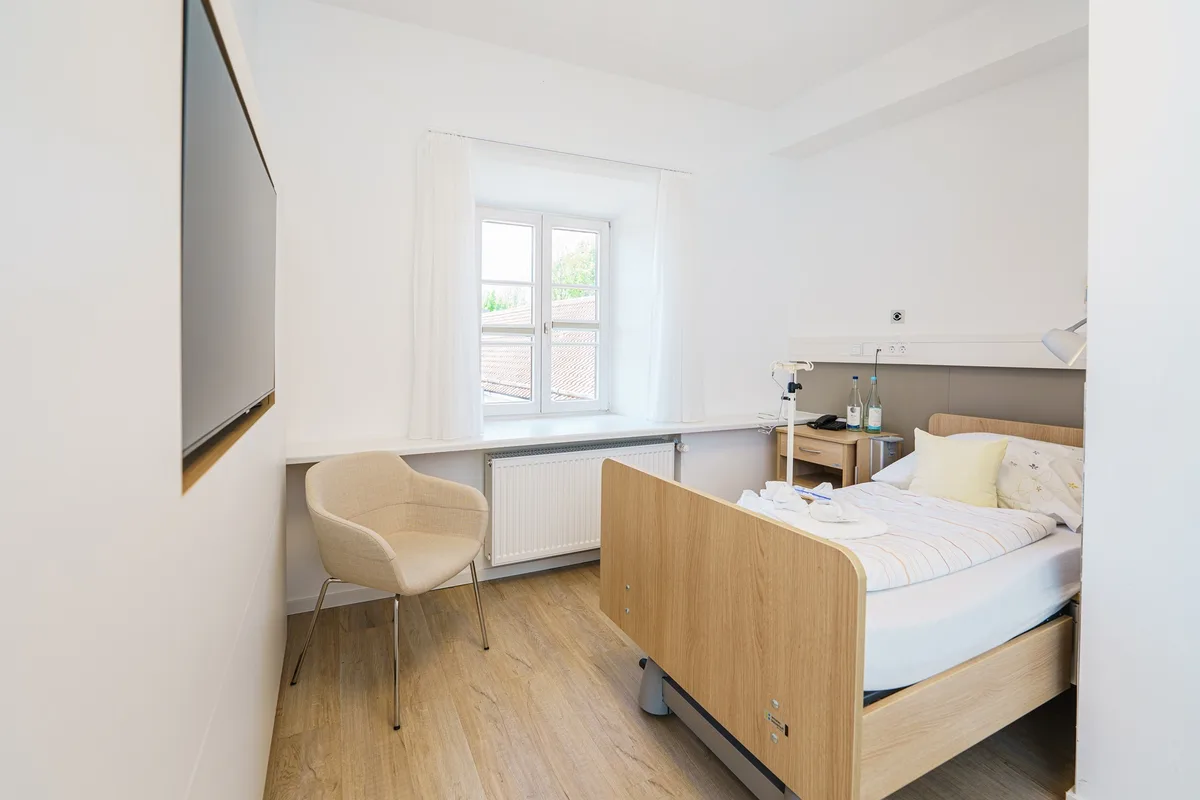
  • A patient room at St. George Hospital
    Inpatient care is considered where your needs call for a hospital stay. · St. George Hospital
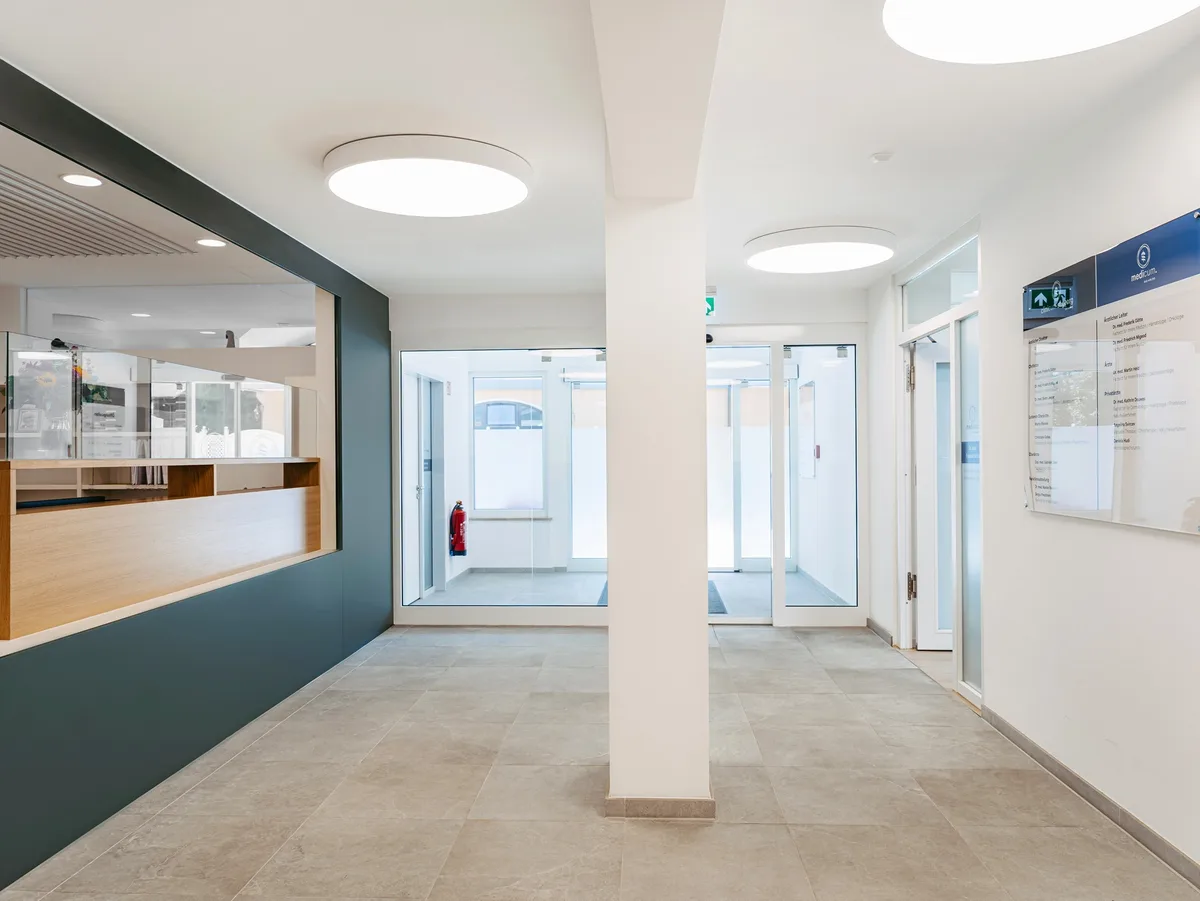
  • The reception desk and hallway at St. George Hospital
    The team confirms the right setting before you travel. · St. George Hospital

A neurological diagnosis does not automatically mean an inpatient programme. Assessment clarifies hospital care, outpatient appointments and coordination with your existing specialists.

Cognitive rehabilitation after cancer treatment

Memory, attention and processing difficulties during or after cancer treatment are often called “chemo brain”. Our oncology and neurorehabilitation teams coordinate assessment and rehabilitation. Neuromodulation for cancer-related cognitive impairment remains investigational.

Explore chemo brain assessment and neuromodulation.

Peak performance and prevention

The Brain Center also assesses performance and concentration goals in people without a diagnosed disease. Peak performance is a separate goal, not a medical condition. Assessment clarifies whether symptoms need a clinical work-up before a training plan is considered.

How your care is coordinated

Therapeutic plasma exchange can also be assessed for a specific clinical indication, with your neurological and hospital team. It is not appropriate for every neurological or psychiatric diagnosis.

The Douwes Brain Center is our outpatient neuromodulation department. The team clarifies which services take place there and which require a hospital stay. Existing psychiatric, neurological and rehabilitation care remains part of the shared plan.

Explore neuromodulation methods and ask the team to review your case. If your diagnosis is not listed, include it in your inquiry so the team can advise on suitability.

Outpatient option

More about your condition

The Douwes Brain Center is our outpatient neuromodulation department in Bad Aibling. Its condition guides explain the assessments and individual treatment options in more detail.

Explore conditions at the Douwes Brain Center

From the journal

Reading on Neuromodulation, regenerative and supportive therapies

  1. Brain & neurological health · · 4 min read

    Taurine for the brain and nervous system: Benefits, dosage & research

    Taurine is one of the most abundant amino acids in the brain, heart and retina. What research shows about taurine and nerve cells, why levels fall with age, typical doses, food sources, and how we use it.

  2. Neurofeedback · · 8 min read

    Neurofeedback therapy benefits: How EEG biofeedback retrains the brain

    Neurofeedback therapy — also known as EEG biofeedback — is a non-invasive brain training technique that uses real-time monitoring of brainwave activity to help patients learn to regulate their own neural patterns. By providing visual or auditory feedback about brainwave states, neurofeedback…

Send a free inquiry

The initial inquiry is free of charge. The International Office reviews your message and your case directly and gets back to you.

Hours
Mon–Thu 08:00–17:00, Fri 08:00–14:00 German time (CET/CEST); in the US Mon–Thu 2–11 a.m. ET, Fri 2–8 a.m. ET.

Munich Airport (MUC), about 60 minutes by car.

CallSend a free inquiry