
Blood Analysis
Laboratory & immune testing
St. George Hospital draws its laboratory profile on the first morning of your stay: standard clinical chemistry and hematology, immune cell panels, infection serology, autoimmune and metabolic markers. The physician reads the results against your history before the first therapy is scheduled, and the values that were abnormal are repeated in week two.
What laboratory testing is available?
St. George Hospital runs its laboratory diagnostics in two layers. The first is conventional clinical chemistry, hematology and serology, drawn on the morning of day one or two. The second is the specialized layer that chronic illness needs: immune cell panels, infection markers, autoimmune and metabolic profiling. Both are part of the diagnostic work-up that opens every stay, and the functional medicine approach reads the values against your history and against each other.
In chronic Lyme disease, Post-COVID syndrome, autoimmune conditions and cancer, your treatment plan is written from this profile. Our physicians choose the panels from your symptoms and suspected diagnoses, and recent values from home are not repeated without reason.
What the panels contain
The core panel includes a complete blood count, a metabolic panel, liver and kidney function, a thyroid panel, and the inflammatory markers CRP, ESR and ferritin, with vitamin D, iron status and, where the history asks for it, the hormonal profile described on the hormone therapy page.
The immune panel types the immune cells (CD4 and CD8 T cells, B cells, NK cells) and, where chronic fatigue or post-viral illness is the question, measures NK cell function rather than count alone. Reduced NK cell cytotoxicity is the most consistent immune finding in ME/CFS; a meta-analysis of 28 studies found it reduced to about half of healthy control levels (Baraniuk et al., Front Immunol, 2024). The panel continues with cytokine profiling, the complement system, immunoglobulin subclasses and autoantibody panels where an autoimmune process is suspected.
The infection panel covers Lyme disease serology (ELISA, Western blot and the EliSpot lymphocyte assay), the tick-borne co-infections Bartonella, Babesia, Ehrlichia, Chlamydia pneumoniae and Mycoplasma, the reactivation markers for EBV, CMV and HHV-6, and parasitology. The viral markers matter in post-viral illness: in one cohort, Epstein-Barr virus reactivation measured by PCR was more than twice as frequent in COVID-19 patients as in COVID-negative controls (Bernal et al., Virus Res, 2023). For oncology patients the panel adds tumor markers and, where the oncologist asks for it, circulating tumor cell analysis. Heavy metal and toxin screening is described on the detoxification program page. Our functional medicine testing guide explains each panel in plain terms.
What two-tier Lyme testing can and cannot tell you
Two-tier serology measures antibodies. A negative result does not exclude Lyme disease, and a positive one does not prove active infection. Tests outside the standard, such as EliSpot, count as one line of evidence.
Read what the studies show
Standard Lyme testing is a two-tier serology: a screening ELISA followed by a confirmatory Western blot. A systematic review of 48 North American studies found that the two-tier protocol and the C6 ELISA have better specificity than the proposed replacements, that test sensitivity rises dramatically as infection progresses from early to late disease, that direct detection by culture or PCR is less sensitive and less timely than serology, and that a large number of commercial and in-house tests used by private laboratories have never been evaluated in the primary literature (Waddell et al., PLoS One, 2016).
Three consequences follow for how we work. Serology is an antibody test, so a negative result early in infection or in a patient with a weak antibody response does not exclude Lyme disease, and a positive result does not by itself prove active infection. Where we use tests outside the two-tier standard, such as the EliSpot cellular assay recommended by the German Borreliosis Society and ILADS, we say that their diagnostic accuracy has not been established in the primary literature and we read them as one line of evidence, never as the diagnosis. The diagnosis is clinical: history, examination, serology, co-infection and immune findings read together by a physician. How that reading works is set out on the Lyme disease diagnosis page. What the evidence does not show is a laboratory test that can confirm or exclude chronic Lyme disease on its own.
What the testing is used for
- Chronic Lyme disease: diagnosis, co-infections and monitoring
- Immune system assessment in chronic fatigue (ME/CFS)
- Autoimmune condition evaluation
- Post-COVID immune and viral reactivation profiling
- Tumor marker monitoring in oncology, with the treating oncologist
- Nutritional and metabolic status, hormone assessment
- Heavy metal and toxin screening before any detoxification block
Which tests do you still need?
Send the International Office a short history; the initial inquiry is free of charge. The Office then requests the results you already have for a medical review, which decides which panels we would draw here. Nothing is ordered before that review.
What the blood draw looks like
Blood draw
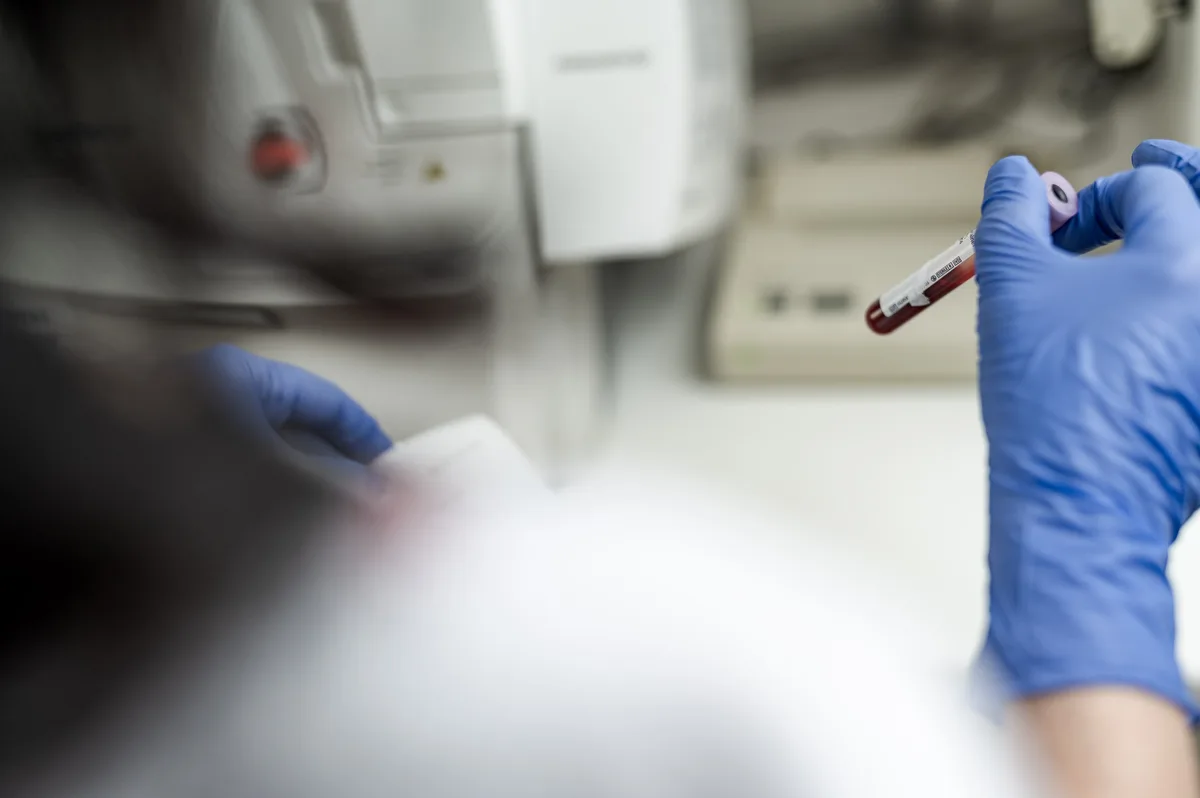
A nurse draws the samples on the ward after an overnight fast. The specialized panels need several tubes.
Standard results
Read by the attending physician before the first therapy is scheduled.
Specialized panels
Immune subtyping, EliSpot and some infection panels go to accredited specialist laboratories, so they are drawn on day one.
Consultation
One combined report, discussed with you; abnormal values are repeated during the stay.
All testing runs in accredited medical laboratories with validated assays and quality control. Some cellular Lyme assays are not established in laboratory medicine, and we label them that way.
The laboratory panels appear in your written, itemized cost overview (package price plus individual add-ons). A deposit is paid before admission; treatment is self-pay and reimbursement is never promised. Costs and insurance
Frequently asked questions about laboratory testing
Can a negative Lyme test rule out Lyme disease?
No. Two-tier serology is specific, but its sensitivity depends on the stage: it is low in the first weeks after infection and rises with time, and it measures antibodies, not the organism. A negative result in a patient with a compatible history and findings does not end the work-up. We read the serology next to the clinical picture, the co-infection panel and the immune profile, and we say which tests are validated and which are not.
Do I need to fast before the blood draw?
Yes, for the metabolic panel, lipids, glucose, insulin and the morning hormones: nothing but water from midnight. Take your usual morning medication with water unless you have been told otherwise, and tell the nurse what you took. The draw is done between 07:00 and 09:00 on the ward.
Can I send results from home instead?
Yes, and you should. Write to the International Office first; it requests your records afterwards, and a physician reviews them before the video consultation and tells you which tests we would still need. Recent standard values are not repeated without reason. Specialized immune and infection panels are usually drawn here because the methods and laboratories differ between countries.
Which laboratories do you use?
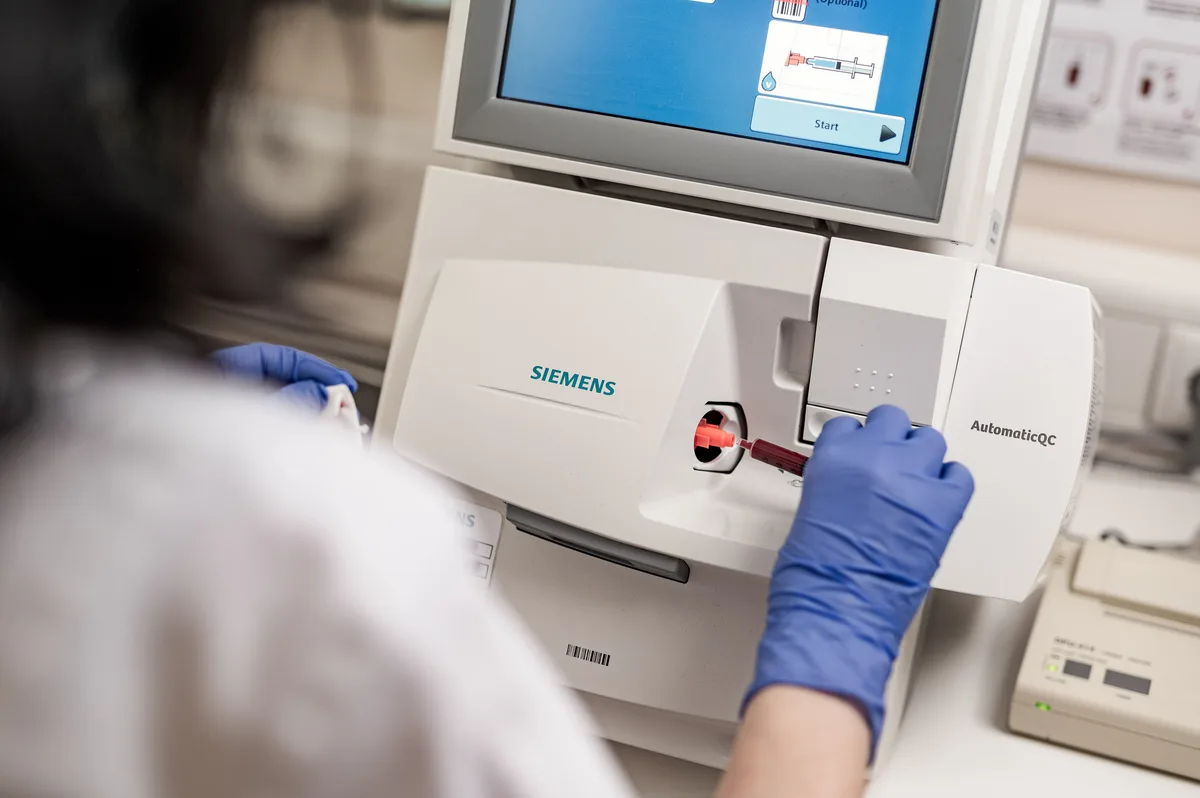
Standard chemistry and hematology run in accredited German laboratories with 24–48 hour turnaround. Immune cell subtyping, cytokine profiling, EliSpot and the tick-borne co-infection panels go to specialized accredited laboratories and take 5–10 business days. Every result carries the laboratory's reference range and method, and the written report you take home lists them.
How much does laboratory testing cost?
Laboratory testing appears in your itemized cost overview as an add-on to the package price. You receive the estimate in EUR after a physician has read your findings and before anything is booked. Treatment is self-pay; the invoice is itemized in English for out-of-network review.
References
- The Accuracy of Diagnostic Tests for Lyme Disease in Humans, A Systematic Review and Meta-Analysis of North American Research.. PLoS One 2016. PMID 28002488
- Meta-analysis of natural killer cell cytotoxicity in myalgic encephalomyelitis/chronic fatigue syndrome.. Front Immunol 2024. PMID 39483457
- Incidence of Epstein-Barr virus reactivation is elevated in COVID-19 patients.. Virus Res 2023. PMID 37364815
Send a free inquiry
The initial inquiry is free of charge. The International Office reviews your message and your case directly and gets back to you.
- Phone
- +49 8061 398-0
- Hours
- Mon–Thu 08:00–17:00, Fri 08:00–14:00 German time (CET/CEST); in the US Mon–Thu 2–11 a.m. ET, Fri 2–8 a.m. ET.
Munich Airport (MUC), about 60 minutes by car.