
Targeted Hyperthermia
Local-regional hyperthermia
Local-regional hyperthermia directs energy to a selected area of the body. At St. George Hospital, Oncotherm EHY-2000 and EHY-3000 systems and the Andromedic HY-DEEP 600WM support an individually planned approach within integrative oncology.
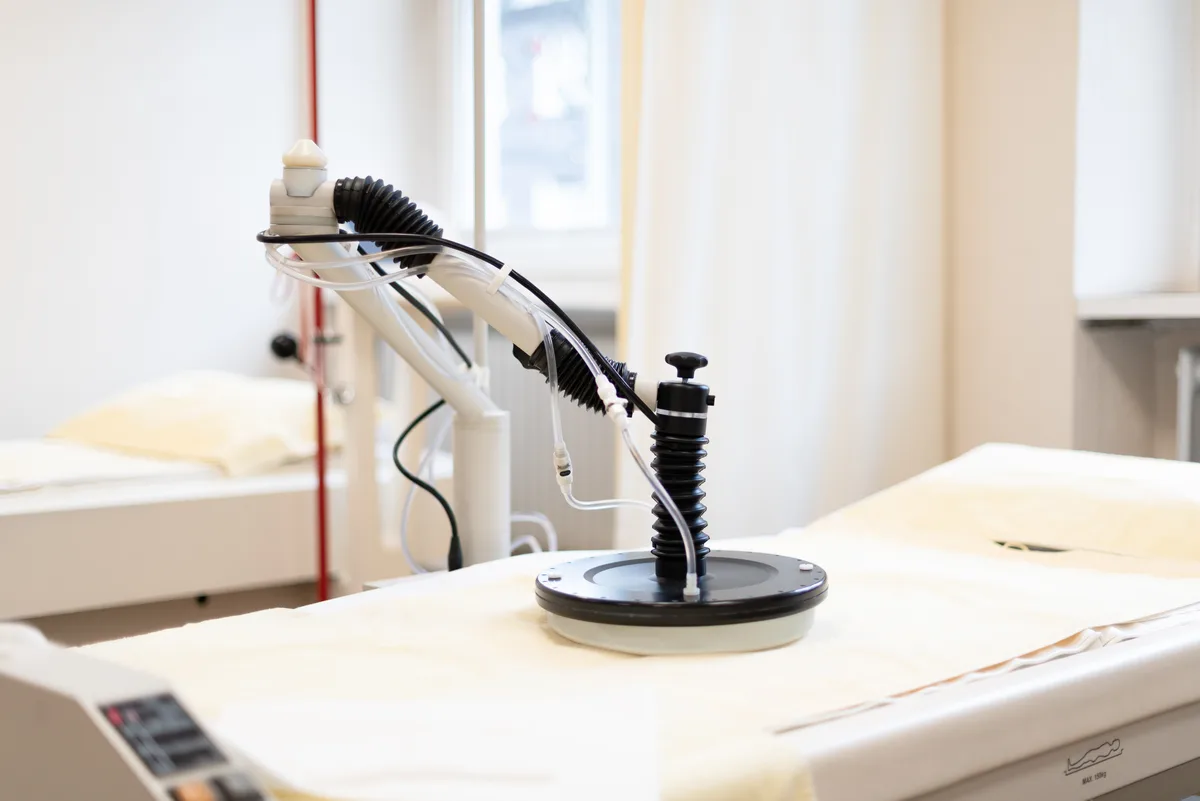
What is local-regional hyperthermia?
This form of hyperthermia delivers energy to a selected body region through applicators placed against the body. The treatment is planned around the target area and the other elements of your cancer care. It differs from whole-body hyperthermia, which deliberately raises core temperature.
At St. George Hospital, local-regional treatment is considered within integrative oncology. The plan depends on the tumour, its location, prior treatment, current imaging and your ability to tolerate the procedure.
Our local-regional hyperthermia systems
The hospital uses Oncotherm EHY-2000 and EHY-3000 systems and the Andromedic HY-DEEP 600WM. Oncotherm describes the EHY-2000 family as a capacitive radiofrequency system; its EHY-3000-series information describes multilocal application with flexible electrodes. Andromedic's HY-DEEP 600WM uses capacitive radiofrequency with cooled applicators and an indirect temperature-estimation system.
These manufacturer descriptions explain the equipment. They are separate from clinical studies of treatment outcomes, which depend on the cancer, accompanying treatment and technique used.
Three systems in our local-regional service
Oncotherm EHY-2000
- Technology family
- Oncothermia / modulated electro-hyperthermia
- Treatment approach
- Capacitive radiofrequency treatment of a selected region
- Planning consideration
- Applicator arrangement and the target region
Oncotherm EHY-3000
- Technology family
- Oncothermia / modulated electro-hyperthermia
- Treatment approach
- Multilocal application using flexible electrodes
- Planning consideration
- Treatment coverage and the individual oncology plan
Andromedic HY-DEEP 600WM
- Technology family
- Deep capacitive radiofrequency hyperthermia
- Treatment approach
- Radiofrequency delivery with cooled applicators
- Planning consideration
- Treatment region, cooling and tolerance
The physician chooses the system and treatment settings. A device name alone does not establish a benefit for a particular tumour.
How a session is planned
Assessment
The team reviews imaging, medicines and previous treatment, including implants and the condition of the skin in the treatment region.
Positioning
The applicator arrangement and cooling are prepared for the selected region. Tell the team about any discomfort.
Monitoring
The team follows the treatment and your tolerance, then reviews the next session within your wider oncology schedule.
Research and treatment planning
Randomized studies have evaluated regional hyperthermia alongside conventional cancer treatment. Examples include a Dutch trial of radiotherapy with or without hyperthermia in pelvic tumours and a phase III trial in high-risk soft-tissue sarcoma, which found improved local progression-free survival when regional hyperthermia was added to chemotherapy.
These results concern the particular patients, equipment and combined treatments studied. They do not demonstrate the same outcome for every device or tumour. Your consultation should explain the rationale for the proposed system and how it will be coordinated with your existing oncology care.
Comfort, safety and your next step
Report pain, excessive heat or discomfort to the team during treatment. Skin irritation, burns and pain are possible; the assessment includes implanted devices, metal in the treatment region, skin problems and other factors that may affect suitability. The team explains the monitoring and the plan for your individual session.
Start with a free inquiry to the International Office. Medical review comes before the treatment proposal. Your written cost overview sets out what is included in the proposed stay.
Frequently asked questions
Is local-regional hyperthermia the same as whole-body hyperthermia?
No. Local-regional treatment focuses on a selected area. Whole-body hyperthermia deliberately raises core temperature and has a different setup, monitoring and recovery plan.
Which of the three systems would I receive?
Your physician chooses after reviewing your findings, the treatment region and other cancer care. The consultation explains the proposed approach before you decide.
Can I continue care with my oncologist at home?
Your current oncology treatment is part of the assessment. Bring the treatment plan and recent reports so the teams can discuss timing and responsibilities.
References
- Oncotherm EHY-2000plus user manual. Source
- Oncotherm EHY-3000 series. Source
- Andromedic HY-DEEP 600WM product information. Source
- Comparison of radiotherapy alone with radiotherapy plus hyperthermia in locally advanced pelvic tumours: a prospective, randomised, multicentre trial. Lancet 2000. PMID 10791373
- Neo-adjuvant chemotherapy alone or with regional hyperthermia for localised high-risk soft-tissue sarcoma: a randomised phase 3 multicentre study. Lancet Oncology 2010. PMID 20434400
Send a free inquiry
The initial inquiry is free of charge. The International Office reviews your message and your case directly and gets back to you.
- Phone
- +49 8061 398-0
- Hours
- Mon–Thu 08:00–17:00, Fri 08:00–14:00 German time (CET/CEST); in the US Mon–Thu 2–11 a.m. ET, Fri 2–8 a.m. ET.
Munich Airport (MUC), about 60 minutes by car.