
Light-Activated Treatment
Photodynamic Therapy
Photodynamic therapy (PDT) uses light-sensitive compounds and specific wavelengths of light to selectively destroy cancer cells and pathogens. It is a targeted, minimally invasive treatment with a favorable side-effect profile.
What it is
What Is Photodynamic Therapy?
Photodynamic therapy involves administering a photosensitizing agent that accumulates preferentially in cancer cells or diseased tissue. When this compound is activated by exposure to a specific wavelength of light, it produces reactive oxygen species that destroy the targeted cells. Healthy tissue, which absorbs less of the photosensitizer, is largely spared.
How it works
How Does It Work?
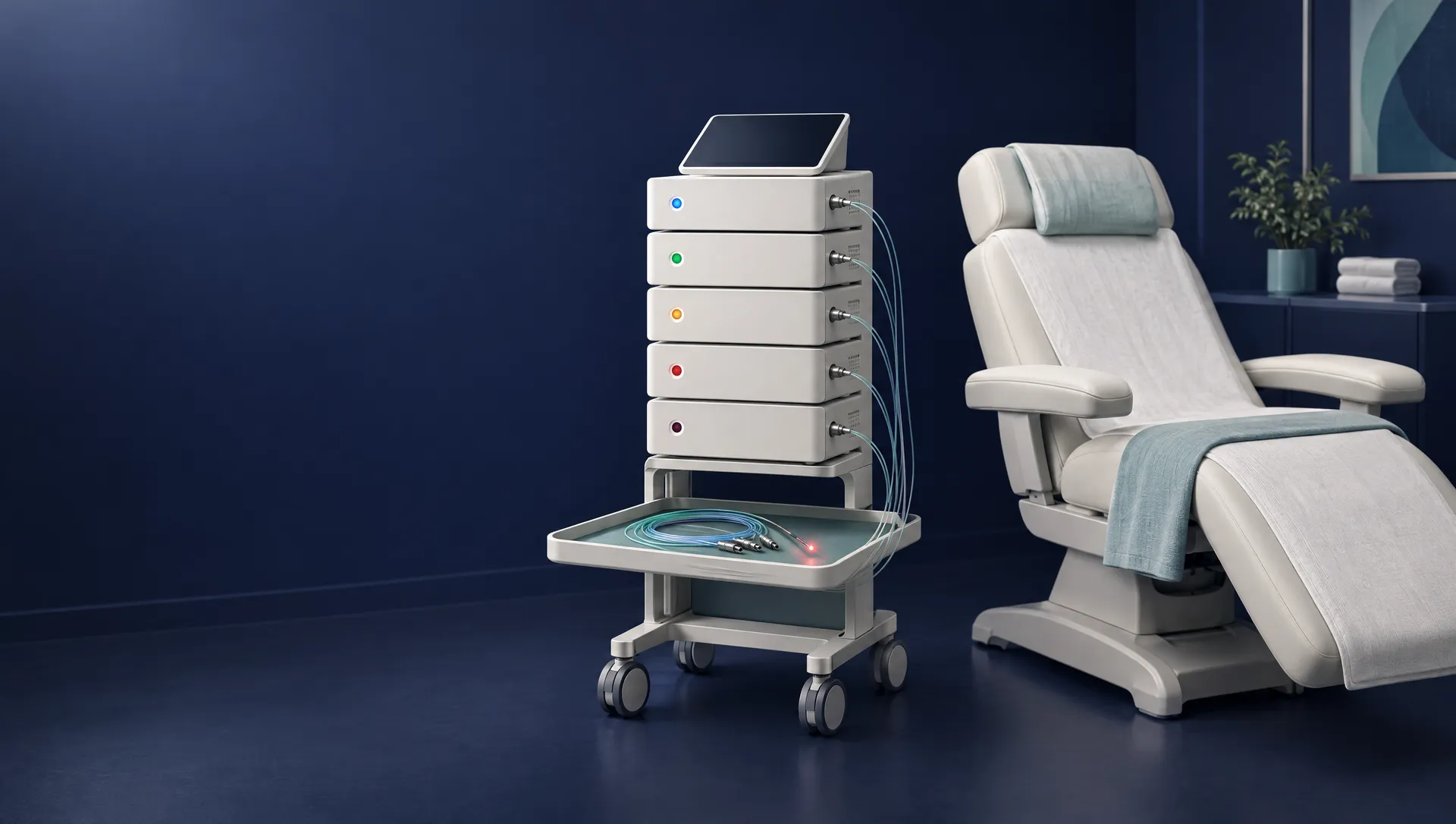
A photosensitizing agent is administered intravenously or applied topically, depending on the condition being treated. After a defined accumulation period, the treatment area is exposed to light of the appropriate wavelength using fiber optic devices or external light sources. The light activates the photosensitizer within the diseased cells, triggering a localized cytotoxic reaction. The treatment also stimulates local immune responses against the treated tissue.
Who it is for
What Conditions Does It Treat?
- Various cancer types (surface and accessible tumors)
- Chronic Lyme disease and persistent infections
- Precancerous lesions
- Conditions requiring targeted tissue destruction
Is CES Right for You?
CES is a gentle, well-tolerated treatment that may complement other therapies. Our specialists will assess whether it is appropriate for your condition
In the room
What a session feels like
- Before The photosensitizer is given first. Depending on the agent you then wait hours, or in some cases days, for it to accumulate in the target tissue.
- During Light exposure lasts 15–45 minutes depending on the area. You feel warmth from the light source; it is generally painless.
- Afterwards Your skin and eyes will be light-sensitive for a period we specify. Sunglasses, long sleeves and shade until then.
Evidence
Evidence & Safety
PDT is approved for several cancer indications in multiple countries and has extensive published research supporting its use. Clinical trials have demonstrated effectiveness in various tumor types. St. George Hospital has published research on PDT applications in integrative oncology and has decades of clinical experience with this modality.
Where we use it
Used in These Departments
Request a consultation
A video consultation in English before you travel. A physician reviews your findings first; we reply by email within one business day (Mon–Fri).
Mon–Thu 08:00–17:00, Fri 08:00–14:00 (CET/CEST)+49 8061 398-0info@clinicum-stgeorg.de
St. George Hospital is a specialist hospital, not an emergency department. In a medical emergency in Germany, dial 112.