
Oxygen Medicine
Hyperbaric Oxygen Therapy (HBOT)
Breathing 100% pure oxygen in a pressurized chamber to saturate body tissues with oxygen, promoting healing, reducing inflammation, and stimulating regenerative processes.
What Is Hyperbaric Oxygen Therapy?
Hyperbaric oxygen therapy (HBOT) involves breathing pure oxygen at pressures greater than normal atmospheric pressure (typically 1.5-2.5 ATA) inside a specialized hyperbaric chamber. Under these conditions, blood plasma becomes supersaturated with dissolved oxygen, delivering 10-15 times more oxygen to tissues than normal breathing.
This hyperoxic state triggers a cascade of physiological responses including angiogenesis (new blood vessel formation), stem cell mobilization, anti-inflammatory cytokine production, and enhanced antimicrobial activity. HBOT has established indications in wound healing, diving injuries, and carbon monoxide poisoning, and is increasingly used in integrative medicine.
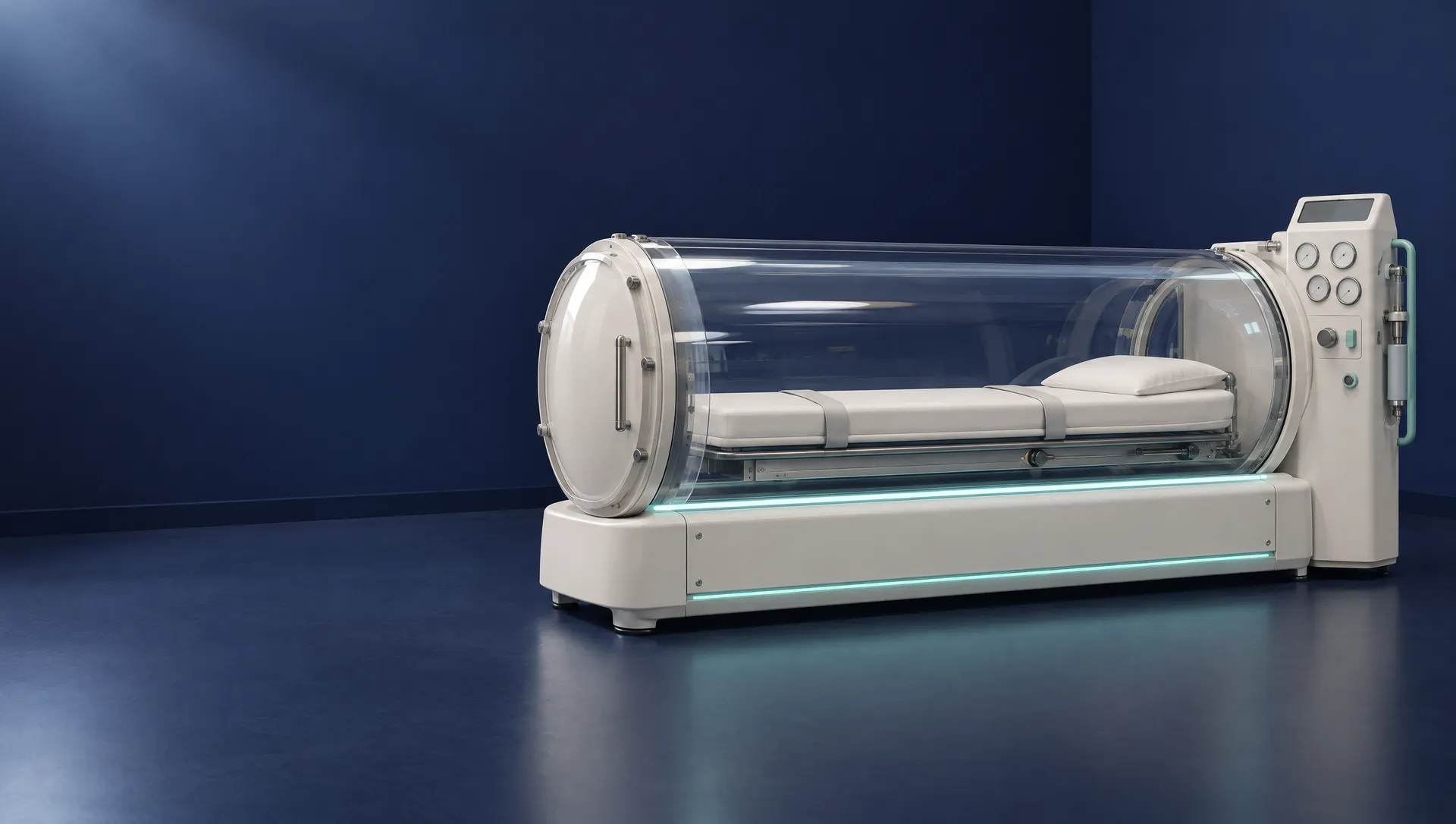
HBOT Device Image
How Does It Work?
Under hyperbaric conditions, oxygen dissolves in plasma at concentrations sufficient to sustain tissue oxygenation even without hemoglobin. This has several therapeutic effects: it reverses tissue hypoxia in areas with compromised circulation; it stimulates the release of vascular endothelial growth factor (VEGF) promoting new blood vessel formation; it activates stem cell release from bone marrow; and it enhances the oxygen-dependent killing mechanisms of white blood cells.
At the cellular level, intermittent hyperoxia triggers upregulation of antioxidant enzymes and anti-inflammatory pathways. Repeated HBOT sessions produce cumulative regenerative effects.
What Conditions Does It Treat?
- Chronic wounds and diabetic ulcers
- Post-COVID syndrome
- Chronic Lyme disease
- Traumatic brain injury and post-stroke rehabilitation
- Sudden hearing loss
- Chronic osteomyelitis
- Radiation tissue injury
- Cognitive decline and neurodegenerative conditions
Could this belong in your plan?
That depends on your findings, not on the therapy. Send what you have with a short history; a physician reads it before the video call and tells you whether this treatment belongs in your program.
What a session feels like
- Before You settle into the chamber and the door closes. As the pressure rises your ears fill, as on a descending flight; swallowing or yawning clears them, and the operator watches you the whole time.
- During At treatment pressure you breathe oxygen normally for 60–90 minutes. There is a soft hiss of air and not much else. Read, listen to something, or sleep.
- Afterwards The chamber is depressurised slowly. A few people feel tired or notice their vision briefly changed. A course runs 20–40 sessions depending on the indication.
Evidence & Safety
HBOT is one of the most well-studied oxygen therapies, with over 14 approved indications recognized by the Undersea and Hyperbaric Medical Society (UHMS). Clinical trials published in journals including The Lancet, JAMA, and Neurology support its efficacy for wound healing, neurological recovery, and immune function. Recent studies have also demonstrated benefits in post-COVID syndrome and age-related cognitive decline. HBOT is generally safe when administered according to established protocols; the most common side effects are mild barotrauma and transient myopia.
Request a consultation
A video consultation in English before you travel. A physician reviews your findings first; we reply by email within one business day (Mon–Fri).
Mon–Thu 08:00–17:00, Fri 08:00–14:00 (CET/CEST)+49 8061 398-0info@clinicum-stgeorg.de
St. George Hospital is a specialist hospital, not an emergency department. In a medical emergency in Germany, dial 112.