
Blood Purification
Therapeutic Plasma Exchange
A procedure that removes the patient’s plasma and replaces it with donor plasma or albumin solution, effectively clearing autoantibodies, immune complexes, toxins, and inflammatory mediators from the circulation.
What Is Therapeutic Plasma Exchange?
Therapeutic plasma exchange (TPE), also known as plasmapheresis, is an extracorporeal procedure in which the patient’s blood is separated into cellular components and plasma. The plasma — which contains antibodies, immune complexes, clotting factors, and other proteins — is removed and replaced with a substitution fluid, typically human albumin or fresh frozen plasma.
TPE is one of the most broadly applicable apheresis techniques, with established indications across neurology, hematology, nephrology, and autoimmune medicine.
How Does It Work?
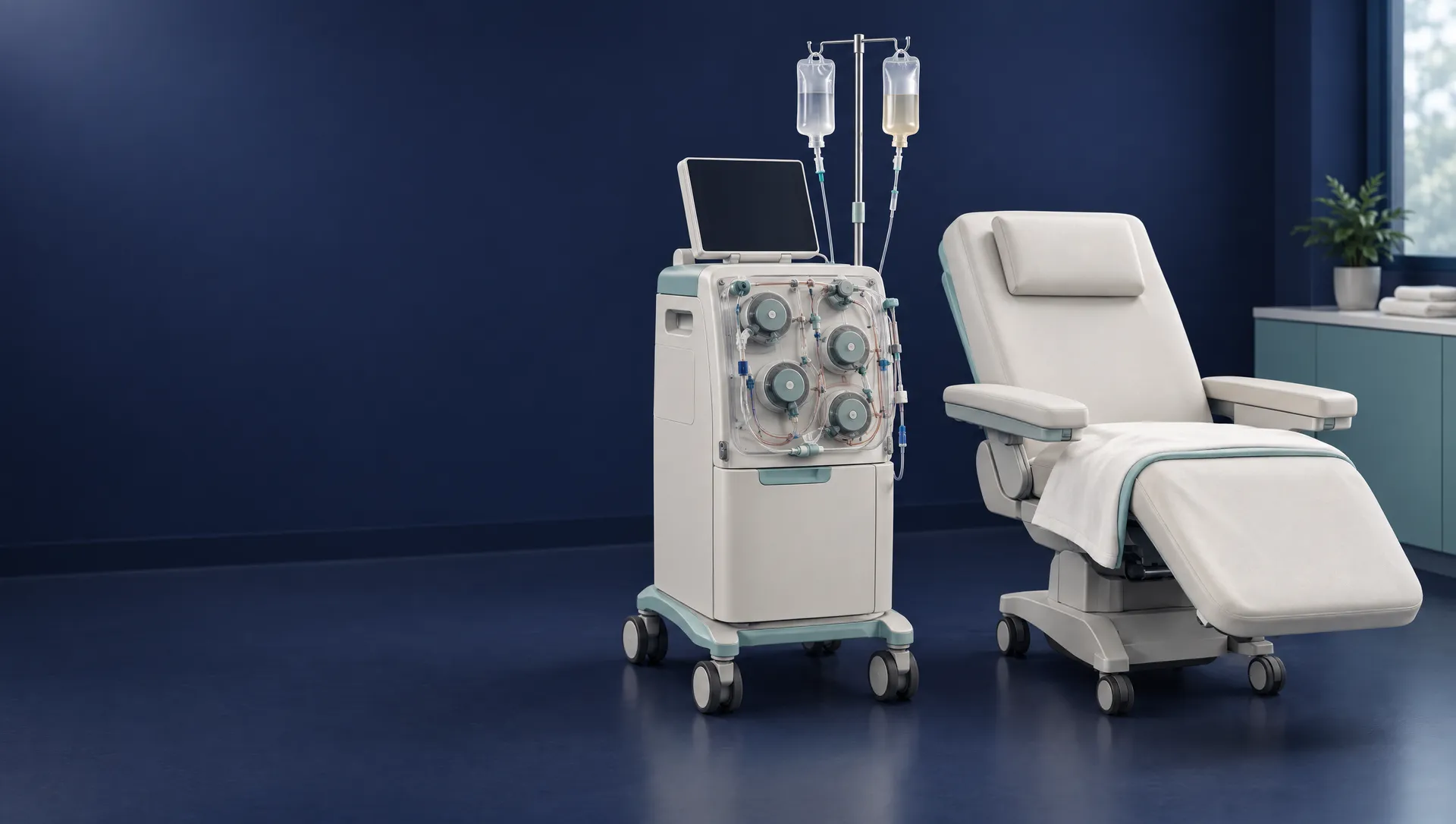
Blood is drawn through a venous access point and passed through a centrifuge or membrane-based separator that divides plasma from blood cells. The separated plasma is discarded and replaced with an equal volume of substitution fluid. The reconstituted blood is returned to the patient.
A single session typically processes 1-1.5 times the patient’s plasma volume. This achieves approximately 60-70% removal of circulating pathological substances per session. Courses of 3-7 sessions are common, depending on the clinical indication.
Conditions Treated
- Guillain-Barre syndrome
- Chronic inflammatory demyelinating polyneuropathy (CIDP)
- Myasthenia gravis
- Thrombotic thrombocytopenic purpura (TTP)
- Anti-NMDA receptor encephalitis
- Goodpasture syndrome
- Acute inflammatory demyelination (multiple sclerosis flares)
- Chronic Lyme disease with high inflammatory load
Could this belong in your plan?
That depends on your findings, not on the therapy. Send what you have with a short history; a physician reads it before the video call and tells you whether this treatment belongs in your program.
What a session feels like
- Before Venous access is placed and you are seated comfortably, with a blanket within reach.
- During Each exchange takes about 2–3 hours. Blood pressure, heart rate and temperature are monitored the whole time. Tingling around the lips or fingers, lightheadedness or chills can occur; tell the nurse, who will slow the machine and warm you.
- Afterwards A short rest before you return to your room. Courses of 3–7 sessions are common, depending on the indication.
Evidence & Safety
Therapeutic plasma exchange is one of the most well-studied apheresis procedures. The American Society for Apheresis (ASFA) publishes evidence-based guidelines categorizing indications by strength of evidence. Many neurological and hematological indications are classified as Category I (standard first-line therapy). The procedure carries a low risk of serious adverse events when performed by experienced personnel in an appropriately equipped setting.
Request a consultation
A video consultation in English before you travel. A physician reviews your findings first; we reply by email within one business day (Mon–Fri).
Mon–Thu 08:00–17:00, Fri 08:00–14:00 (CET/CEST)+49 8061 398-0info@clinicum-stgeorg.de
St. George Hospital is a specialist hospital, not an emergency department. In a medical emergency in Germany, dial 112.