
Blood Filtration
HELP apheresis (H.E.L.P.)
HELP apheresis (H.E.L.P., Heparin-induced Extracorporeal LDL Precipitation) is a blood filtration therapy that removes LDL cholesterol, lipoprotein(a), fibrinogen and inflammatory proteins from the plasma.
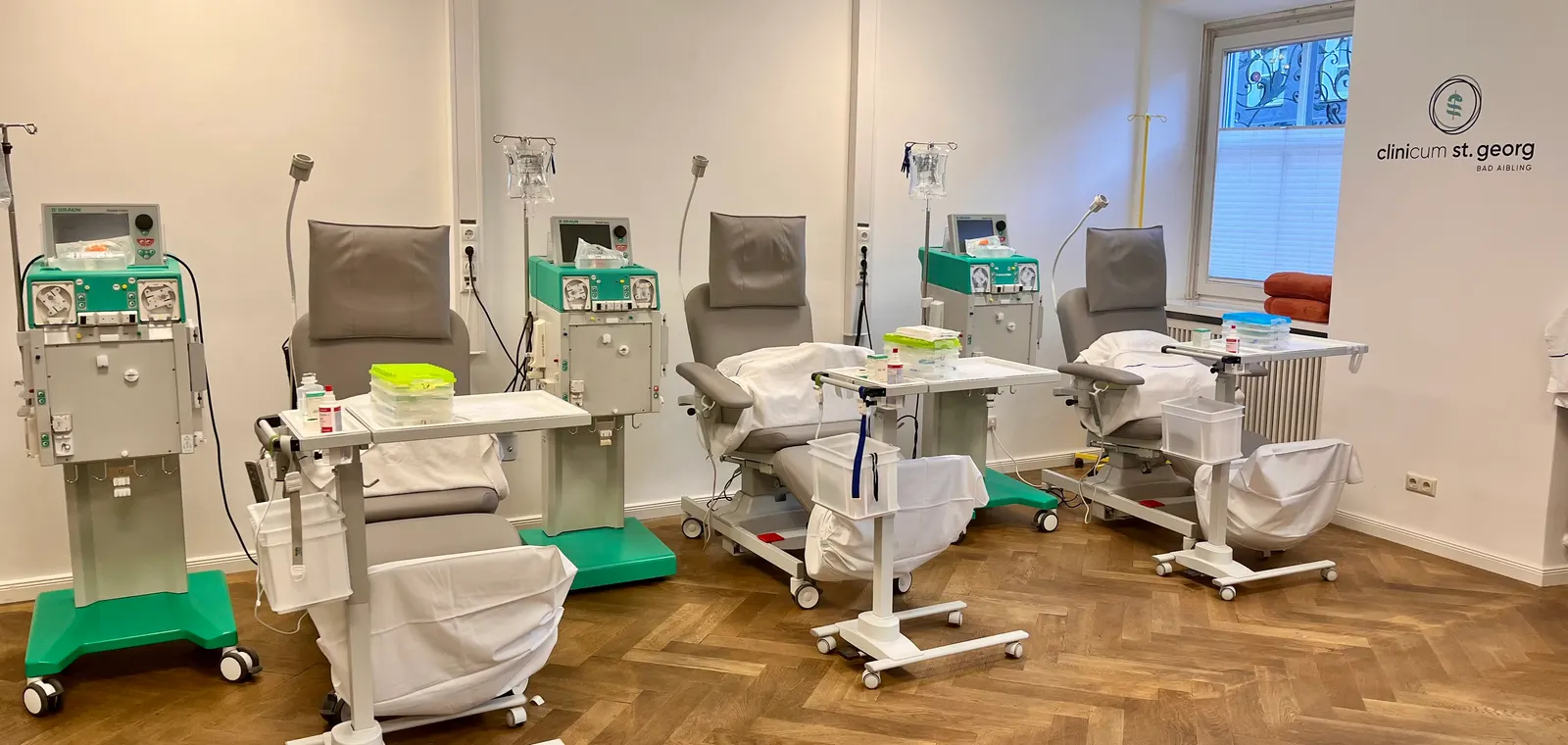
What it is
What is HELP apheresis?
HELP apheresis filters the blood to remove specific substances. It was developed in the 1980s for severe lipid disorders and is the most selective of the apheresis methods on our ward. Each session precipitates LDL cholesterol, lipoprotein(a) and fibrinogen out of the plasma, and inflammatory proteins and immune complexes go with them. Albumin and the other proteins the body needs are returned.
Because the plasma itself goes back to you, no donor plasma or albumin is needed. Therapeutic plasma exchange discards the whole plasma, and immunoadsorption removes antibodies. Your laboratory findings decide which of the three you need.
How it works
How does it work?
Blood is drawn from one arm and a filter separates the plasma from the blood cells. The plasma is mixed with heparin and a buffer that lowers its pH. At that acidity heparin binds LDL, lipoprotein(a) and fibrinogen, and the complexes fall out of solution. A second filter holds the precipitate back, an adsorber removes the excess heparin, a dialysis step restores the normal pH and volume, and the cleaned plasma returns with the blood cells through the other arm. The circuit is closed, so only a small volume of blood is outside the body at any time.
Fibrinogen and LDL fall after each session and climb back over the following days, so the sessions are repeated and the values measured before and after.
Who it is for
What conditions does it treat?
- Post-COVID syndrome and Long COVID with raised fibrinogen, lipoproteins and inflammatory proteins
- Chronic Lyme disease with a high inflammatory load or circulating immune complexes
- ME/CFS with the same plasma findings
- Severe lipid disorders: raised lipoprotein(a), familial hypercholesterolemia
- Autoimmune conditions in which immune complexes are part of the picture
- Inflammatory markers that stay high after the cause has been treated
Who it is not for
Patients with active bleeding or a bleeding disorder, unstable circulation, a known reaction to heparin, or veins that will not carry two lines. Pregnancy and severe heart failure are decided case by case on your first day.
Could this belong in your plan?
That depends on your findings. Send the International Office a short history; the initial inquiry is free of charge. The Office then requests your records for a medical review.
What a session feels like
About 2 to 3 hours. You can read, doze or talk while the machine runs.
Before
The nurse checks blood pressure, pulse and clotting values, then places one line in each arm. Those are the only needles you feel.
During
The machine cleans your plasma and returns your blood. A nurse checks on you throughout.
Afterwards
The puncture sites are bandaged and you rest briefly. Some people feel tired; others notice nothing different that day.
Your physician sets how often the session is repeated.
Evidence and safety
The evidence is strong for severe lipid disorders. For Long COVID, ME/CFS and chronic Lyme disease the studies are observational, so H.E.L.P. apheresis there is an individual treatment attempt. Side effects are mostly mild and resolve during the session.
Read the studies and the side effects
The evidence is strong for severe lipid disorders. H.E.L.P. apheresis lowered LDL cholesterol in patients with hypercholesterolemia who did not respond to medication (Lees et al., 1996) and lipoprotein(a) in patients with raised Lp(a) (Armstrong et al., 1994). The German Lipoprotein Apheresis Registry has followed patients on regular lipoprotein apheresis for more than ten years and documents the procedure's tolerability across many centers (Schettler et al., 2024). The American Society for Apheresis grades lipoprotein apheresis in its guideline (Connelly-Smith et al., 2023).
For Long COVID the evidence is emerging. Fibrin amyloid microclots and platelet changes have been described in the plasma of Long COVID patients (Pretorius et al., 2022), and the hypothesis that these microclots impair microcirculation has been set out in detail (Kell et al., 2022). Dr. Beate Jaeger, Chief Physician for internal and laboratory medicine at the hospital, described why H.E.L.P. apheresis, which removes fibrinogen and lipoproteins, may address this picture (Jaeger et al., 2022). A 2023 study of Long COVID patients found that clinical improvement after therapeutic apheresis went together with falling autoantibodies, lipids and inflammatory markers (Achleitner et al., 2023). These are observational studies without a control group; a randomized trial has not yet been published. In Long COVID, ME/CFS and chronic Lyme disease, H.E.L.P. apheresis is an individual treatment attempt, decided with the patient after medical consultation, with the markers measured before and after.
Side effects are those of apheresis in general: a drop in blood pressure, tingling from the anticoagulant, bruising at the puncture sites and, rarely, a reaction to heparin. The World Apheresis Association registry reports that most events across centers are mild and resolve during the session (Vrielink et al., 2023). On our ward a nurse stays in the room and a physician is on site for every session.
Measured before and after
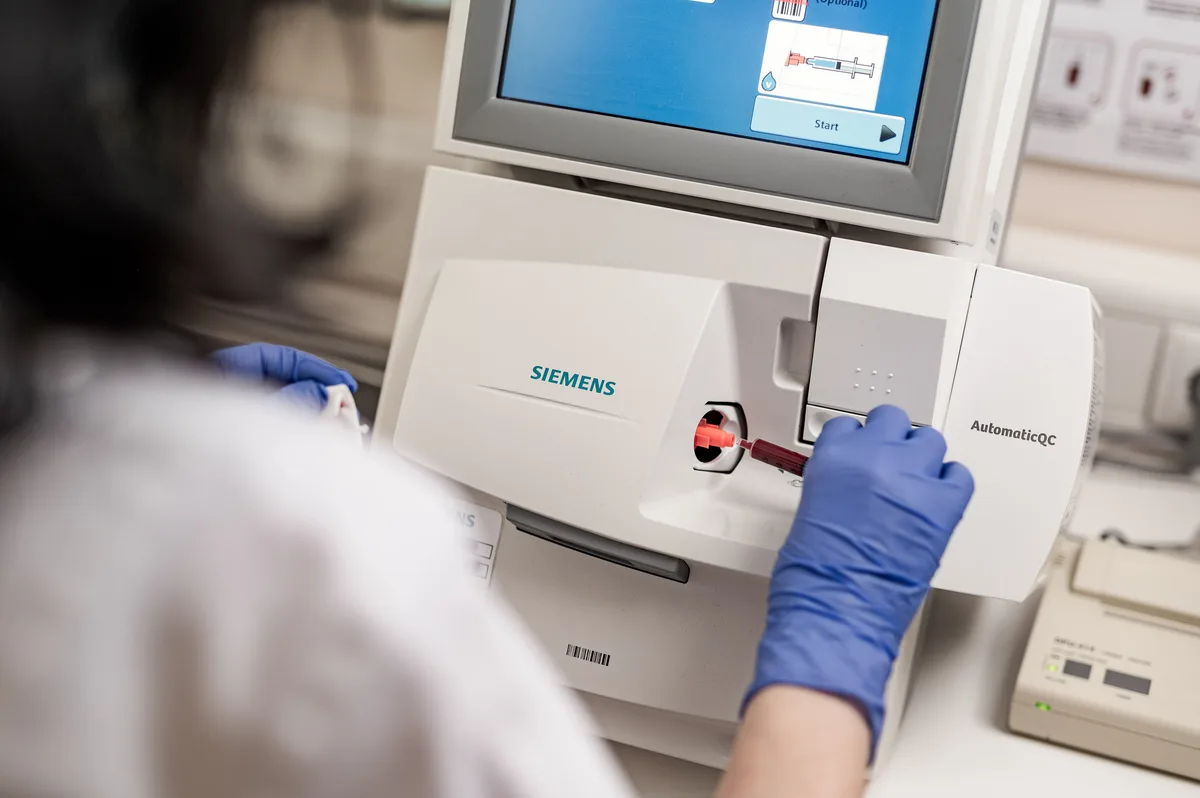
The hospital laboratory · Clinicum St. Georg 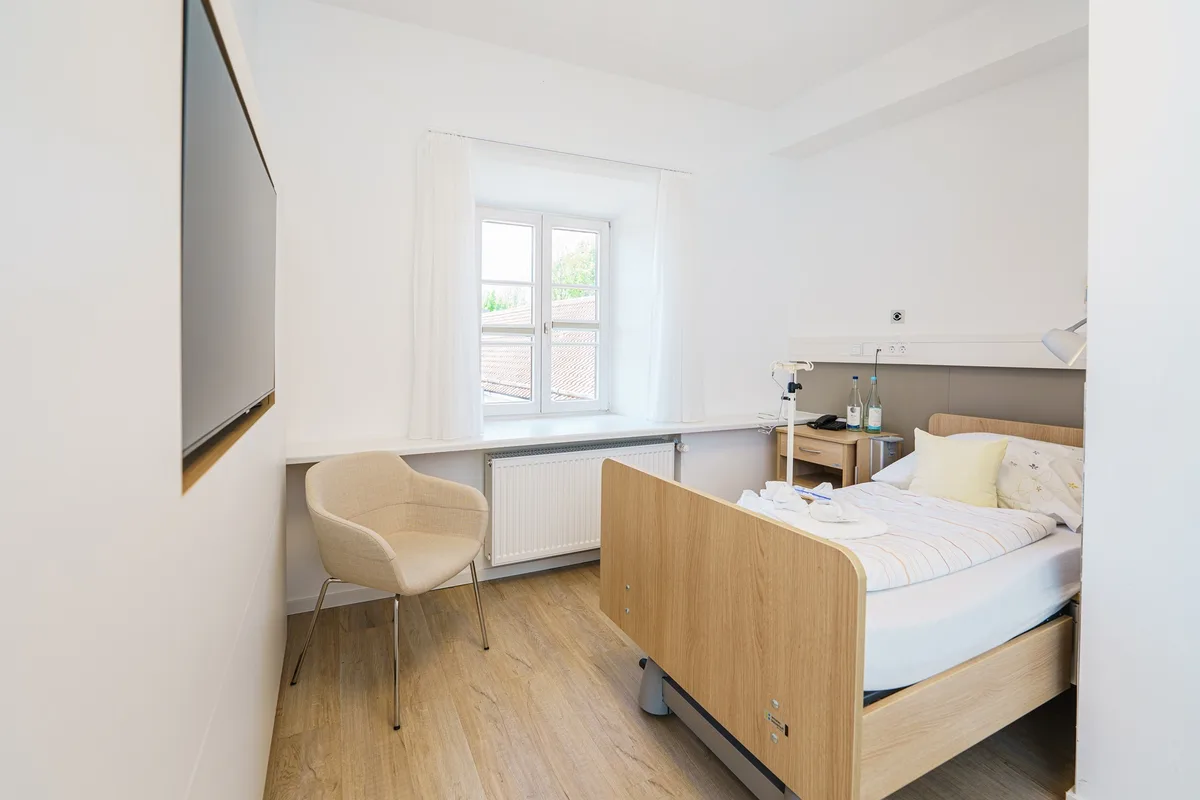
A patient room · Clinicum St. Georg
The admission work-up decides whether H.E.L.P. apheresis fits; the raised values are measured again in week two.
In the program
How it fits the program
H.E.L.P. apheresis clears what is in the plasma today, so it is combined with therapies that act on the cause. In chronic Lyme disease the sessions run alongside antimicrobial treatment and whole-body hyperthermia. In Long COVID they run alongside infusion and immune therapies and, when autoantibodies are found, immunoadsorption. When immune complexes dominate, double cascade filtration may fit better. The laboratory work-up comes first.
For international patients the sessions are part of the Long COVID and ME/CFS apheresis program, an inpatient stay of two to three weeks. Costs depend on the number of sessions: a package price plus individual add-ons, in a written, itemized cost overview. Costs and insurance
FREQUENTLY ASKED QUESTIONS
Common questions about HELP apheresis
What does HELP apheresis remove?
Heparin at a low pH precipitates LDL cholesterol, lipoprotein(a) and fibrinogen out of the plasma, and inflammatory proteins and immune complexes come out with them. Albumin and most other plasma proteins stay in solution and go back to you. The heparin is removed by an adsorber before the plasma returns, so you do not go home anticoagulated.
Does HELP apheresis hurt?
The two needles, one in each arm, are what most patients feel. The session itself is quiet: you sit in a reclining chair for 2 to 3 hours and can read, talk or sleep. A cool feeling in the arm or a short spell of lightheadedness can occur; the nurse slows the flow and it passes within minutes.
How many HELP apheresis sessions will I need?
Several. The number depends on what the work-up finds and on how the markers move after the first sessions, which is why fibrinogen, lipids and inflammatory values are measured again in week two. The written treatment proposal you receive before admission names the planned number and the spacing.
Is HELP apheresis safe?
H.E.L.P. apheresis has been in clinical use for lipid disorders since the 1980s and its side effects are known: a drop in blood pressure, tingling, bruising at the puncture sites. It is not used in patients with active bleeding, unstable circulation or a known reaction to heparin. A physician checks these points before the first session and is on site throughout.
How much does HELP apheresis cost?
The price depends on the number of sessions in your plan. After a physician has reviewed your findings you receive a written, itemized cost overview that lists each session separately, so you can see what the apheresis part of the program costs before anything is booked. How estimates and invoices are written is explained on the costs page.
Where we use it
Programs that use HELP apheresis
References
- Treatment of hypercholesterolemia with heparin-induced extracorporeal low-density lipoprotein precipitation (HELP). J Clin Apher 1996. PMID 8915817
- Heparin extracorporeal LDL precipitation (HELP): an effective apheresis procedure for lowering Lp(a) levels. Chem Phys Lipids 1994. PMID 8187229
- The German Lipoprotein Apheresis Registry: Summary of the eleventh annual report. Atherosclerosis 2024. PMID 39342791
- Prevalence of symptoms, comorbidities, fibrin amyloid microclots and platelet pathology in individuals with Long COVID/PASC. Cardiovasc Diabetol 2022. PMID 35933347
- A central role for amyloid fibrin microclots in long COVID/PASC: origins and therapeutic implications. Biochem J 2022. PMID 35195253
- The potential of heparin-induced extracorporeal LDL/fibrinogen precipitation (H.E.L.P.)-apheresis for patients with severe acute or chronic COVID-19. Front Cardiovasc Med 2022. PMID 36304538
- Clinical improvement of Long-COVID is associated with reduction in autoantibodies, lipids, and inflammation following therapeutic apheresis. Mol Psychiatry 2023. PMID 37131073
- Guidelines on the Use of Therapeutic Apheresis in Clinical Practice: The Ninth Special Issue. J Clin Apher 2023. PMID 37017433
- The world apheresis association registry, 2023 update. Transfus Apher Sci 2023. PMID 37827962
Send a free inquiry
The initial inquiry is free of charge. The International Office reviews your message and your case directly and gets back to you.
- Phone
- +49 8061 398-0
- Hours
- Mon–Thu 08:00–17:00, Fri 08:00–14:00 German time (CET/CEST); in the US Mon–Thu 2–11 a.m. ET, Fri 2–8 a.m. ET.
Munich Airport (MUC), about 60 minutes by car.