
Blood Purification
Double Cascade Filtration
A two-stage plasma filtration technique that selectively removes large-molecular-weight proteins such as autoantibodies and immune complexes while returning albumin and smaller proteins to the patient.
What Is Double Cascade Filtration?
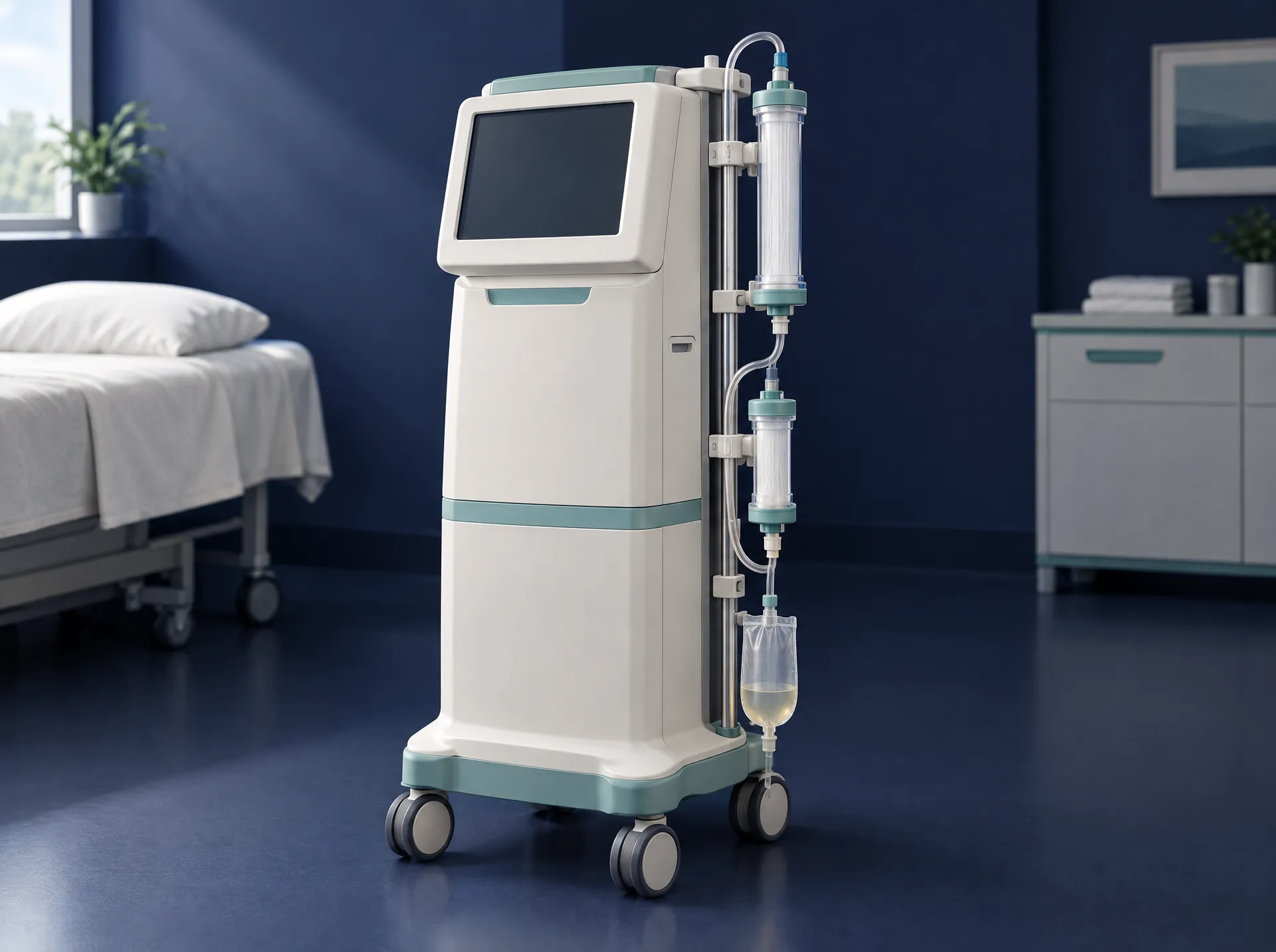
Double filtration plasmapheresis (DFPP), also called double cascade filtration, is an apheresis technique that uses two membrane filters in series. The first filter separates plasma from blood cells. The second filter, with a smaller pore size, separates the plasma into a fraction containing large molecules (immunoglobulins, immune complexes, fibrinogen) and a fraction containing smaller molecules (albumin, electrolytes).
The large-molecule fraction is discarded while the small-molecule fraction is returned to the patient along with the blood cells. This selective approach eliminates the need for replacement fluids in most cases.
How Does It Work?
Blood flows from the patient through the primary plasma separator, which uses centrifugal force or membrane filtration to isolate the plasma. This plasma then enters a secondary fractionation filter with a precisely calibrated pore size (typically designed to separate molecules above and below approximately 100-200 kDa).
Large proteins — including IgM, IgG, fibrinogen, LDL cholesterol, and immune complexes — are retained and discarded. Albumin and smaller proteins pass through and are returned to the patient. This achieves targeted removal of pathological substances with minimal loss of beneficial plasma components.
Conditions Treated
- Autoimmune neurological conditions
- Hyperviscosity syndrome (e.g., Waldenstrom's macroglobulinemia)
- Chronic Lyme disease with elevated inflammatory markers
- Familial hypercholesterolemia
- Cryoglobulinemia
- Systemic vasculitis with circulating immune complexes
Could this belong in your plan?
That depends on your findings, not on the therapy. Send what you have with a short history; a physician reads it before the video call and tells you whether this treatment belongs in your program.
What a session feels like
- Before A nurse places a venous line and checks your blood pressure and clotting values. You settle into a reclining chair; bring a book or headphones.
- During For 2–3 hours your blood runs quietly through the two filters and back to you. The machine hums; a nurse stays with you and watches your vital signs. A light tingling or a moment of lightheadedness can happen, and the flow is slowed until it passes.
- Afterwards You rest a short while before walking back to your room. Feeling tired that evening is common. Your physician tells you when the next session is planned.
Evidence & Safety
DFPP has been used in clinical practice since the 1980s, particularly in Japan and Europe. Published studies demonstrate effective removal of pathogenic macromolecules with good preservation of albumin levels. The technique has a favorable safety profile compared to standard plasma exchange because it minimizes protein loss and eliminates the need for donor plasma replacement. Complications are uncommon and typically limited to citrate-related symptoms and mild hemodynamic changes.
Request a consultation
A video consultation in English before you travel. A physician reviews your findings first; we reply by email within one business day (Mon–Fri).
Mon–Thu 08:00–17:00, Fri 08:00–14:00 (CET/CEST)+49 8061 398-0info@clinicum-stgeorg.de
St. George Hospital is a specialist hospital, not an emergency department. In a medical emergency in Germany, dial 112.