

Longevity Medicine
Longevity and preventive medicine
Longevity medicine at St. George Hospital is preventive diagnostics first: cardiovascular, metabolic, hormonal, immune and mitochondrial markers measured in one week, read by a physician, and turned into a plan you take home. Therapies are added only where a finding calls for one. The aim is healthspan, the years lived in full function.
Longevity
About the condition and its treatment
- About the conditionPreventive diagnostics
A standard check-up finds disease after it has developed.
- About the conditionHormone optimization
St. George Hospital tests the full hormone panel before anything is prescribed: thyroid, adrenal, sex hormones, IGF-1, melatonin and insulin, with free fractions …
- About the conditionDetox program
St. George Hospital runs a physician-supervised inpatient detoxification program that starts with measurement: blood and urine testing for heavy metals and …
- About the conditionGut health
A large share of the body's immune tissue sits in the gut wall, and the gut-brain axis reaches mood, sleep and cognition.
- About the conditionHealthy aging
St. George Hospital measures the biology of aging that can be tested, then treats what the findings show: senescent-cell burden, mitochondrial capacity, NAD+ …
- TherapySenolytic protocol
A senolytic protocol is a short, intermittent course of agents that selectively remove senescent cells, the damaged cells that stop dividing, resist their own death …
What is longevity medicine?
Longevity medicine is preventive medicine with better measurements. It asks where a person stands before a disease declares itself: how the blood vessels, the metabolism, the hormones, the immune system and the mitochondria are functioning now, and which of those are drifting. At St. George Hospital that question is answered with the functional medicine work-up of a 70-bed hospital, read by a physician, and followed by a plan that treats only what was measured. The aim is healthspan, the years lived in full function, rather than a longer decline.
The program draws on what the hospital has done since 1991 in complex chronic disease: measure first, combine therapies from the findings, and repeat the measurements to see whether they moved. It is led by Dr. Julian Douwes, Chief Medical Officer, who develops the treatment protocols, with Dr. Martin Rößner, Chief Physician for internal medicine, and Dr. Daniela Hudi in hormone optimization and longevity medicine.
Measure, treat, measure again
Your records
After your first message, the International Office asks for recent results, your medications and a short history. A physician reads them before the video consultation.
Preventive diagnostics
Cardiovascular, metabolic, hormonal, immune, toxicological and mitochondrial markers, measured at the hospital.
A written plan
The physician reviews every result with you and proposes therapies only for what was measured.
Repeat measurements
The same markers are measured again at the end of a program to see whether they moved.
Results you bring from home are used, not repeated.
Who the program is for, and who it is not for
The program can be considered if
- You want to know where you stand: a cardiovascular, metabolic, hormonal and immune status read by a physician, with a written plan.
- You have symptoms that standard check-ups have not explained: fatigue, weight change, sleep, mood, libido, recovery after exertion.
- You have a family history of cardiovascular disease, diabetes or dementia and want to measure your own risk markers early.
- You have had a hormone deficiency, a toxin exposure or a gut problem diagnosed and want it treated inside a plan rather than piecemeal.
- You are a man with prostate, urinary or testosterone questions; the men's health program is the sub-program for you.
It is not for you if
- You are looking for a therapy without a diagnosis. NAD+, peptides, senolytics and hormones are prescribed here only after measurement.
- You expect a promise about lifespan. The hospital measures and treats what it finds; it does not promise years.
What the week of preventive diagnostics measures
Six areas: cardiovascular risk, metabolism, hormones, immune status, toxins and mitochondrial function. A physician reviews every result with you before any therapy is proposed.
Show the tests in each area
The preventive diagnostics week covers six areas, each with the tests named on its page: cardiovascular risk (lipids and lipoprotein subfractions, inflammation markers, vascular imaging where indicated); metabolism (glucose regulation, insulin, liver and kidney function, body composition); hormones (thyroid, adrenal, sex hormones with their binding proteins); immune status and chronic infection markers; toxicological screening for heavy metals and environmental toxins; and mitochondrial function tests where fatigue or reduced exercise tolerance is the complaint. The diagnostics pages describe the laboratory and imaging in detail. Results you bring from home are used, not repeated; the physician reviews everything with you before any therapy is proposed.
Where the measurements are made
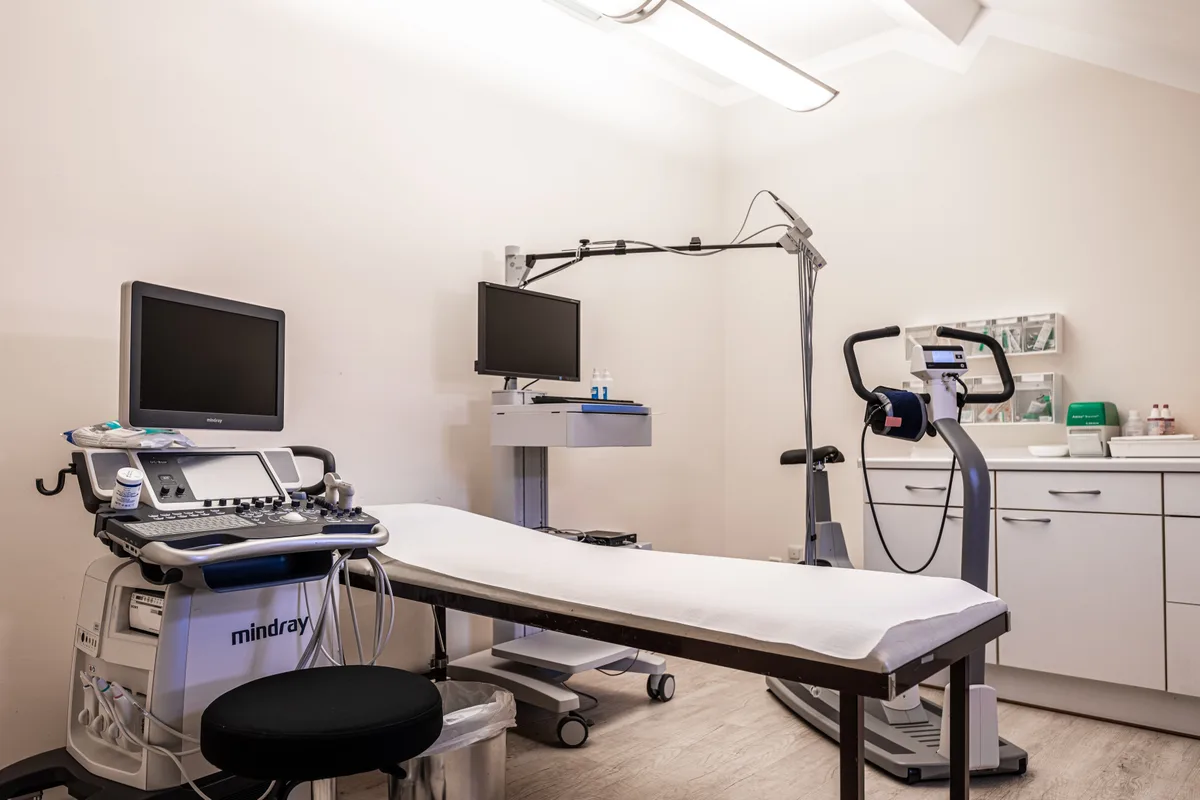
Examination room for ultrasound and ECG · Clinicum St. Georg 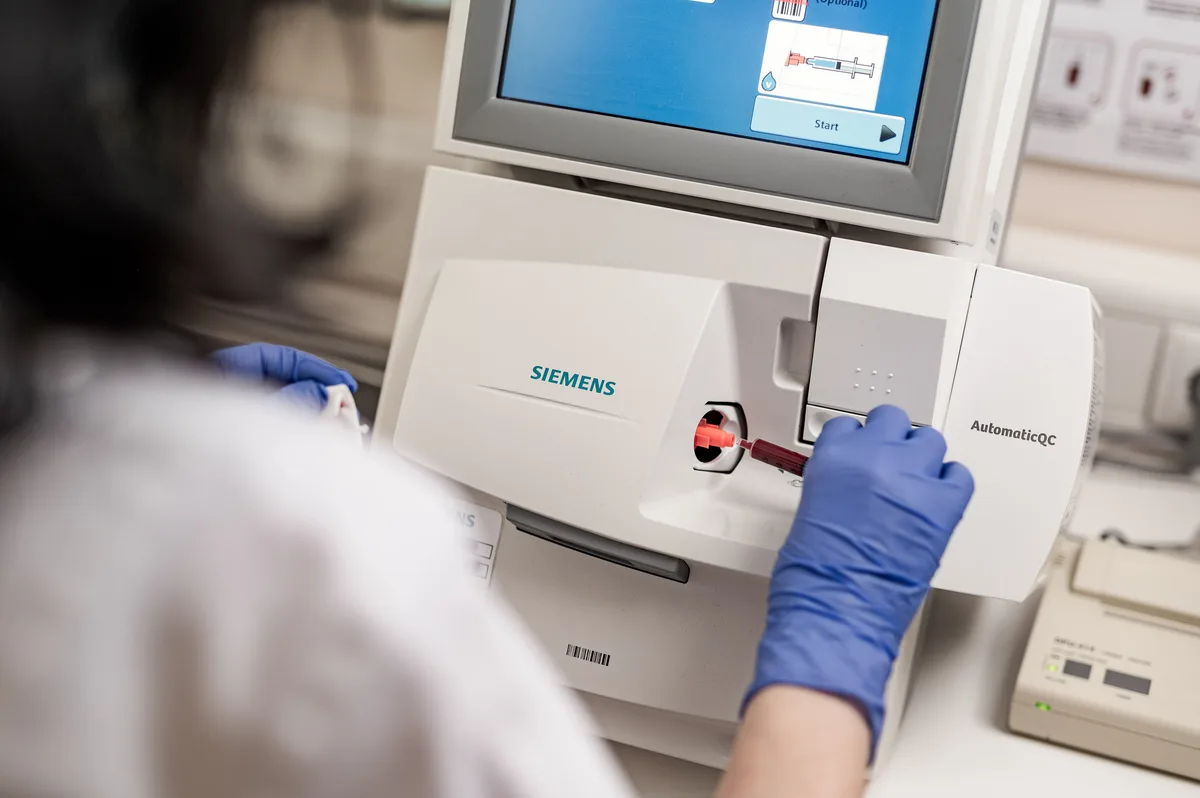
Blood diagnostics in the clinic laboratory · Clinicum St. Georg
The five program areas
- Preventive diagnosticsWhat the preventive check-up includes
The measurement week: cardiovascular, metabolic, hormonal, immune, toxicological and mitochondrial markers, read by a physician and written into a plan.
- Healthy agingHealthy aging at the hospital
Cellular senescence, mitochondria, inflammation and what can be measured and treated: the science of healthy aging & cellular rejuvenation, with the senolytic protocol and NAD+ where findings call for them.
- Hormone optimization
Measured hormone levels, then bioidentical hormone therapy for women and men within the evidence and with the risks reviewed.
- Medical detox programThe medical detox program
Heavy-metal and toxin testing first; chelation and supportive detoxification only after a burden has been measured.
- Gut health and regenerationGut health and microbiome medicine
Microbiome analysis, intestinal permeability and, where indicated, microbiome transfer.
- Men's health
Prostate health, urinary function and testosterone, under one physician, with assessment and individual support coordinated with your urologist.
Therapies
Therapies used in the longevity program
- TherapySenolytic protocol
Dasatinib plus quercetin in short courses, an individual treatment attempt where senescence markers support it.
- TherapyNAD+ IV therapy
Slow infusions where mitochondrial testing shows an energy deficit.
- TherapyIHHT oxygen training
Intermittent hypoxia-hyperoxia sessions for mitochondrial conditioning.
- TherapyPeptide therapy
Selected peptides within the limits stated on their page.
- TherapyBioidentical hormone therapy
For women and men, after measured levels and a risk review.
- TherapyDetoxification therapies
Chelation and supportive detoxification once a toxin burden has been measured.
- TherapyMicrobiome transfer
Where the gut health program calls for it.
Evidence and limits
Hormone therapy has strong evidence in defined groups. Senolytics, NAD+ and the functional model of care are emerging. No therapy here is shown to extend human lifespan, and the hospital does not claim it.
Read the evidence for each therapy
Hormone therapy: strong in defined groups. The 2022 position statement of The North American Menopause Society supports hormone therapy as the most effective treatment for vasomotor symptoms, with the most favorable benefit-risk ratio in women under 60 or within ten years of menopause onset (NAMS Advisory Panel, Menopause, 2022). In men with hypogonadism, the TRAVERSE randomized trial found testosterone replacement non-inferior to placebo for major adverse cardiac events (Lincoff et al., N Engl J Med, 2023), and the Testosterone Trials showed modest benefits for sexual function and some other outcomes in older men with low testosterone (Snyder et al., N Engl J Med, 2016). The hospital prescribes hormones only after measured levels.
Senolytics: emerging. The first human data for dasatinib plus quercetin come from small open-label pilot studies: reduced senescent-cell markers in adipose tissue and skin in diabetic kidney disease (Hickson et al., EBioMedicine, 2019) and improved physical function in idiopathic pulmonary fibrosis (Justice et al., EBioMedicine, 2019). No randomized trial with clinical aging endpoints exists yet, which is why the senolytic protocol is an individual treatment attempt here.
NAD+: emerging. Oral nicotinamide riboside raised blood NAD+ and was well tolerated in a six-week randomized crossover trial in middle-aged and older adults (Martens et al., Nat Commun, 2018); clinical endpoints for intravenous NAD+ are not established.
The model of care: emerging. A retrospective cohort at an academic center found that patients in a functional medicine model of care reported larger improvements in physical health than matched primary care patients over 12 months (Beidelschies et al., JAMA Netw Open, 2019); it is an association, not a randomized result.
What the evidence does not show. No therapy on this page is shown to extend lifespan in humans, and the hospital does not claim it. What can be shown is a measured marker that moved; that is what the repeat testing at the end of a program documents.
Common questions about the longevity program
What does the longevity program include?
Five areas: preventive diagnostics, hormone optimization, a medical detox program, gut health and regeneration, and a men's health program. The week of diagnostics covers cardiovascular, metabolic, hormonal, immune, toxicological and mitochondrial markers. Therapies such as the senolytic protocol, NAD+ infusions, IHHT or bioidentical hormones are added only where a finding calls for one.
Is the program inpatient, and how long does it take?
The diagnostic week can run as an inpatient or outpatient program at the hospital in Bad Aibling. Any therapy program that follows is planned individually from the findings. The first step is a short inquiry, free of charge; the International Office then requests your records and arranges a video call before you travel, and you receive the proposed program and the itemized cost overview in writing afterwards.
Which therapies are used in the longevity program?
Depending on the findings: the senolytic protocol, IHHT (intermittent hypoxia-hyperoxia training), NAD+ IV therapy, peptide therapy, bioidentical hormone therapy, chelation within the detox program and microbiome restoration. Each has its own page with the evidence graded; a therapy is included only when a measured finding supports it.
Is hormone therapy safe for men and women?
Menopausal hormone therapy has strong evidence for vasomotor symptoms in women under 60 or within ten years of menopause, with risks that depend on age, timing and type. Testosterone therapy in men with confirmed hypogonadism did not increase major cardiac events in a large randomized safety trial. Both are prescribed here only after measured levels and a review of the individual risks.
Which physicians lead the longevity program?
Dr. Julian Douwes, Chief Medical Officer, develops the treatment protocols, with Dr. Martin Rößner, Chief Physician for internal medicine, and Dr. Daniela Hudi in hormone optimization and longevity medicine.
What does the program cost?
Costs are individual: a package price plus individual add-ons. After a physician has reviewed your findings, you receive a written, itemized cost overview: a package price plus individual add-ons. Treatment is self-pay; the itemized invoice can be submitted to a US insurer for out-of-network review. We cannot promise reimbursement.
Start with a short message
The International Office handles your inquiry, records, travel and follow-up questions.
Step 1: Initial inquiry
A short message by online form, email or phone. The initial inquiry is free of charge.
Free of charge
Step 2: Reply from the International Office
The International Office reviews your message and your case directly and gets back to you.
Step 3: Secure transfer of records
After the first contact, the International Office requests your medical records and tells you how to send them securely.
Step 4: Medical review and video call
Your records are reviewed medically. A video call with a medically trained member of the International Office is free of charge; a video consultation with a physician is usually charged, and the International Office explains the fee before booking.
Video call with the International Office: free of charge
Step 5: Treatment proposal and cost overview
You receive an individual treatment proposal and an itemized cost overview in writing.
Step 6: Travel, stay and aftercare
The International Office helps you plan travel and your stay. You go home with detailed written plans for your doctor; follow-up questions go to the International Office.
Recent laboratory results, a medication list and a short history are enough for the first review. A physician reads them before the video consultation and proposes the diagnostic week, or tells you which results from home already answer the question. Information for international patients, costs and insurance.
Therapeutic plasma exchange within an individual plan
Therapeutic plasma exchange (TPE) is available for assessment across our condition programs, including longevity. Your physician checks the specific indication, risks and alternatives. Availability does not establish a benefit for every condition or a preventive anti-aging benefit.
Costs, in plain terms
- Self-pay: package price plus individual add-ons; no prices online.
- An itemized cost overview in writing before you travel; airport transfers are charged extra.
- No reimbursement promise; US patients can be put in touch with an independent US reimbursement office.
- Deposit before admission; the payment process is explained with your cost overview.
References
- Senolytics decrease senescent cells in humans: preliminary report from a clinical trial of dasatinib plus quercetin in individuals with diabetic kidney disease. EBioMedicine 2019. PMID 31542391
- Senolytics in idiopathic pulmonary fibrosis: results from a first-in-human, open-label, pilot study. EBioMedicine 2019. PMID 30616998
- Chronic nicotinamide riboside supplementation is well-tolerated and elevates NAD+ in healthy middle-aged and older adults. Nature Communications 2018. PMID 29599478
- The 2022 hormone therapy position statement of The North American Menopause Society. Menopause 2022. PMID 35797481
- Cardiovascular safety of testosterone-replacement therapy. New England Journal of Medicine 2023. PMID 37326322
- Effects of testosterone treatment in older men. New England Journal of Medicine 2016. PMID 26886521
- Association of the functional medicine model of care with patient-reported health-related quality-of-life outcomes. JAMA Network Open 2019. PMID 31651966
From the journal
Reading on Longevity, hormones and men's health
- Longevity · · 8 min read
Longevity medicine: The science of extending your healthspan
Is longevity medicine anything more than expensive check-ups? What healthspan means, which markers of aging can be measured, and which interventions have evidence.
- Senolytics · · 8 min read
Senolytic therapy: Clearing senescent cells to slow aging
What are “zombie cells,” and can you really clear them? How senescent cells drive inflammation and aging, what senolytic therapy does, and where the evidence stands.
- NAD+ · · 8 min read
NAD+ and aging: How this critical molecule declines and what you can do about it
Why do NAD+ levels fall with age, and can you restore them? What NAD+ does in your cells, what the decline causes, and how oral and IV supplementation compare.
Send a free inquiry
The initial inquiry is free of charge. The International Office reviews your message and your case directly and gets back to you.
- Phone
- +49 8061 398-0
- Hours
- Mon–Thu 08:00–17:00, Fri 08:00–14:00 German time (CET/CEST); in the US Mon–Thu 2–11 a.m. ET, Fri 2–8 a.m. ET.
Munich Airport (MUC), about 60 minutes by car.