
Progesterone is often called a “female hormone”, yet men produce progesterone too, in the testes and adrenal glands. Progesterone in men plays a part in hormone balance, prostate health, brain protection and sleep.
At St. George Hospital in Bad Aibling, Germany, we measure progesterone in men as part of our hormone diagnostics. A blood or saliva test shows your level, which we compare with the normal and optimal ranges.
What does progesterone do?
Progesterone is a precursor of other hormones and also acts directly in many tissues:
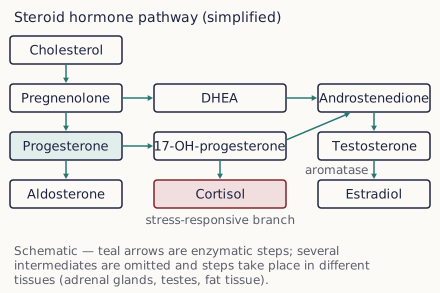
- Hormone precursor: Progesterone is a building block for cortisol, aldosterone (mineralocorticoid), and testosterone. Low progesterone directly impacts testosterone production.
- Estrogen balance: Progesterone counterbalances the effects of estrogen in both men and women, preventing “estrogen dominance.”
- Neuroprotection: The brain is rich in progesterone receptors and even manufactures progesterone locally. It promotes nerve repair, calms neural excitation, and supports cognitive function.
- Sleep and mood: Progesterone metabolites (especially allopregnanolone) modulate GABA-A receptors, the same receptors benzodiazepines act on, which promotes restorative sleep and reduces anxiety.
- Bone health: Progesterone stimulates osteoblast activity, supporting bone density in both sexes.
- Fat metabolism: Progesterone influences lipid metabolism and helps regulate body composition.
- Thyroid support: Progesterone assists thyroid hormone production and function.
Normal progesterone levels in men
A deficiency is judged against these normal and optimal ranges:
| Test Type | Normal Range | Optimal Range | Deficient |
|---|---|---|---|
| Serum (blood) | 0.3–1.2 ng/mL | 0.7–1.2 ng/mL | < 0.3 ng/mL |
| Saliva | 12–100 pg/mL | 50–100 pg/mL | < 12 pg/mL |
Key point: Progesterone has to be read together with testosterone, estradiol and SHBG. A level at the low end of “normal” can still mean a functional deficiency if estrogen is high.
Whether progesterone falls with age in men is less settled than often claimed. In a prospective cohort of 1,026 men with and without cardiovascular disease, serum progesterone showed no age-dependent change, and outside the luteal phase men’s and women’s progesterone levels are not greatly different (Oettel and Mukhopadhyay, The Aging Male, 2004). A low value in an individual man therefore needs an explanation; age alone does not account for it.
Do men have progesterone?
Yes. Men produce progesterone in the Leydig cells of the testes and in the adrenal cortex, where it is an intermediate on the way to testosterone and cortisol. Measured in serum, the amounts are in the same range as in women outside the luteal phase of the cycle (Oettel and Mukhopadhyay, 2004). In a male body it influences sperm maturation and capacitation, testosterone synthesis in the Leydig cells, and, through its 5α-reduced metabolites, the central nervous system.
What does progesterone do in men?
Three things are reasonably established. It is a precursor: without progesterone there is no cortisol, aldosterone or testosterone, so a very low value is a reason to look at the whole steroid pathway. It acts on the brain through neurosteroid metabolites: allopregnanolone and pregnanolone bind the GABA-A receptor, which is why an evening dose changes sleep. In a double-blind placebo-controlled crossover study in nine healthy men, oral progesterone at 9:30 PM increased the amount of non-REM sleep while reducing slow-wave spectral power, with plasma allopregnanolone rising in parallel (Friess et al., American Journal of Physiology, 1997); a single 300 mg evening dose produced no measurable hangover on attention the next morning in a comparable crossover design (Grön et al., Neuropsychobiology, 1997). And it modulates estrogen signaling in tissues that carry progesterone receptors. Effects on the prostate and on bone are plausible from receptor biology but have not been tested in controlled trials in men.
Why men need progesterone
Besides serving as a precursor, progesterone acts directly in several systems that matter for men’s health:
Testosterone production
The body converts progesterone into testosterone through a series of enzymatic steps. When progesterone is low, less raw material is available for testosterone, which is why progesterone and testosterone deficiency often occur together.
Prostate
Progesterone has been proposed to inhibit 5-alpha reductase, the enzyme that converts testosterone to dihydrotestosterone (DHT), the androgen that drives prostate growth in benign prostatic hyperplasia, and to counter estrogen’s stimulating effect on prostate tissue. The evidence for this comes from receptor and laboratory work; there is no controlled trial showing that progesterone replacement changes prostate outcomes in men, and we do not present it as prostate treatment.
Brain and nervous system
The brain carries progesterone receptors in both sexes and makes progesterone locally; in experimental models it supports myelination and dampens neuroinflammation. The clinical test of that idea was traumatic brain injury, and it failed: two phase 3 trials, ProTECT III (882 patients, stopped for futility) and SYNAPSE (1,195 patients with severe TBI), found no benefit of progesterone over placebo on neurological outcome at six months (Wright et al., New England Journal of Medicine, 2014; Skolnick et al., New England Journal of Medicine, 2014). Progesterone is therefore not a treatment for brain injury, and claims that it is should be read with that result in mind.
Sleep quality
Progesterone metabolites, particularly allopregnanolone, modulate GABA-A receptors, the same receptors targeted by benzodiazepines. In healthy men an evening dose increases non-REM sleep (Friess et al., 1997). Whether that translates into better sleep for men with low progesterone has not been tested in a trial; in practice we use it only where the panel shows a deficit and sleep is part of the complaint.
Mood and anxiety
The calming neurosteroid effects of progesterone metabolites reduce anxiety, irritability, and emotional reactivity. Low progesterone in men is frequently associated with increased anxiety and depressive symptoms.
Signs of low progesterone in men
Symptoms of low progesterone overlap with testosterone deficiency and ordinary aging, so they are often missed. Watch for:
- Persistent fatigue and low energy
- Decreased libido and sexual drive
- Erectile dysfunction or weaker erections
- Increased abdominal fat (“visceral belly fat”)
- Insomnia or poor sleep quality
- Anxiety, nervousness, or irritability
- Brain fog and difficulty concentrating
- Breast tissue growth (gynecomastia)
- Prostate enlargement symptoms (frequent urination, weak stream)
- Hair thinning or hair loss
- Bone density loss
- Muscle loss despite exercise
Estrogen dominance in men
When progesterone drops while estrogen remains stable or rises, men develop “estrogen dominance”, a condition first described by Dr. John R. Lee. The imbalance drives many of the symptoms above and feeds itself: excess estrogen promotes fat storage, fat cells make more estrogen via aromatase, and the imbalance grows.
In men, estrogen dominance is driven by:
- Aromatase activity: The enzyme aromatase converts testosterone to estrogen, particularly in fat tissue. More body fat means more conversion.
- Declining progesterone: As testicular and adrenal production drops with age, estrogen goes unchecked.
- Environmental estrogens: Plasticizers (BPA, phthalates), hormones in meat and dairy, pesticides, and other endocrine disruptors mimic estrogen.
- Alcohol: Regular alcohol consumption increases aromatase activity.
- Obesity: Fat cells produce estrogen and aromatase, creating a vicious cycle of weight gain and estrogen excess.
Early signs include changes in body odor, breast tenderness, increasing body fat despite normal diet, and reduced muscle development. If you notice these changes, have a full hormone panel tested, including more than testosterone.
We go into this further in our articles on the testosterone-estrogen balance in men and hormone replacement therapy for men.
Progesterone supplements for men
Treatment uses bioidentical progesterone, molecularly identical to the body’s own. Synthetic progestins (Provera, Clinovir, Megestat) are different substances with more adverse effects.
Oral bioidentical progesterone
Best for sleep, anxiety, and brain-protective effects. Liver metabolism converts oral progesterone into active neurosteroid metabolites. Typical doses: 25–200 mg at bedtime.
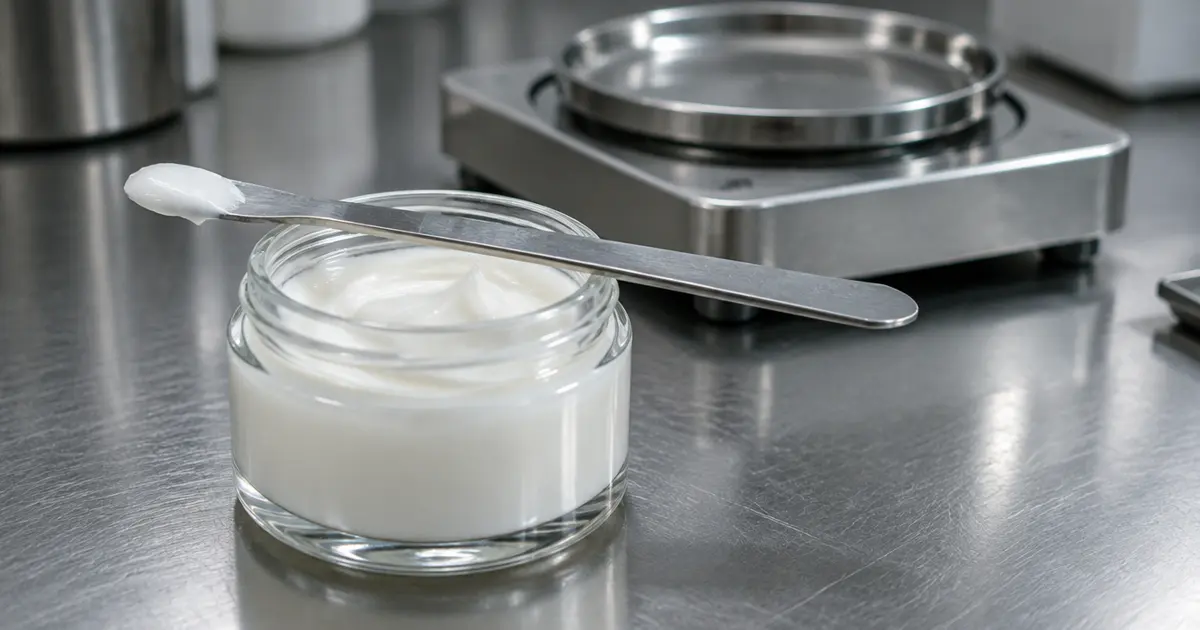
Transdermal progesterone cream
Applied to thin-skinned areas. Lower doses needed (10–20 mg/day). Preferred for prostate protection and erectile function support. Avoids liver first-pass metabolism.
Sublingual or buccal progesterone
Rapid absorption through the oral mucosa. Useful when oral tolerance is limited.
Important distinction
Bioidentical progesterone and synthetic progestins are not interchangeable. At St. George Hospital, we prescribe only bioidentical progesterone unless a specific clinical condition requires otherwise.
Progesterone in women: How it differs
In women, progesterone is equally essential, and deficiency is common, particularly during perimenopause and menopause. The same hormone does different work in the female body:
| Role | What progesterone does in women |
|---|---|
| Menstrual regulation | Progesterone governs the second half of the menstrual cycle. Deficiency is associated with irregular periods, heavy bleeding, and PMS. |
| Fertility | Adequate progesterone is critical for implantation and maintaining early pregnancy. |
| Endometrial protection | Progesterone counterbalances estrogen’s proliferative effect on the uterine lining. |
| Bone density | Progesterone stimulates osteoblast (bone-building) cells, working together with estrogen for bone health. |
| Mood and sleep | The same GABA-modulating effects apply to women, particularly during perimenopause when progesterone drops sharply. |
Women are assessed with the same hormone panels described below, interpreted against cycle phase and menopausal status. Bioidentical progesterone is used for women as well; synthetic progestins are avoided unless a specific clinical situation requires them.
There is a separate article on a bioidentical hormone therapy guide.
How St. George Hospital approaches progesterone in men
Progesterone is tested in men as part of the full hormone panel and, where low, replaced with bioidentical progesterone at a low dose with follow-up testing. The testing and treatment run inside our longevity and preventive medicine program; what a stay at St. George Hospital costs is listed on the costs page.
Our men’s health and longevity medicine programs include:
- Serum and saliva progesterone testing
- Full hormone panel: testosterone (free/total), estradiol, DHEA-S, cortisol, thyroid, SHBG
- DUTCH dried urine test for complete metabolite analysis
- Bioidentical hormone replacement dosed for you
- Serial monitoring and protocol adjustment
- Lifestyle optimization: nutrition, stress, environmental toxin reduction
Under the direction of Dr. Julian Douwes and Dr. Daniela Hudi, the aim is to balance the whole hormone panel; a single hormone is not replaced in isolation.
Can a man take progesterone? Side effects and limits
A man can take bioidentical progesterone when a physician has documented a low value and a reason for it. The side effects seen with the doses used in men are drowsiness and dizziness after an oral evening dose, a dampened mood in some, breast tenderness, and fluid retention; at higher oral doses the sedation can be marked, which is why oral progesterone is taken at bedtime. Progesterone suppresses gonadotropins at high doses and can lower sperm production, so it is not used in men who are trying to conceive. It is not a substitute for testosterone, and it is not a treatment for prostate disease or brain injury. Men with liver disease, a history of thromboembolism or hormone-sensitive tumors are assessed individually before any prescription.
What this means for you
- A single low progesterone value is not a diagnosis. Have it measured with testosterone, estradiol, SHBG, DHEA-S and cortisol, and have the pattern read by a physician.
- If sleep and anxiety are the main complaints, a low evening dose of oral progesterone is the form that reaches the brain; cream is the form for lower, steadier levels.
- Expect a re-test after about three months and a dose change based on the numbers, not on how the first weeks felt.
- Body fat, alcohol and endocrine disruptors drive the estrogen side of the balance; reducing them is part of the treatment.
Frequently asked questions
What is a normal progesterone level for a man?
Serum values of roughly 0.3–1.2 ng/mL are reported as normal by most laboratories. The number is read together with testosterone, estradiol and SHBG, because the same value can be adequate in one man and functionally low in another with high estrogen.
Does progesterone decline with age in men?
Not clearly. A prospective cohort of 1,026 men found no age-dependent change in serum progesterone (Oettel and Mukhopadhyay, 2004). Testosterone and DHEA do fall with age, which is why a low progesterone value deserves its own explanation.
What are the side effects of progesterone in men?
Drowsiness after an oral evening dose, dizziness, mood dampening, breast tenderness and fluid retention. Sedation is dose-dependent; the attention test on the morning after a 300 mg evening dose was unremarkable in healthy men (Grön et al., 1997), but individual bioavailability varied widely in the same study.
Can progesterone help men with sleep problems?
In healthy men an evening dose increases non-REM sleep (Friess et al., 1997). For men with low progesterone and insomnia there is no trial; we use it in that situation only when the panel supports it and review the effect at follow-up.
Contact us
Questions about hormone testing or treatment go to the International Office; the initial inquiry is free of charge.
Phone: +49 8061 398-0
Email: info@clinicum-stgeorg.de
Address: Rosenheimer Str. 6-8, 83043 Bad Aibling, Germany
This article is for educational purposes. Hormone therapy should be prescribed and monitored by a qualified physician based on individual assessment.
References
- Oettel and Mukhopadhyay, The Aging Male, 2004. PMID 15669543
- Friess et al., American Journal of Physiology, 1997. PMID 9176190
- Grön et al., Neuropsychobiology, 1997. PMID 9170120
- Wright et al., New England Journal of Medicine, 2014. PMID 25493974
- Skolnick et al., New England Journal of Medicine, 2014. PMID 25493978