
An infusion room with pale reclining chairs beside a wooden cabinet and a bright window

Integrative Cancer Treatment

Oncology therapies

Explore oncology therapies at St. George Hospital and specialist treatment at collaborating centers. From hyperthermia and immune therapies to infusion options and cognitive rehabilitation, each part is assessed individually and coordinated with your treating oncologist.

Oncology therapies

Treatments in this group

  • TherapyIPT chemotherapy

    Insulin-potentiated therapy (IPT) is low-dose chemotherapy combined with insulin: a controlled dose of insulin is given first, a fraction of the standard …

  • TherapyPhotodynamic therapy

    Photodynamic therapy (PDT) combines a light-sensitive agent with light of one defined wavelength: the agent collects in the target tissue, the light activates it, …

  • TherapySurgery, radiation & CyberKnife

    Surgery, radiotherapy and CyberKnife are arranged at a collaborating treatment center.

  • TherapyChemo brain & neuromodulation

    For difficulties with memory, concentration or mental speed during or after cancer treatment, our oncology and neurorehabilitation teams assess the causes and …

  • Treatment program for international patientsIntegrative oncology program

    St. George Hospital in Bad Aibling, Germany, has practiced integrative oncology since 1991.

What it is

What is integrative oncology therapy?

Integrative oncology therapy is the set of treatments a hospital adds to surgery, chemotherapy and radiotherapy with the aim of improving local tumor control, tolerance of standard treatment and the patient's condition during it. At St. George Hospital that set is hyperthermia, low-dose chemotherapy with insulin, photodynamic therapy, immune therapy, infusions and supportive care, chosen per patient from the findings and coordinated with the oncologist at home. The oncology program describes the conditions we treat; this page describes the therapies and the evidence behind each.

Dr. Julian Douwes leads infectiology, neurorehabilitation and complementary oncology and develops the treatment protocols. Dr. Martin Rößner, Chief Physician, is responsible for day-to-day clinical care and sees patients. Dr. Gabriele Zabel is part of the inpatient care team. Dr. Frederik Götte contributes to the tumor board; his direct patient care, like Dr. Peter Holzhauer’s, is for German patients.

Evidence is graded on this page in four words: strong, moderate, emerging and limited. A therapy graded limited or emerging is an individual treatment attempt decided with the patient after medical consultation, and the physician says so before you consent.

Heat

Hyperthermia: the therapies with the strongest evidence

Local-regional hyperthermia

Radiofrequency applicators heat the tumor region to 40–44 °C / 104.0–111.2 °F for about 60 minutes, two to three times a week, alongside chemotherapy or radiotherapy. Evidence: strong for defined indications. A randomized phase 3 trial in 341 patients with high-risk soft-tissue sarcoma found better local progression-free survival when regional hyperthermia was added to chemotherapy (Issels et al., Lancet Oncol, 2010), and the long-term analysis found longer survival as well (Issels et al., JAMA Oncol, 2018). In recurrent breast cancer, a meta-analysis of 34 studies found complete responses more often with hyperthermia added to radiotherapy than with radiotherapy alone (Datta et al., Int J Radiat Oncol Biol Phys, 2016).

What local-regional hyperthermia involves
Whole-body hyperthermia

The core body temperature is raised under continuous monitoring in a session of four to six hours, with a physician and nurse present. The hospital has run more than 30,000 whole-body sessions and uses it in oncology alongside chemotherapy or immunotherapy. Evidence: emerging in oncology, from cohort and early-phase data rather than randomized trials; what the evidence does not show is a survival benefit in a controlled trial, and the hospital does not claim one.

What a whole-body hyperthermia session involves

Where heat treatment happens

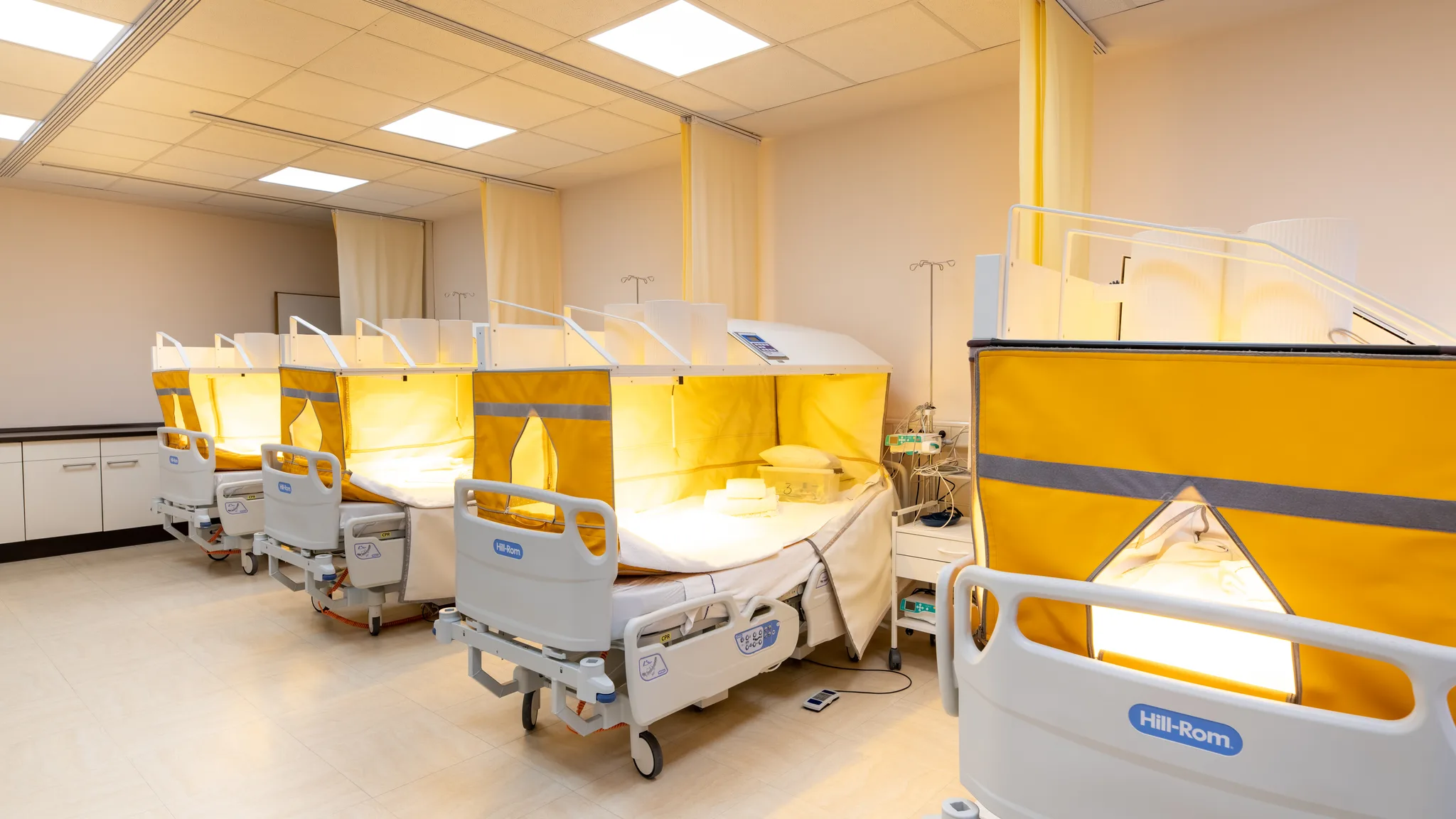
  • Four hospital beds in the whole-body hyperthermia room, each under a yellow infrared canopy lit from within
    The whole-body hyperthermia room · Clinicum St. Georg
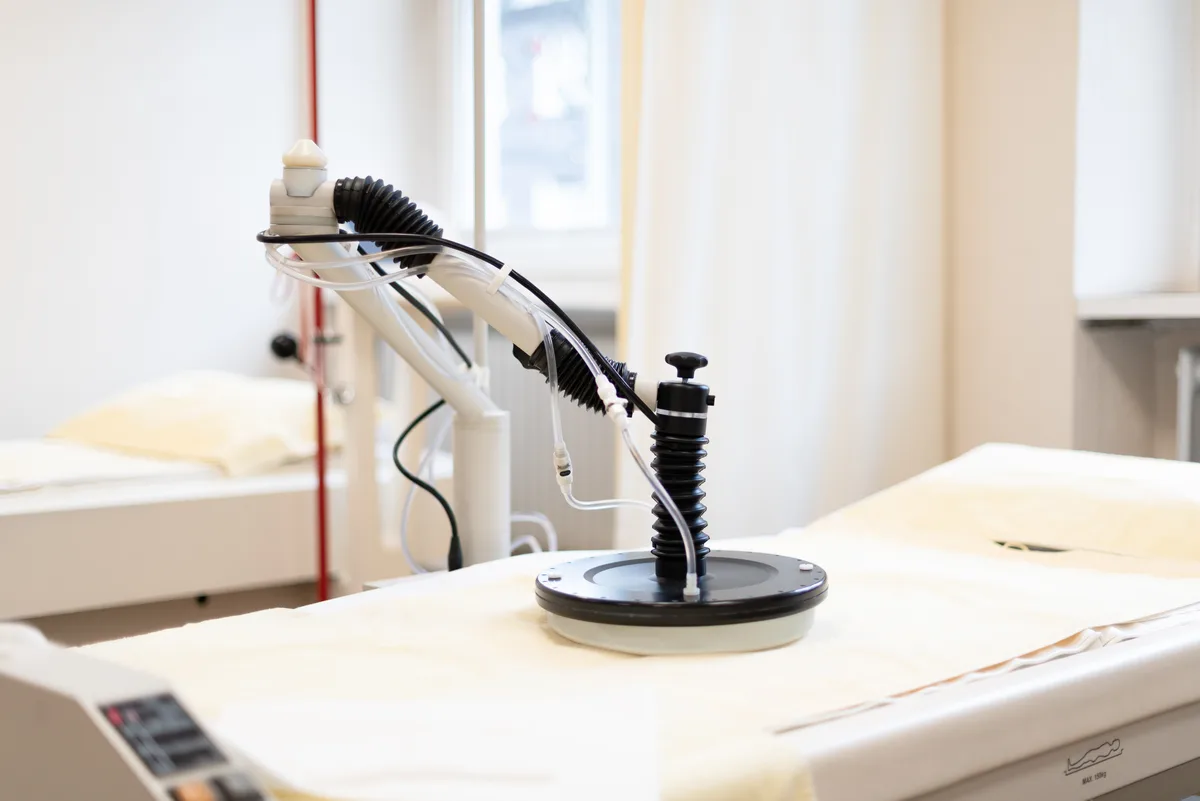
  • Local hyperthermia applicator positioned over a treatment couch
    Local hyperthermia applicator · Clinicum St. Georg

Surgery, radiation and CyberKnife at a collaborating center

When indicated, surgery, radiation therapy and CyberKnife treatment are provided at a collaborating center. Its specialist team assesses suitability and delivers the procedure; our team coordinates the hospital program, recovery and follow-up with them.

CyberKnife

Robotic stereotactic radiation for selected indications, assessed by the collaborating radiation center.

About CyberKnife

The location, appointments and cost arrangements are clarified before travel.

Tumor-directed

Systemic and local tumor treatments

IPT low-dose chemotherapy

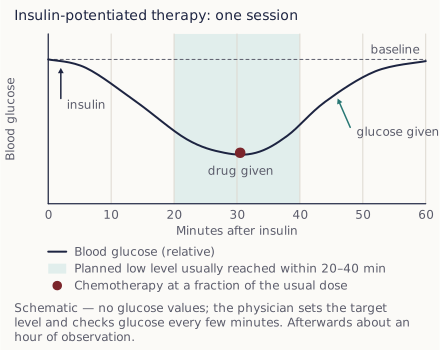
Insulin first, then a fraction of the standard chemotherapy dose in the window of low blood sugar, then glucose; about two to three hours with a physician and nurse at the chair. Used alongside or after guideline chemotherapy after consultation with your oncologist. Evidence: limited; one randomized trial of 30 women with resistant metastatic breast cancer found more stable disease with insulin added to methotrexate (Lasalvia-Prisco et al., Cancer Chemother Pharmacol, 2004), and no trial has compared IPT with full-dose chemotherapy.

How IPT low-dose chemotherapy works

Photodynamic therapy (PDT)

A light-sensitive agent, then light of one wavelength for 15 to 45 minutes on a lesion the light can reach. Evidence: strong in approved skin indications and moderate in some early-stage tumors, where PDT is an approved, minimally invasive procedure with selective activity against malignant cells (Agostinis et al., CA Cancer J Clin, 2011); limited with systemic agents in other tumors.

What photodynamic therapy involves
Line chart of relative blood glucose during one insulin-potentiated therapy session, with the low-dose chemotherapy given in the low-glucose window
Insulin-potentiated therapy: one session. Schematic, not to scale.

Additional options within your individual plan

Heavy-metal assessment

Exposure history and appropriate testing guide whether treatment is indicated. Heavy-metal detoxification is not an established cancer treatment.

Assessment and treatment options

Chemo brain and rehabilitation

Assessment of cognitive symptoms and an individual rehabilitation plan. Neuromodulation for chemo brain remains investigational.

Cognitive rehabilitation options

Therapeutic plasma exchange is also available for assessment across our condition programs. A cancer diagnosis alone is not an indication for plasma exchange; suitability depends on the specific clinical problem.

Immune and infusion

Immune therapy, infusions and supportive care

Immune therapy

Mistletoe (Viscum album) injections, thymus peptides and, for selected patients, dendritic cell therapy, chosen from your immune profile. Evidence: moderate for mistletoe and quality of life; a meta-analysis of nine randomized trials in breast cancer found a medium-sized improvement in quality of life (Loef et al., Integr Cancer Ther, 2023), and one randomized trial in pancreatic cancer with no further tumor treatment found longer survival with mistletoe than with supportive care alone (Tröger et al., Eur J Cancer, 2013). For dendritic cell therapy the evidence is emerging: the approved cellular immunotherapy sipuleucel-T prolonged survival in metastatic castration-resistant prostate cancer (Kantoff et al., N Engl J Med, 2010), but that product is not the therapy given here, and our dendritic cell therapy has no trial of that kind.

What immune therapy involves

Vitamin and nutrient infusions

High-dose vitamin C and other infusions to support nutrition and tolerance of treatment. Evidence: limited for an anti-tumor effect; a randomized phase 3 trial in 442 patients with metastatic colorectal cancer found no longer progression-free survival when high-dose vitamin C was added to chemotherapy (Wang et al., Clin Cancer Res, 2022). The hospital uses these infusions as supportive measures and says so.

What the vitamin infusions involve

Supportive care

Nutritional medicine, pain management, physiotherapy, psycho-oncological support and relaxation therapies run alongside every program. Evidence: supportive care of this kind is standard oncology practice, and its purpose here is tolerance of treatment and function during the stay, not tumor control.

What supportive care includes
In combination

How the therapies are combined

None of these therapies is used alone. The plan is written after the assessment in the first days of the stay, and a physician sees you every day.

From assessment to report

  1. Assessment

    first days

    Immune status, tumor markers, nutritional status, organ function and the records of your previous treatment.

  2. Plan

    A local measure where a tumor is accessible, a heat component, a systemic component coordinated with your oncologist, and immune and supportive measures.

  3. Timing

    Hyperthermia around chemotherapy days so heat and drug act together; PDT spaced so treated tissue can clear; blood counts before every IPT session.

  4. Report

    A written report for your oncologist at home. Follow-up questions go to the International Office.

Integrative oncology program in Germany

Costs

Treatment at St. George Hospital is self-pay. Costs are individual: a package price plus individual add-ons. After a physician has read your findings, you receive a written, itemized cost overview, and a deposit is paid before admission. Details are on costs and insurance; travel is covered under information for international patients.

Background reading in the journal: the guide to integrative oncology, the article on mistletoe therapy in cancer and the article on high-dose vitamin C infusions.

FAQ

Questions patients ask about our oncology therapies

Do these therapies replace chemotherapy or radiotherapy?

No. Every therapy on this page is used alongside or after standard oncology. Where your oncologist recommends surgery, chemotherapy or radiotherapy, that remains your treatment, and the hospital coordinates its program with it. We do not change your cancer medication without that coordination.

Which therapy has the strongest evidence?

Local-regional hyperthermia added to chemotherapy or radiotherapy. A randomized phase 3 trial in high-risk soft-tissue sarcoma showed better local control and longer survival with hyperthermia added, and a meta-analysis of hyperthermia plus radiotherapy in recurrent breast cancer found more complete responses than radiotherapy alone.

What does an individual treatment attempt mean?

It means a therapy that is not part of guideline oncology and whose evidence is limited or emerging, offered after the physician has explained what is known and what is not, and only with your consent. IPT and PDT outside its approved indications fall into this group at our hospital.

Can I keep my chemotherapy going during the stay?

Yes, in most cases. The hospital coordinates with your oncologist, can give certain regimens on the ward, and schedules hyperthermia around the infusion days. Bring your treatment plan and the dates of your last cycle; the physician fits the program to them.

Which cancers do you treat?

Most solid tumors and some cancers of the blood: breast, prostate, colorectal, pancreatic, lung and ovarian cancer are the most frequent diagnoses on the ward. The oncology team reads your records before the video consultation and tells you whether the program is reasonable for your type and stage.

How much does an oncology program cost?

This page lists no prices. After a physician has reviewed your findings, you receive a written, itemized cost overview: a package price plus individual add-ons. Nothing is booked before you have it. See costs and insurance.

If you want to know which of these therapies belong in your plan, send your pathology, imaging and treatment summary. The oncology team reads them before the video consultation and answers in writing.

References

  1. Neo-adjuvant chemotherapy alone or with regional hyperthermia for localised high-risk soft-tissue sarcoma: a randomised phase 3 multicentre study.. Lancet Oncol 2010. PMID 20434400
  2. Effect of Neoadjuvant Chemotherapy Plus Regional Hyperthermia on Long-term Outcomes Among Patients With Localized High-Risk Soft Tissue Sarcoma: The EORTC 62961-ESHO 95 Randomized Clinical Trial.. JAMA Oncol 2018. PMID 29450452
  3. Hyperthermia and Radiation Therapy in Locoregional Recurrent Breast Cancers: A Systematic Review and Meta-analysis.. Int J Radiat Oncol Biol Phys 2016. PMID 26899950
  4. Insulin-induced enhancement of antitumoral response to methotrexate in breast cancer patients.. Cancer Chemother Pharmacol 2004. PMID 14655024
  5. Photodynamic therapy of cancer: an update.. CA Cancer J Clin 2011. PMID 21617154
  6. Viscum album [L.] extract therapy in patients with locally advanced or metastatic pancreatic cancer: a randomised clinical trial on overall survival.. Eur J Cancer 2013. PMID 23890767
  7. Quality of Life in Breast Cancer Patients Treated With Mistletoe Extracts: A Systematic Review and Meta-Analysis.. Integr Cancer Ther 2023. PMID 37888846
  8. A Randomized, Open-Label, Multicenter, Phase 3 Study of High-Dose Vitamin C Plus FOLFOX ± Bevacizumab versus FOLFOX ± Bevacizumab in Unresectable Untreated Metastatic Colorectal Cancer (VITALITY Study).. Clin Cancer Res 2022. PMID 35929990
  9. Sipuleucel-T immunotherapy for castration-resistant prostate cancer.. N Engl J Med 2010. PMID 20818862

Last updated

From the journal

Reading on Integrative oncology

  1. Vitamin C · · 6 min read

    High-Dose vitamin C IV for cancer: Mechanism, evidence, and clinical application

    When most people think of vitamin C, they think of orange juice and cold prevention. But at pharmacological doses — 25 to 100 grams or more administered intravenously — vitamin C behaves in a fundamentally different way. Rather than acting as the antioxidant it is

  2. Cancer & oncology · · 6 min read

    Integrative oncology: A comprehensive guide to combining the best of modern cancer medicine

    Integrative oncology is an evidence-based approach to cancer care that combines the best of conventional medicine — surgery, chemotherapy, radiation, immunotherapy — with carefully selected complementary therapies. The goal is not to replace proven treatments, but to enhance their effectiveness,…

  3. Chemotherapy & IPT · · 6 min read

    Low-Dose chemotherapy (IPT): Insulin potentiation therapy explained

    Low-dose chemotherapy, often given as insulin potentiation therapy (IPT), uses about 10–25% of conventional chemotherapy doses combined with insulin, with the aim of increasing drug uptake by cancer cells. How it works and what the evidence shows.

All articles on Integrative oncology

Send a free inquiry

The initial inquiry is free of charge. The International Office reviews your message and your case directly and gets back to you.

Hours
Mon–Thu 08:00–17:00, Fri 08:00–14:00 German time (CET/CEST); in the US Mon–Thu 2–11 a.m. ET, Fri 2–8 a.m. ET.

Munich Airport (MUC), about 60 minutes by car.

CallSend a free inquiry