
Autologous Growth Factors
Platelet-Rich Plasma (PRP) Therapy
A regenerative treatment that concentrates growth factors from the patient’s own blood and delivers them to damaged tissues to stimulate natural healing and repair.
What Is PRP Therapy?
Platelet-rich plasma (PRP) therapy involves drawing a small volume of the patient’s blood, processing it in a centrifuge to concentrate the platelets, and injecting the resulting platelet-rich preparation into the target tissue. Platelets contain over 800 bioactive proteins including growth factors, cytokines, and chemokines that orchestrate tissue repair.
Because PRP is derived from the patient’s own blood, there is virtually no risk of allergic reaction or immune rejection. The concentrated growth factors promote cell proliferation, collagen synthesis, angiogenesis, and tissue remodeling at the injection site.
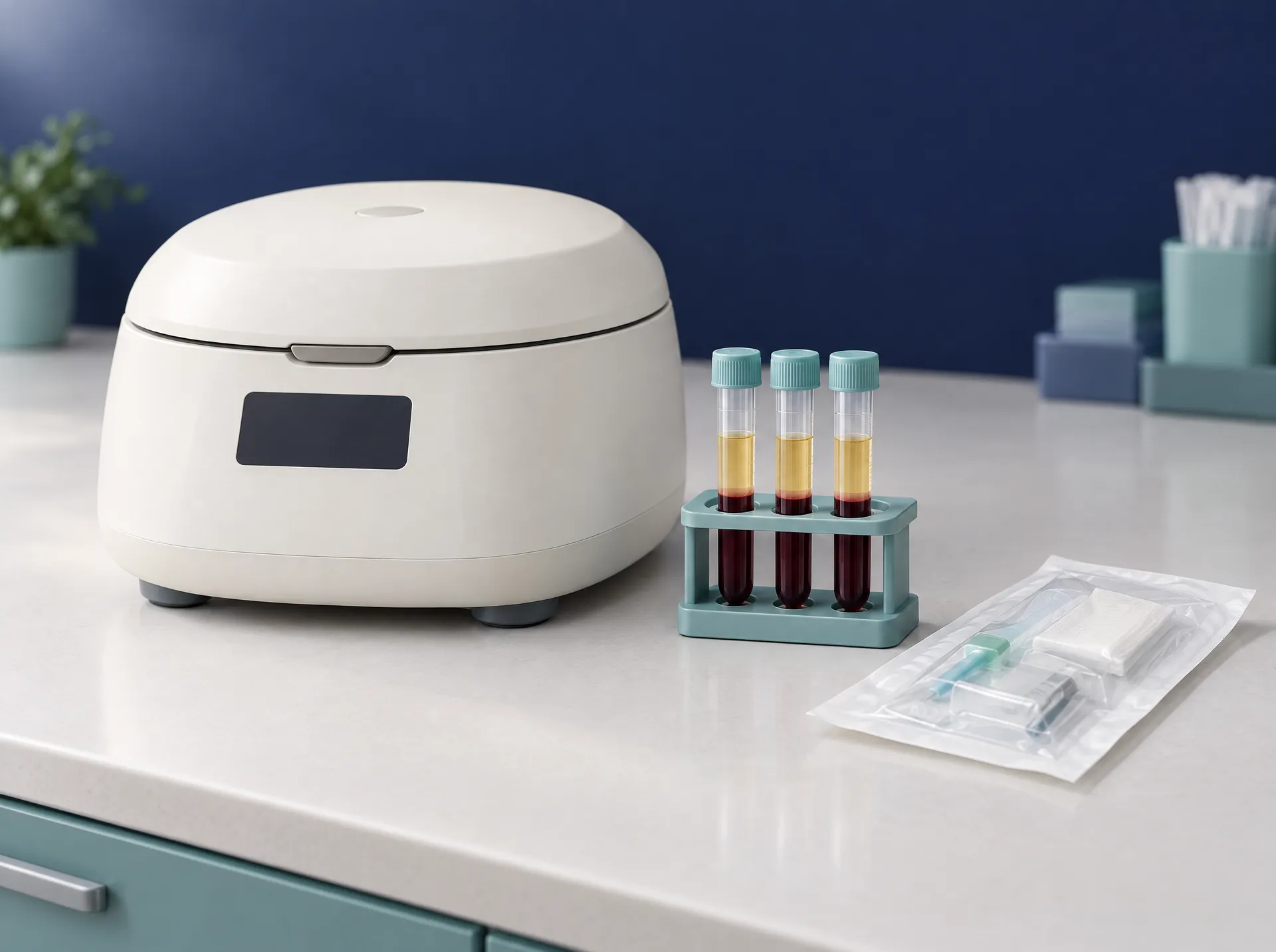
PRP Centrifuge Image
How Does It Work?
A blood sample (typically 15-60 mL) is drawn from the patient and placed in a specialized centrifuge that separates the blood into layers. The platelet-rich layer is extracted, producing a concentrate with 3-8 times the normal platelet concentration.
Key growth factors in PRP include PDGF (platelet-derived growth factor), TGF-beta (transforming growth factor beta), VEGF (vascular endothelial growth factor), and IGF-1 (insulin-like growth factor). When injected into damaged tissue, these factors recruit stem cells, stimulate fibroblast activity, and accelerate the natural healing cascade.
Conditions Treated
- Osteoarthritis and joint degeneration
- Tendon injuries (tennis elbow, Achilles tendinopathy)
- Ligament injuries
- Muscle tears and chronic muscle pain
- Chronic wounds and ulcers
- Hair loss (androgenetic alopecia)
- Post-surgical healing support
Could this belong in your plan?
That depends on your findings, not on the therapy. Send what you have with a short history; a physician reads it before the video call and tells you whether this treatment belongs in your program.
What a session feels like
- Before A blood draw from your arm, then 10–15 minutes while the centrifuge separates the platelet-rich layer.
- During The PRP is injected where it is needed under ultrasound or fluoroscopic guidance. Some discomfort at the injection site is normal. The whole visit takes 45–60 minutes.
- Afterwards Mild soreness for 2–3 days. One to three sessions are typical, spaced 4–6 weeks apart.
Evidence & Safety
PRP therapy has been studied extensively in orthopedic and sports medicine. Meta-analyses published in the American Journal of Sports Medicine and the British Journal of Sports Medicine demonstrate efficacy for knee osteoarthritis and tendinopathy. As an autologous preparation, PRP has an excellent safety profile with minimal risk of adverse reactions. The primary risk is injection site discomfort and temporary inflammation, which is part of the intended therapeutic response.
Request a consultation
A video consultation in English before you travel. A physician reviews your findings first; we reply by email within one business day (Mon–Fri).
Mon–Thu 08:00–17:00, Fri 08:00–14:00 (CET/CEST)+49 8061 398-0info@clinicum-stgeorg.de
St. George Hospital is a specialist hospital, not an emergency department. In a medical emergency in Germany, dial 112.