
Medical Detoxification
Detoxification therapies
Medical detoxification at St. George Hospital starts with measurement: heavy-metal and toxin testing, liver and kidney function, and the immune and mitochondrial markers that a burden affects. Chelation, ozone therapy, colon hydrotherapy and infusion protocols follow from the findings and run on the ward under physician supervision.
Detoxification
Treatments in this group
- TherapyOzone therapy
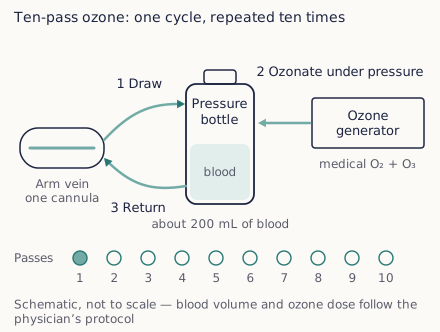
Ozone therapy is the controlled application of a medical ozone-oxygen mixture to a measured volume of the patient's own blood, which is then returned to the vein.
- TherapyColon hydrotherapy
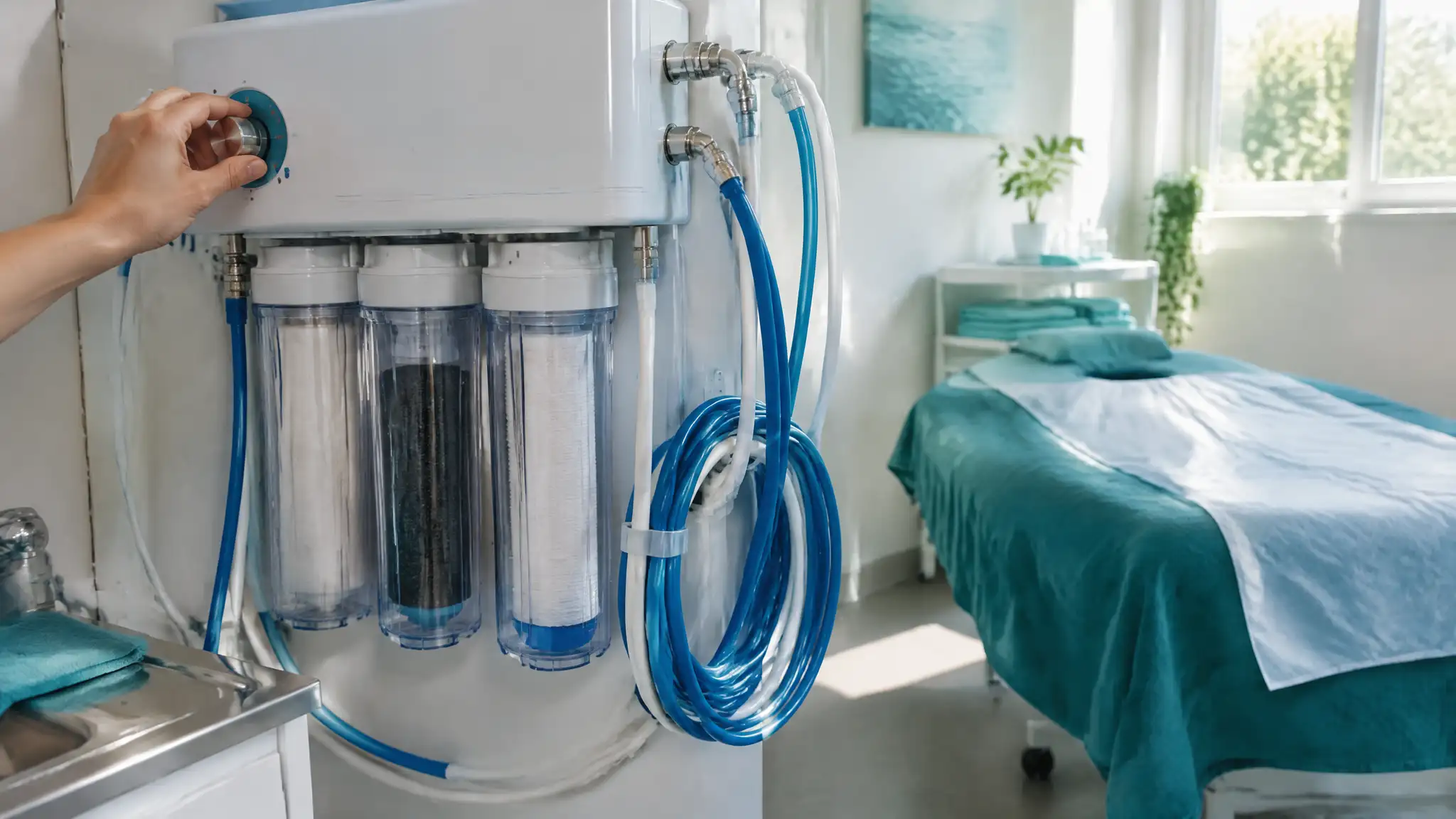
Colon hydrotherapy flushes the large intestine with temperature-controlled, filtered water through a closed system, in a private treatment room with a trained therapist.
- TherapyIonic footbath
An ionic footbath is a warm, salted footbath with a low-voltage electrode array in the water.
- TherapyHeavy-metal detoxification
A clinical review of suspected metal exposure, relevant testing and treatment where a specific indication is established.
What is medical detoxification?
Medical detoxification reduces a measured burden of heavy metals or other toxins, or supports the organs that clear them: liver, kidneys, gut and lymphatic system. No therapy in this group starts before the relevant values have been measured.
"Detox" covers two different things. One is chelation for a confirmed metal burden, which is standard toxicology with its own indications and monitoring. The other is support for elimination and recovery during a demanding program such as the chronic Lyme disease program, where antimicrobial therapy and whole-body hyperthermia load the body. Ozone therapy, colon hydrotherapy, infusion protocols and hyperbaric oxygen belong to this second group.
What we measure before any detoxification therapy
The same values are measured again before you go home.
Measure the burden
Heavy metals (lead, mercury, cadmium, arsenic and others) in blood and urine; further toxin panels where the history points to an exposure.
Check the organs
Liver and kidney function, electrolytes and essential minerals (zinc, copper, selenium, magnesium), because chelating agents bind those too.
Read with your symptoms
Inflammation and immune markers and, in chronic fatigue, mitochondrial tests show whether a burden affects your symptoms.
Treat and re-measure
Values are repeated during the stay and at the end; the report for your physician at home shows what changed.
The detoxification therapies compared
Chelation
- What it does
- DMPS, DMSA or EDTA bind metals so the kidneys excrete them
- Session
- Infusion or oral course; kidneys and minerals checked
- Evidence
- Strong in confirmed metal poisoning
- Used when
- A metal burden has been measured
Ozone therapy
- What it does
- Your blood is mixed with a set ozone-oxygen dose and reinfused
- Session
- About 30 to 45 minutes on the ward
- Evidence
- Limited to emerging
- Used when
- As a treatment attempt, decided with you
Colon hydrotherapy
- What it does
- Warm-water irrigation of the colon in a closed system
- Session
- About 45 minutes, given by trained staff
- Evidence
- No trial evidence for toxin removal
- Used when
- Supportive, in the detox and Lyme programs
Ionic footbath
- What it does
- A low-current footbath
- Session
- About 30 minutes
- Evidence
- Limited; no evidence for toxin removal through the skin
- Used when
- Supportive and low-risk, in the detox program
Contraindications are checked before every therapy.
Hyperbaric oxygen (sessions of about 60 to 90 minutes) and infusion protocols such as glutathione, high-dose vitamin C and alpha-lipoic acid run alongside. Sauna, lymphatic drainage, nutrition and oral binders are added where your findings call for them. A physician sees you every day and spaces chelation, ozone and infusion days so they do not collide. The chelation guide explains the agents.
Where the therapies run
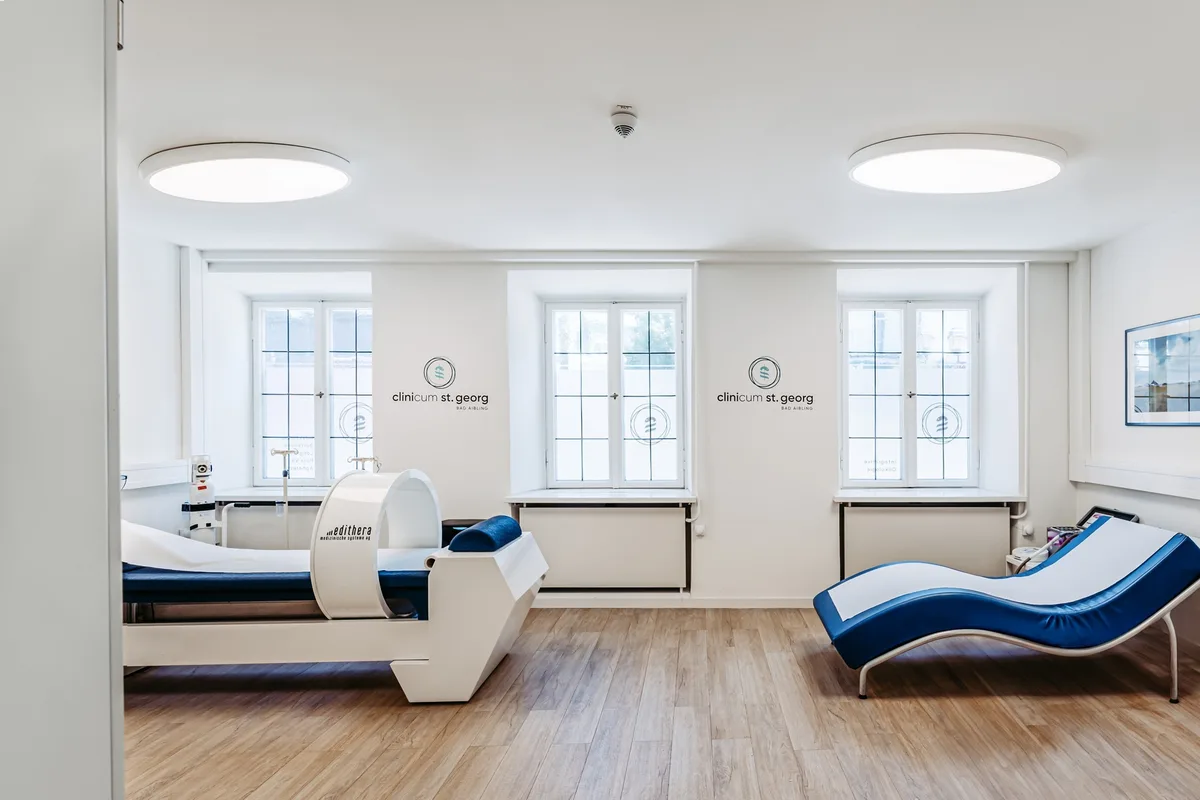
A therapy room · Clinicum St. Georg 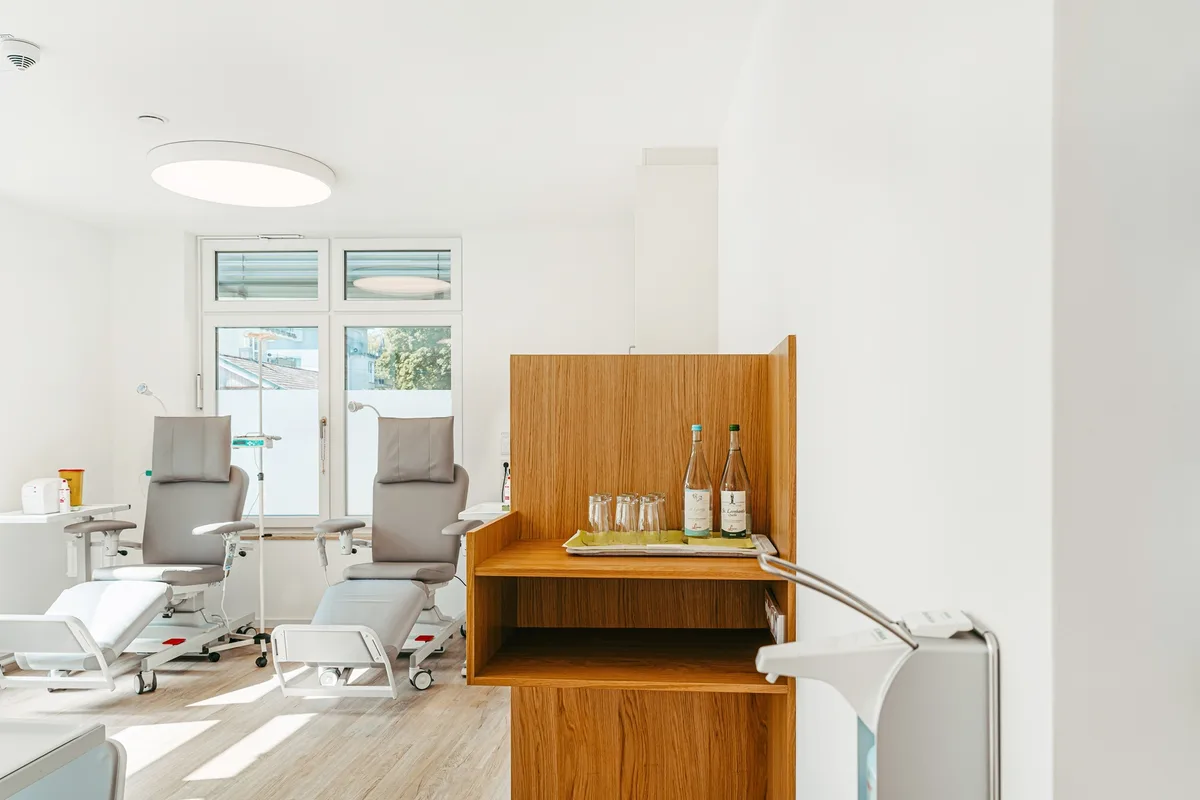
The infusion room · Clinicum St. Georg
Ozone sessions and infusions are given on the ward.
Where we use it
Which programs use detoxification
- ConditionChronic Lyme disease
Support during antimicrobial therapy and hyperthermia, including Herxheimer management.
- ConditionChronic fatigue (ME/CFS)
Chelation and infusions alongside IHHT and NAD+ where testing shows a toxic component.
- ConditionThe medical detox program
A stand-alone program built on heavy-metal and toxin testing.
- ConditionIntegrative oncology
Supportive care between cycles of your standard treatment at home.
- ConditionLong COVID
Hyperbaric oxygen and infusions as treatment attempts alongside apheresis.
Evidence and limits
Chelation is standard care for confirmed metal poisoning. Evidence for ozone, hyperbaric oxygen and glutathione outside that is limited or emerging, and colon hydrotherapy and ionic footbaths have no trial evidence for toxin removal.
Read the evidence per therapy
Chelation for confirmed metal poisoning: strong. Chelating agents are the standard treatment for arsenic and mercury poisoning with a measured burden, with agent choice and monitoring described in the toxicology literature (Kosnett, J Med Toxicol, 2013). The same literature lists the pitfalls: chelation without a measured burden, provoked urine tests read against unprovoked reference ranges, and loss of essential minerals (Andersen and Aaseth, J Trace Elem Med Biol, 2016). The hospital follows those rules.
Chelation outside poisoning: mixed. The TACT trial of EDTA chelation after myocardial infarction found a modest reduction in cardiovascular events (Lamas et al., JAMA, 2013); the follow-up TACT2 trial in patients with diabetes did not confirm a benefit (Lamas et al., JAMA, 2024). The hospital does not give chelation to prevent heart disease.
Ozone therapy: limited to emerging. A pilot randomized trial of major autohemotherapy in post-COVID condition and a placebo-controlled trial of ozone as an add-on in fibromyalgia reported symptom effects in small groups (He et al., Int Immunopharmacol, 2024; Sucuoğlu et al., J Back Musculoskelet Rehabil, 2023). Larger trials are missing. The hospital offers ozone therapy as an individual treatment attempt decided with the patient after medical consultation.
Hyperbaric oxygen in Long COVID: emerging. A randomized, sham-controlled trial with long-term follow-up reported sustained improvement in several symptom domains (Hadanny et al., Sci Rep, 2024); the groups were small and replication is pending.
Glutathione infusions: limited. A double-blind pilot trial of intravenous glutathione in Parkinson's disease found no significant difference from placebo (Hauser et al., Mov Disord, 2009). The hospital uses glutathione as a supportive infusion where a measured deficit or oxidative load calls for it, not as a disease treatment.
What the evidence does not show. No study shows that a detoxification program removes toxins that were not measured, or that the color of water or sweat indicates toxin release. Colon hydrotherapy and ionic footbaths have no trial evidence for toxin removal; the hospital offers them as supportive, low-risk measures and says so on their pages.
Costs and billing
Detoxification therapies are not sold per session. They appear as blocks, with the planned number of sessions, in the written, itemized cost overview: a package price plus individual add-ons. A deposit is paid before admission. Treatment is self-pay, and reimbursement is never promised. Costs and insurance
Common questions about detoxification
What is medical detoxification?
Treatment that reduces a measured burden of heavy metals or other toxins, or supports the liver, kidneys, gut and lymphatic system that clear them. At St. George Hospital it is a set of therapies prescribed from laboratory findings, not a fixed cleanse. A physician decides which of them, in which order, and the values are repeated to see whether they move.
Do you test before you treat?
Yes. Heavy-metal testing in blood and urine, liver and kidney function, inflammation and immune markers and, where the history calls for it, further toxin panels come first. Chelation in particular is given only after a burden has been measured, because the agents also bind metals the body needs.
Is chelation therapy safe?
With a confirmed indication, laboratory monitoring and physician supervision, chelation is a standard treatment for metal poisoning. Its risks are kidney strain, loss of essential minerals and, with some agents, allergic reactions, which is why the hospital checks kidney function and minerals before and during a course and does not give chelation without a measured burden.
Which conditions is detoxification used for?
A measured heavy-metal or environmental toxin burden; chronic Lyme disease, where the detoxification protocols support the body during antimicrobial therapy and hyperthermia; chronic fatigue with a toxic component; and as supportive care within the oncology program. It is also the core of the detox program in longevity medicine.
How long does a detoxification program take?
As part of a Lyme, chronic fatigue or oncology stay it runs alongside the main program over two to five weeks. As a stand-alone detox program it is planned from the findings, usually within a one- to two-week stay, with repeat testing at the end to document what changed.
What does it cost?
There is no price per session. The therapies are listed as blocks in the itemized estimate you receive after a physician has read your findings, with the planned number of sessions for each. Treatment is self-pay; the itemized invoice can be submitted to a US insurer for out-of-network review.
Write to the International Office
Send a short history; the initial inquiry is free of charge. The Office then requests any heavy-metal or toxin results you have for a medical review. You learn whether detoxification belongs in your plan, or whether the first step is the measurement itself.
References
- The role of chelation in the treatment of arsenic and mercury poisoning. Journal of Medical Toxicology 2013. PMID 24178900
- A review of pitfalls and progress in chelation treatment of metal poisonings. Journal of Trace Elements in Medicine and Biology 2016. PMID 27150911
- Effect of disodium EDTA chelation regimen on cardiovascular events in patients with previous myocardial infarction: the TACT randomized trial. JAMA 2013. PMID 23532240
- Edetate disodium-based chelation for patients with a previous myocardial infarction and diabetes: the TACT2 randomized clinical trial. JAMA 2024. PMID 39141382
- A pilot randomized controlled trial of major ozone autohemotherapy for patients with post-acute sequelae of COVID-19. International Immunopharmacology 2024. PMID 39018686
- Efficacy of ozone therapy as an add-on treatment in fibromyalgia: a randomized double-blind placebo-controlled study. Journal of Back and Musculoskeletal Rehabilitation 2023. PMID 36530072
- Long term outcomes of hyperbaric oxygen therapy in post covid condition: longitudinal follow-up of a randomized controlled trial. Scientific Reports 2024. PMID 38360929
- Randomized, double-blind, pilot evaluation of intravenous glutathione in Parkinson's disease. Movement Disorders 2009. PMID 19230029
From the journal
Reading on Detox, ozone and IV therapies
- Ozone therapy · · 8 min read
Ozone therapy cost guide: What to expect for IV, 10-Pass, and insufflation treatments
Ozone therapy is one of the most sought-after integrative medical treatments worldwide, used for conditions ranging from chronic infections and autoimmune disorders to post-COVID syndrome and anti-aging support. As interest grows, so does the need for transparent information about what ozone…
- Chelation therapy · · 8 min read
Chelation therapy: A complete guide to heavy metal detoxification
Chelation therapy is a medical treatment that uses specific binding agents — called chelators — to remove toxic heavy metals and excess minerals from the body. The word “chelation” comes from the Greek chele, meaning claw, reflecting how these agents grasp and hold metal ions, allowing them to…
- Toxin & heavy-metal testing · · 7 min read
Environmental toxin testing: A complete guide to detection and detoxification
Which environmental toxins to test for (heavy metals, pesticides, plastics, PFAS, mold toxins), which sample answers which question, how to read the results, and how a supervised detoxification protocol follows.
Send a free inquiry
The initial inquiry is free of charge. The International Office reviews your message and your case directly and gets back to you.
- Phone
- +49 8061 398-0
- Hours
- Mon–Thu 08:00–17:00, Fri 08:00–14:00 German time (CET/CEST); in the US Mon–Thu 2–11 a.m. ET, Fri 2–8 a.m. ET.
Munich Airport (MUC), about 60 minutes by car.