
Mitochondrial Training
Intermittent Hypoxia-Hyperoxia Training (IHHT)
A controlled breathing therapy that alternates between reduced and elevated oxygen concentrations to stimulate mitochondrial renewal, improve cellular energy production, and enhance overall metabolic function.
What Is IHHT?
Intermittent Hypoxia-Hyperoxia Training (IHHT) is a non-invasive therapy in which the patient breathes alternating intervals of low-oxygen (hypoxic) and high-oxygen (hyperoxic) air through a face mask while resting comfortably. This simulates aspects of altitude training in a controlled medical setting.
The therapy targets mitochondria — the energy-producing organelles in every cell. Dysfunctional mitochondria, which accumulate with age and chronic illness, are selectively eliminated through a process called mitophagy, while the production of new, healthy mitochondria is stimulated.
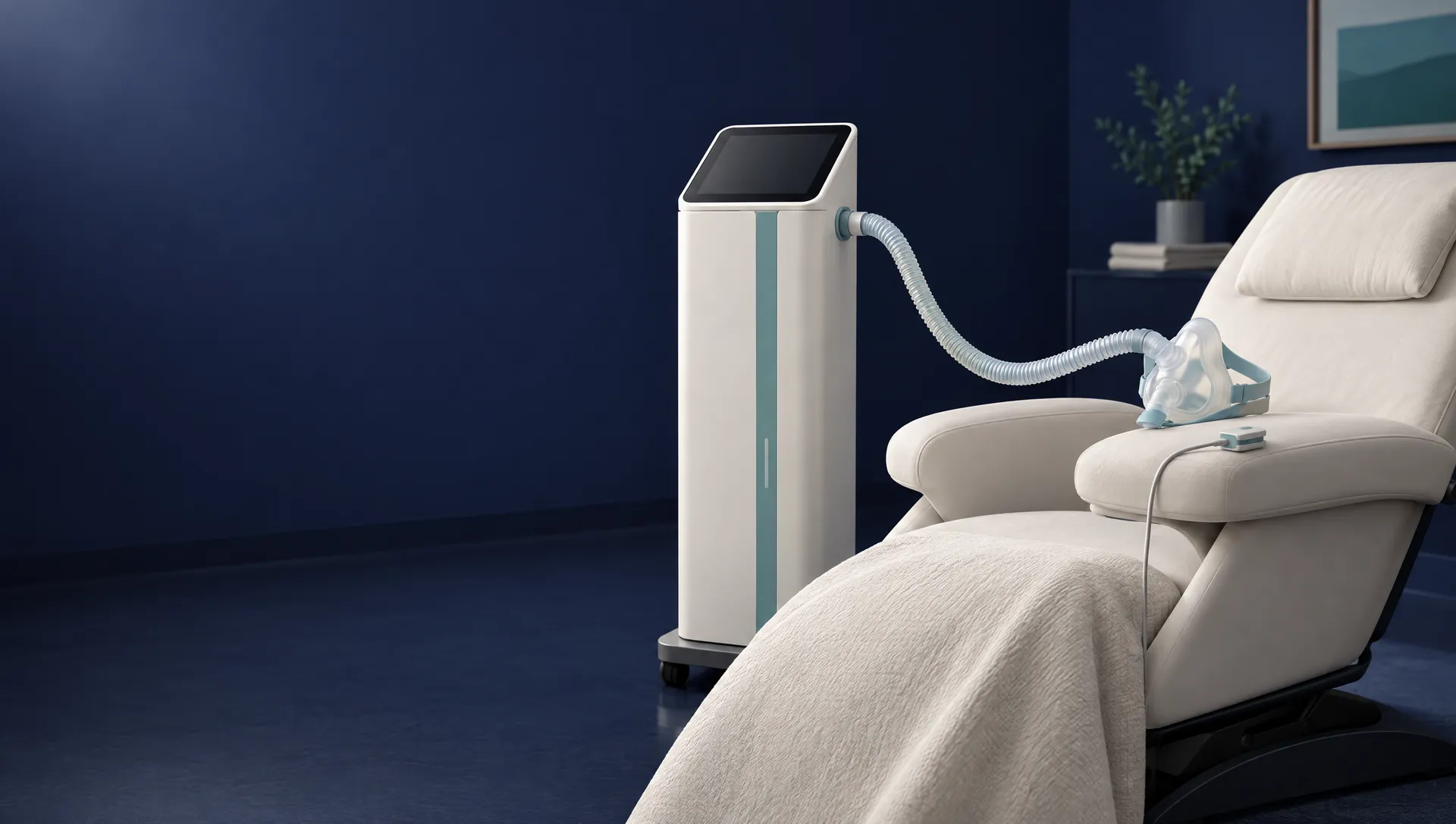
IHHT Device Image
How Does It Work?
During an IHHT session, the patient breathes through a mask connected to a device that precisely controls oxygen concentration. Hypoxic intervals (9-13% O2) lasting 3-5 minutes alternate with hyperoxic intervals (30-40% O2) of similar duration. This cycle is repeated for 30-40 minutes per session.
The hypoxic stimulus activates hypoxia-inducible factor (HIF) pathways, triggering mitophagy of damaged mitochondria. The subsequent hyperoxic phase promotes mitochondrial biogenesis through PGC-1alpha activation. Over a course of treatments, the net effect is an improvement in the overall quality and efficiency of the cellular mitochondrial population.
Conditions Treated
- Chronic fatigue syndrome
- Post-COVID syndrome with metabolic fatigue
- Chronic Lyme disease with mitochondrial dysfunction
- Age-related metabolic decline
- Cardiovascular risk reduction
- Pre-surgical conditioning
- Athletic performance optimization
Could this belong in your plan?
That depends on your findings, not on the therapy. Send what you have with a short history; a physician reads it before the video call and tells you whether this treatment belongs in your program.
What a session feels like
- Before You recline, a mask goes over your nose and mouth, and a pulse oximeter clips onto a finger.
- During For about 40 minutes the device alternates “mountain air” and oxygen-rich air on its own; you may notice your breathing deepen during the low-oxygen intervals. Oxygen saturation and heart rate are on a screen the whole time. Most people read or rest.
- Afterwards Nothing to recover from. A course is 10–15 sessions over 2–3 weeks.
Evidence & Safety
Intermittent hypoxia training has been studied in clinical trials for cardiovascular health, metabolic syndrome, and exercise performance. Published research in journals including the European Journal of Applied Physiology and Frontiers in Physiology supports its effects on mitochondrial function and metabolic parameters. The addition of hyperoxic intervals (IHHT vs. IHT alone) is a more recent development with growing clinical evidence. Contraindications include unstable angina, severe COPD, and acute infections.
Request a consultation
A video consultation in English before you travel. A physician reviews your findings first; we reply by email within one business day (Mon–Fri).
Mon–Thu 08:00–17:00, Fri 08:00–14:00 (CET/CEST)+49 8061 398-0info@clinicum-stgeorg.de
St. George Hospital is a specialist hospital, not an emergency department. In a medical emergency in Germany, dial 112.