
Functional diagnostics
Metabolic and mitochondrial testing, hormonal evaluation, gut health analysis and toxicological screening: the mechanisms behind fatigue, weight change, poor recovery and brain fog.
What functional diagnostics include →Rosenheimer Str. 6-8, 83043 Bad Aibling, Germany · info@clinicum-stgeorg.de
Functional medicine · Bad Aibling, Bavaria · since 1991
Functional medicine looks for the reasons a body stopped working the way it should, measures them, and treats what it finds. At St. George Hospital that happens inside a 70-bed hospital with its own laboratory, so the work-up and the treatment sit under one roof and one physician team.
Functional medicine is a systems approach to chronic illness. Instead of naming a syndrome and treating its symptoms, it asks which body systems have stopped functioning normally, what is driving that, and what a measurement would show if the driver were corrected. Infection, immune activation, hormone decline, mitochondrial impairment, toxic load and gut dysfunction are treated as connected, because in a chronically ill patient they usually are.
In practice that means three habits. Measure first: extended laboratory, immune, metabolic and functional testing before a treatment decision. Think in systems: a patient with fatigue, brain fog and joint pain is one patient with one history, not three referrals. Treat the driver: if the work-up shows a persistent infection, an autoimmune process or a metabolic block, the plan targets that, and the follow-up measurements show whether it worked.
What functional medicine is not: a supplement list, a food-sensitivity print-out or an alternative to conventional diagnosis. When a scan, a biopsy or a specialist opinion is needed, it is ordered. The functional work-up adds to standard medicine; it does not replace it.
The two terms are often used interchangeably. They are not the same thing, and the difference matters when you are choosing where to be treated.
It is a diagnostic discipline. Its output is a map of which systems are impaired and by what. On its own it produces findings, not a treatment.
It is a treatment discipline. It combines conventional medicine with physical and biological therapies that have evidence behind them: hyperthermia, apheresis, infusion protocols, neuromodulation, rehabilitation.
An outpatient functional medicine practice can run the work-up but has to refer out for most of the treatment. A hospital that only offers integrative therapies can treat, but often without a precise picture of what it is treating. St. George Hospital was built to do both in sequence: the functional work-up produces the findings, the integrative programme acts on them, and the same physicians see the patient from the first video call to the discharge report. How we work describes the six principles behind that sequence.
Most patients arrive with a folder of normal results and a body that disagrees. A standard panel is built to rule out acute disease. It is not built to find a chronic infection that hides in tissue, an immune system that is exhausted rather than absent, or mitochondria that produce energy at half capacity. Our diagnostic programme is built for exactly those questions and is overseen by Dr. Martin Rößner, Chief Physician for Internal Medicine.
Metabolic and mitochondrial testing, hormonal evaluation, gut health analysis and toxicological screening: the mechanisms behind fatigue, weight change, poor recovery and brain fog.
What functional diagnostics include →Extended blood panels, immune system profiling, Lyme and tick-borne co-infection testing, autoantibody screening and inflammatory markers, from our in-house and partner laboratories.
What the laboratory panels cover →Review and coordination of CT, MRI and PET, circulating tumour cell analysis and chemosensitivity testing for oncology patients, and physiological assessments.
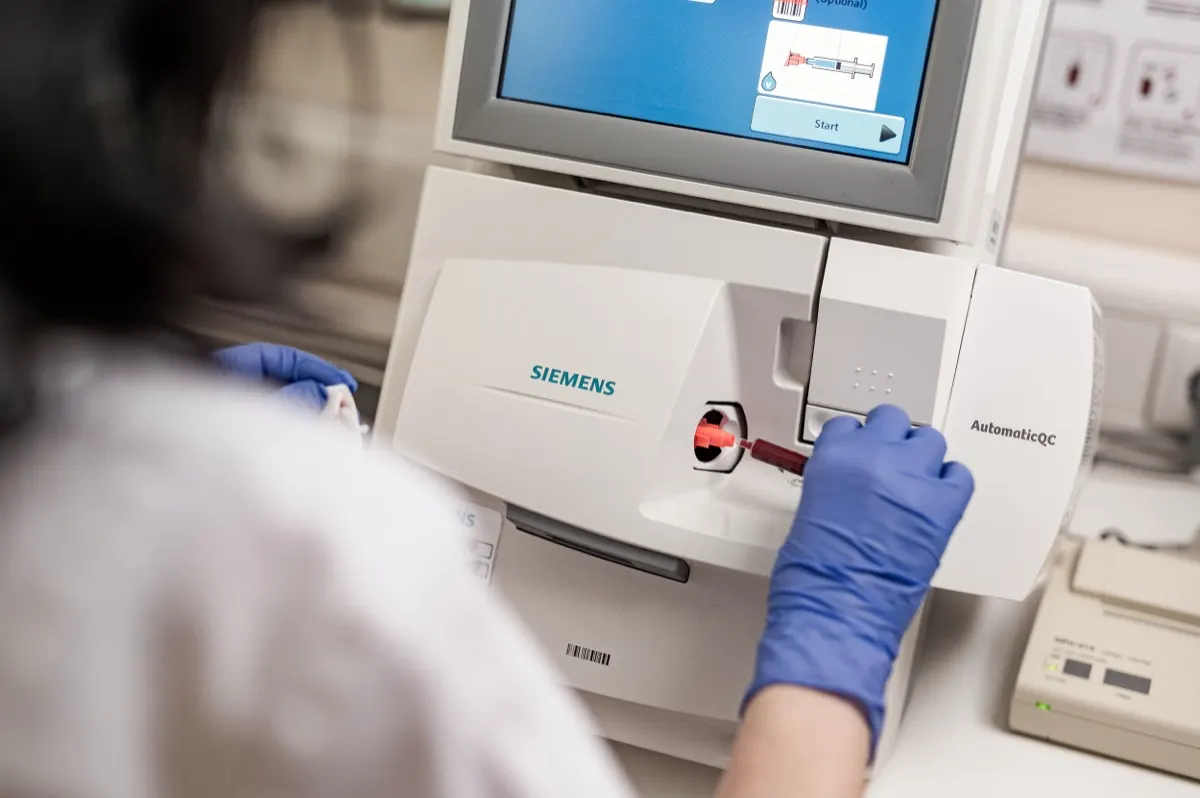
Imaging and specialist tests →Most laboratory results are back within 24 to 72 hours, because the laboratory is in the building. That is the practical difference between a hospital work-up and a mailed-in kit: the physician who ordered the test reads it the same week, with you in the room, and can add the next test immediately instead of after another appointment. The functional medicine testing guide explains what the individual markers mean.
The work-up is only useful if it changes what happens next. In our four largest programmes, it does.
Whether a patient's persisting symptoms come from active Borrelia, from an untreated co-infection such as Bartonella or Babesia, or from an immune process the infection set off decides between antimicrobial therapy, whole-body hyperthermia and immune-directed treatment. The work-up answers that before the 2–5 week programme is planned. See the Lyme programme →
Microcirculation, fibrinoid microclots and endothelial dysfunction, the research direction opened by Dr. Beate Jaeger, are measured rather than assumed. A patient whose findings point to impaired microcirculation is a candidate for H.E.L.P. apheresis; a patient whose findings point to immune activation or mitochondrial impairment is not treated the same way. See the Long COVID programme →
"All your tests are normal" is where most ME/CFS patients arrive. Mitochondrial function, immune status, hormone axes and autonomic testing give the diagnosis structure, and the treatment plan follows the findings: NAD+ infusions, IHHT, neuromodulation and pacing-based rehabilitation are chosen, not stacked. See the chronic fatigue programme →
Alongside or after conventional oncology, the work-up adds immune status, chemosensitivity testing and metabolic findings to the tumour board picture. Hyperthermia and IPT are planned with the treating oncologist and with those results in hand. See the integrative oncology programme →
The same logic runs through the longevity programme, where the question is not which disease you have but which systems are drifting before one develops, and through every therapy we offer: a therapy is prescribed because a finding calls for it.
Functional medicine in the United States is mostly practised in outpatient offices. Testing is sent out, results come back over weeks, treatment is prescribed by phone and delivered somewhere else. That model works for patients who are stable. It struggles for patients who are not.
St. George Hospital, founded in 1991 in Bad Aibling, Bavaria, is a hospital: 70 beds, nursing staff around the clock, an internal medicine department, and the laboratory, the hyperthermia unit and the apheresis unit in the same building. A functional work-up here compresses into days what takes months as an outpatient, and the treatment that follows can be intensive because it is monitored. Programmes run as inpatient stays of two to five weeks depending on the condition, with a physician visit every day.
For a patient travelling from the US that has a second consequence: one trip, one team, one report. Your first visit describes the sequence step by step.
A fair question, and the honest answer has two parts.
The diagnostic side rests on standard medicine. Immune profiling, autoantibody screening, hormone panels, mitochondrial and metabolic markers, PCR and serology for tick-borne infections are established laboratory methods; what functional medicine changes is how broadly they are ordered and how the results are read together. The therapies we build on those findings are chosen for the evidence behind them for a given indication: hyperthermia in oncology, apheresis in defined immunological and vascular conditions, neuromodulation for defined neurological symptoms. Our physicians publish their work, and the publications page lists it.
The limits are real and we name them. Some therapies we use for chronic infections and post-viral illness have a stronger record in clinical experience than in controlled trials, and we say so on the individual therapy pages. No programme cures a chronic illness by promise; what changes and how much shows in the follow-up measurements, which is why we take them. If a work-up shows that what you need is a conventional specialist, that is what we tell you.
What separates a serious functional medicine programme from a questionable one is simple to check: are tests ordered for a reason, are the results read by a physician, does the treatment follow the findings, and is the outcome measured afterwards. That is the standard we hold ourselves to and the one you should apply to any provider, including us.
The hospital is led by Julian Douwes M.D., Chief Medical Officer, who develops the treatment protocols and whose clinical focus is functional medicine, chronic disease and rare diseases, and by Martin Rößner M.D., Chief Physician for Internal Medicine and Oncology, who oversees the diagnostic programme and the hospital's daily clinical operations. The founder, Friedrich Douwes M.D. (1945–2022), built the hospital around the principle that diagnosis precedes treatment; the team that continues his work includes specialists in infectiology, oncology, haematology, hormone medicine and psychosomatic medicine.
Every patient is seen by a physician daily during an inpatient stay, and the physician who plans your programme is the one who reads your results. Consultations are held in English.
Treatment at St. George Hospital is self-pay. There is no fixed price for a functional medicine work-up, because the work-up is planned from your history; after the video consultation you receive a written estimate that lists diagnostics, the daily inpatient rate and each therapy block. You receive an itemised invoice with diagnosis codes and procedure descriptions in English, which you can submit to your US health plan for out-of-network review. We cannot promise reimbursement and do not. Costs and insurance explains how to read the estimate.
Getting here is simpler than most patients expect. Munich Airport (MUC) is about 60 minutes by car and has direct flights from several US hubs; a coordinator arranges the transfer, accommodation for a companion, and correspondence with your home physician. Coming from abroad covers the details, including what to bring.
The first step costs you an email. Send your findings, and a physician will tell you within one business day whether a video consultation makes sense and what it would cover.
Functional medicine is a way of diagnosing: it asks why a system failed and measures the answer, using extended laboratory, immune, metabolic and functional testing. Integrative medicine is a way of treating: it combines conventional medicine with physical and biological therapies that have evidence behind them. At St. George Hospital the functional work-up comes first and the integrative treatment plan is built on its results.
Treatment at St. George Hospital is self-pay. You receive an itemised invoice with diagnosis codes and procedure descriptions in English, which you can submit to your US health plan for out-of-network review. Some plans reimburse part of the diagnostics or inpatient costs; many do not. We cannot promise reimbursement, and we say so before you travel.
No. The first step is a video consultation in English. A physician reads your existing findings first, then discusses with you whether a work-up at the hospital makes sense, what it would include and what it would cost. You decide about travelling after that, with a written estimate in hand.
There is no fixed price, because the work-up and the programme are planned from your findings. After the video consultation you receive a written estimate that lists the diagnostics, the daily inpatient rate and each therapy block. Nothing is added during your stay without your agreement. Our costs page explains how to read the estimate.
Yes. Every physician at St. George Hospital is a licensed medical doctor practising in Germany. The hospital is led by Julian Douwes M.D. (Chief Medical Officer) and Martin Rößner M.D. (Chief Physician). Speciality backgrounds are listed on the medical team page.
Gut health analysis, toxicological screening, tick-borne co-infection panels, immune profiling and autoantibody screening are part of the diagnostics we run in-house and with partner laboratories. Which of them your work-up includes is decided per case, after the video consultation, and is listed in your written estimate so there are no surprises.
A video consultation in English before you travel. A physician reviews your findings first; we reply by email within one business day (Mon–Fri).
Mon–Thu 08:00–17:00, Fri 08:00–14:00 (CET/CEST)+49 8061 398-0info@clinicum-stgeorg.de
St. George Hospital is a specialist hospital, not an emergency department. In a medical emergency in Germany, dial 112.