
Testing before treatment
Diagnostics
Every program at St. George Hospital starts in the laboratory. Immune profile, infection markers, metabolic, hormonal and mitochondrial tests, imaging review and, where indicated, specialist tests are done in the first days of your stay. One physician reads them together and writes your treatment plan from them.
Diagnostics
Topics in this area
- DiagnosticsFunctional diagnostics
Functional diagnostics measure how the body's systems perform, at rest and under load.
- DiagnosticsLaboratory and immune testing
St. George Hospital draws its laboratory profile on the first morning of your stay: standard clinical chemistry and hematology, immune cell panels, infection …
- DiagnosticsImaging and specialist testing
St. George Hospital runs ultrasound, infrared thermography and darkfield microscopy on site as part of the diagnostic work-up, and arranges MRI, CT and PET-CT with …
- DiagnosticsFunctional medicine
Functional medicine looks for the reasons a body stopped working the way it should, measures them, and treats what it finds.
Understanding before treating
Many patients arrive after years of inconclusive testing, with normal standard panels and persistent symptoms. Our work-up adds tests for immune function, microbial burden, metabolic and mitochondrial function, toxic load and hormones to conventional laboratory medicine. It is the first step of functional medicine at a hospital.
Dr. Martin Rößner, Chief Physician for internal medicine, oversees diagnostics. Your work-up is planned from your history and the results you already have.
How the work-up runs
Five steps, from the records review to discharge.
Records review
After your initial inquiry the International Office requests your results, and a physician decides which tests are still needed.
History and examination
A detailed history, the intake questionnaire and a physical examination set the targets for testing.
Sampling
Blood, urine and stool samples and the functional tests. Most laboratory results are available within 24 to 72 hours.
Reading the results
Your physician reads all results together, explains them and writes the therapy plan.
Repeat testing
The values the therapies should move are measured again, so the report to your physician at home shows what changed.
Nothing is added to the treatment plan without the reading step.
Where the testing happens
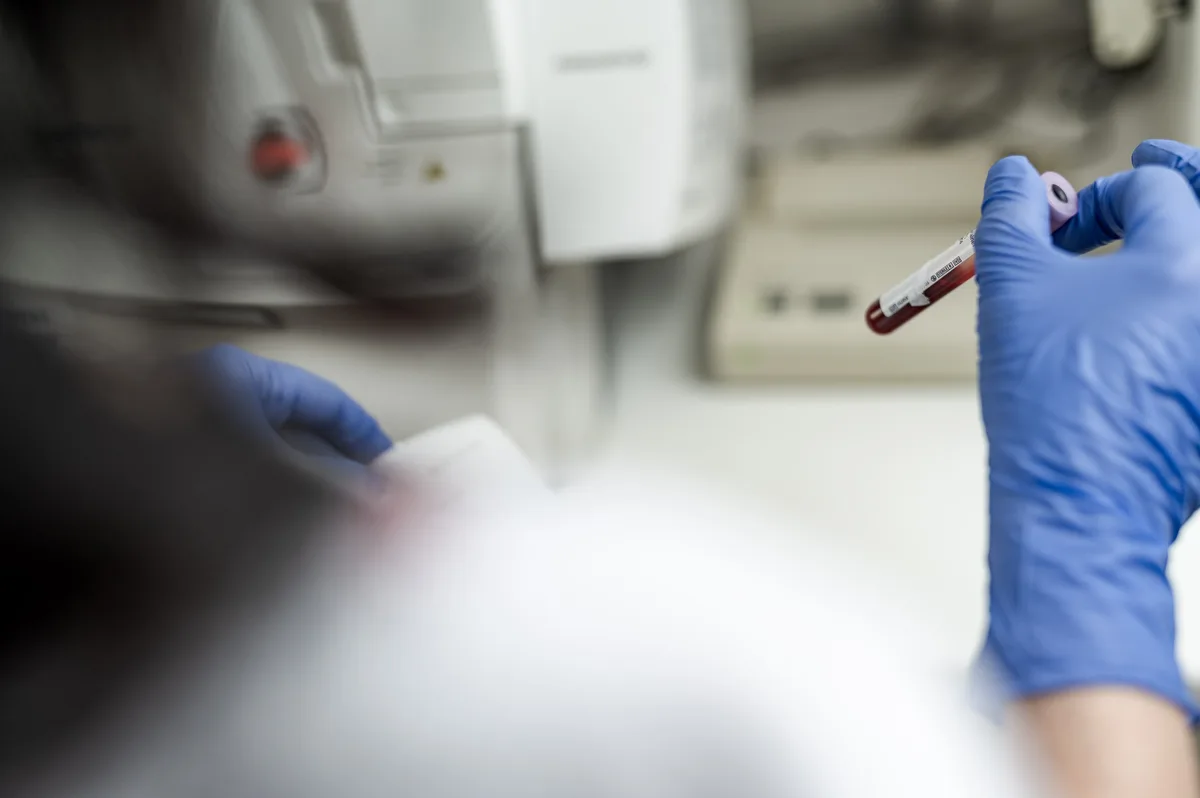
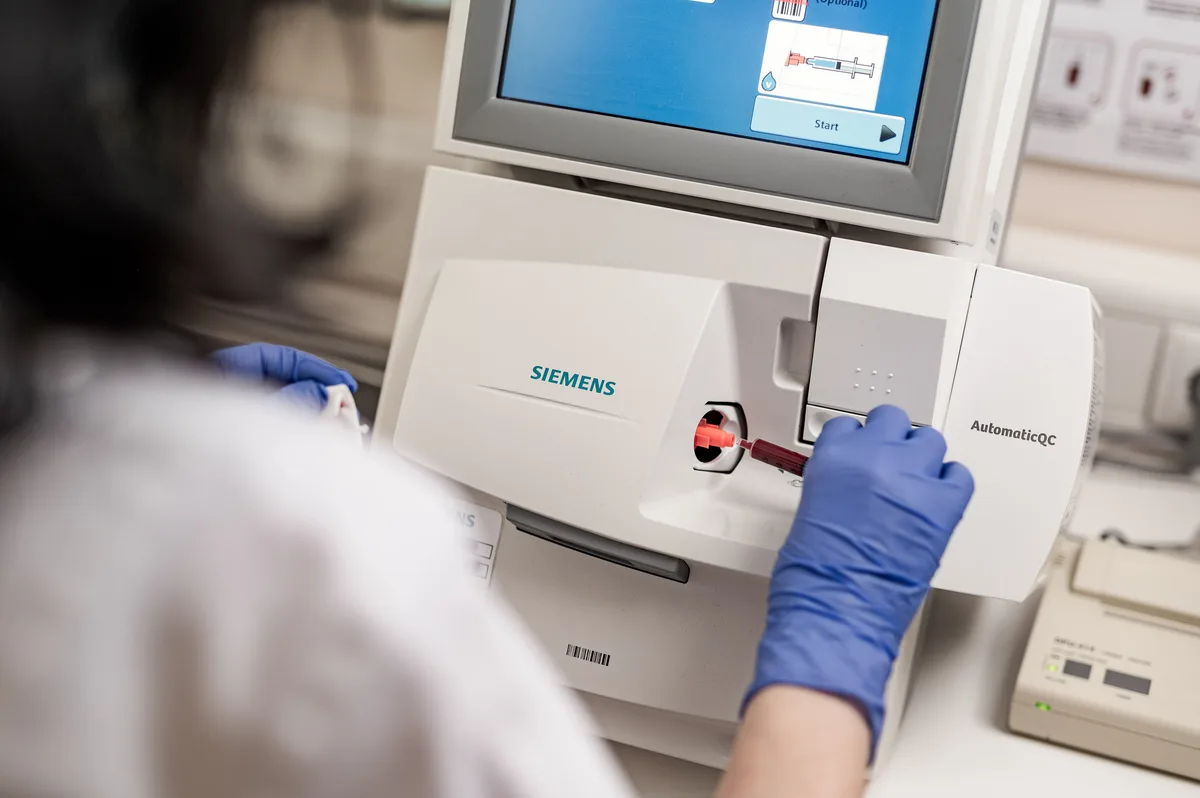
A blood sample in the clinic laboratory · Clinicum St. Georg 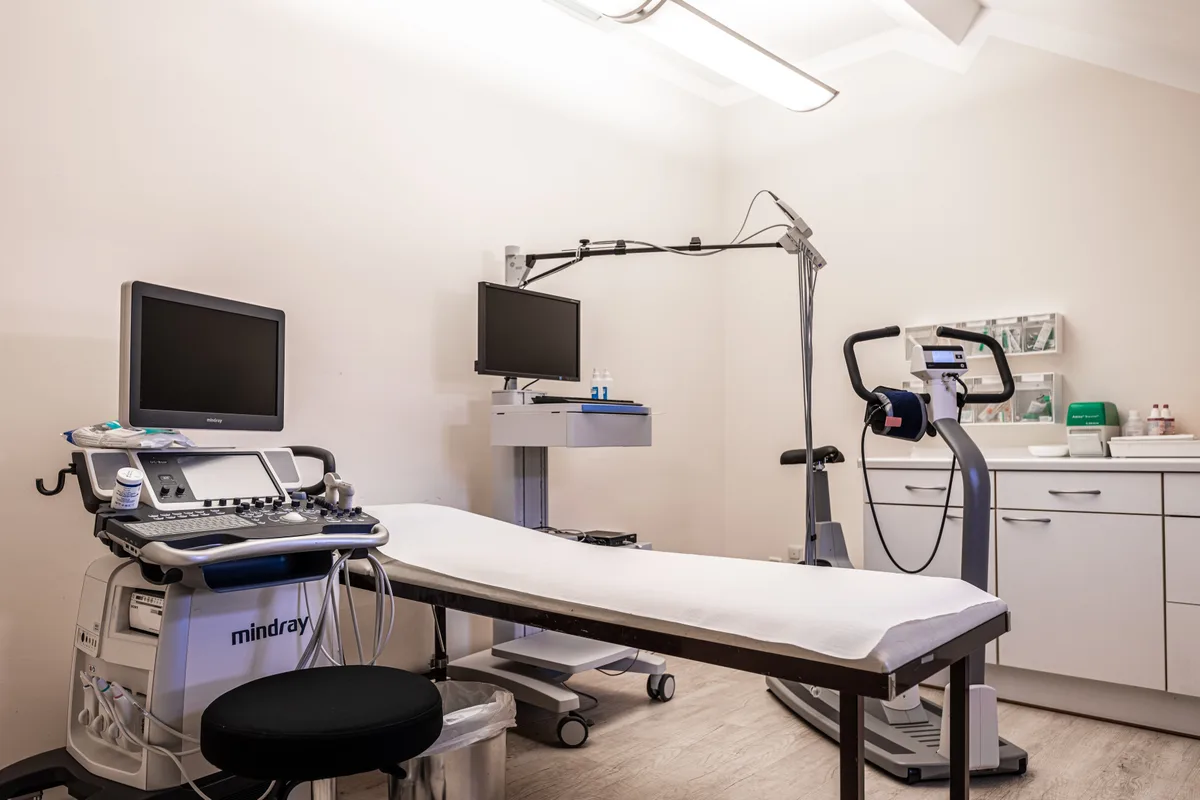
Examination room for ultrasound and ECG · Clinicum St. Georg 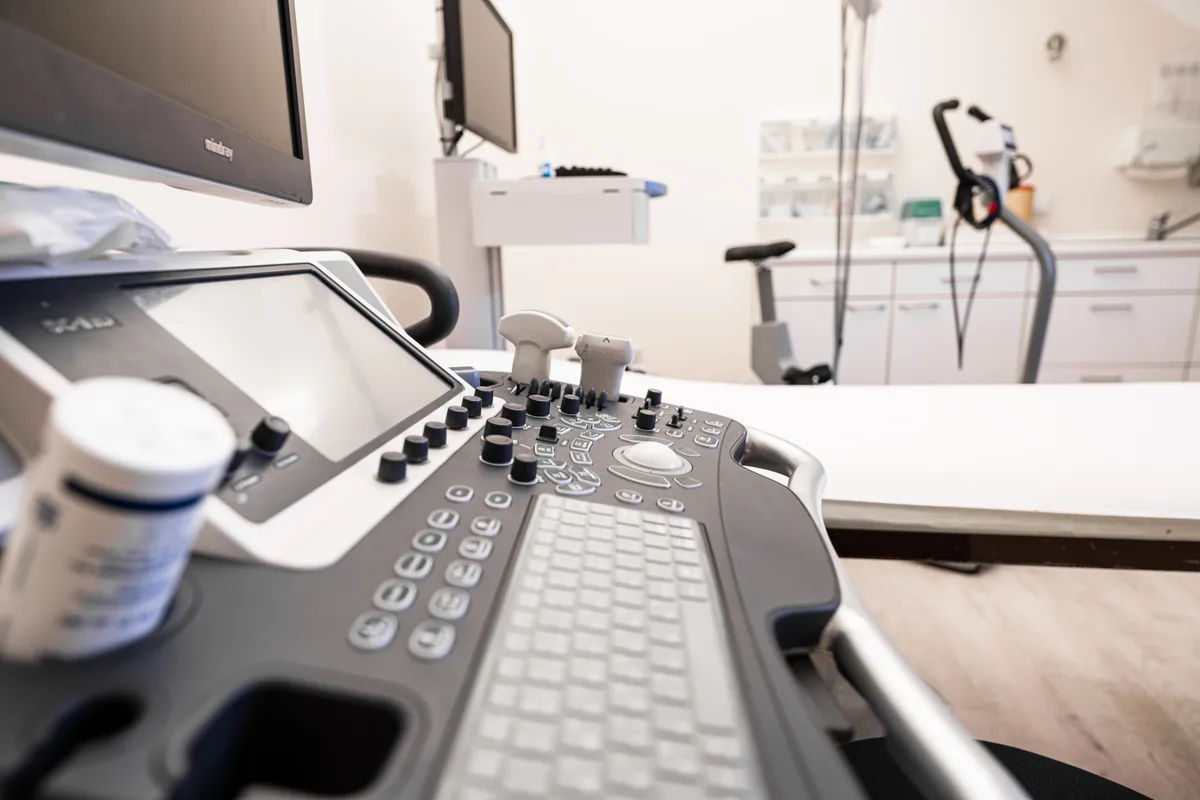
Ultrasound diagnostics · Clinicum St. Georg 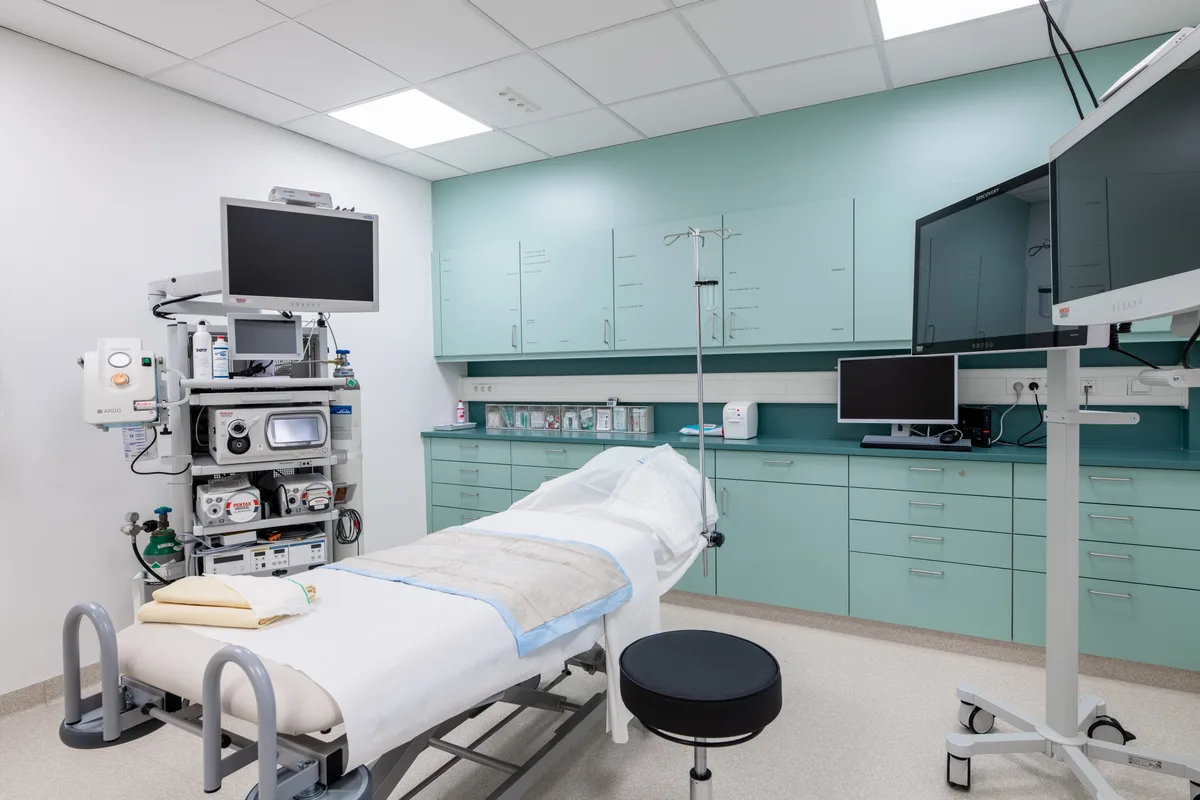
The endoscopy room · Clinicum St. Georg
Specialist tests go to partner laboratories; everything else is done in the hospital.
By program
What each program tests for
- About the conditionLyme disease
Multi-method Borrelia testing, co-infection panels, immune profiling and inflammatory markers, read with the history.
- About the conditionLong COVID and ME/CFS
Immune function, inflammation, autoantibodies, microcirculation and organ function; mitochondrial testing where fatigue leads.
- ConditionOncology
Tumor markers where informative, circulating tumor cells, chemosensitivity testing, immune status and imaging review.
- About the conditionChronic fatigue
Mitochondrial function, immune profile, hormones and toxic load, which decide the energy-metabolism plan.
- About the conditionLongevity and men's health
Cardiovascular, metabolic, hormonal, immune and toxicological markers; PSA, prostate imaging and urinary function for men.
Evidence and limits
The tests are standard laboratory medicine; we order them more broadly and read them together. No diagnosis here rests on a single result, and a test that would not change the plan is not ordered.
Read the evidence
The tests themselves are standard laboratory medicine. The hospital orders them more broadly and reads the results together. A retrospective cohort at an academic center found that patients in a functional medicine model of care reported larger improvements in physical health over 12 months than matched primary care patients (Beidelschies et al., JAMA Netw Open, 2019). That is an association from an observational study, and the hospital reads it as such.
Each test has its own limits. A systematic review and meta-analysis of North American studies found that the sensitivity of standard Lyme serology varies by stage and is lowest in early disease, with specificity high throughout (Waddell et al., PLoS One, 2016), which is why no diagnosis here rests on a single result. A test that would not change the plan is not ordered.
Costs and billing
The planned tests are listed in your written, itemized cost overview. Tests you bring from home are not repeated without a reason, and any test added during the stay is agreed with you first. Treatment is self-pay, a deposit is paid before admission, and reimbursement is never promised. Costs and insurance
Common questions about diagnostics
Which results should I bring from home?
Recent laboratory results, imaging with the written reports, pathology where it exists, a medication list with doses and the letters of the physicians who have treated you. Tests that are recent and of good quality are not repeated without a reason; they shorten the work-up and the estimate.
How long does the diagnostic work-up take?
The blood draws and functional tests are done in the first one to three days of a stay. Most laboratory results arrive within 24 to 72 hours; a few specialist tests from partner laboratories take longer and are reviewed when they arrive. The physician discusses the complete picture with you before the therapy plan is final.
Do you test for Lyme disease and co-infections?
Yes, with serology, PCR where appropriate, co-infection panels and immune markers. Standard two-tier serology has known limits in late disease, which is why the hospital reads the tests together with the history and the immune findings rather than from a single result. The Lyme diagnosis page explains the methods and their limits.
Is the laboratory in-house?
Part of it. The hospital runs its own laboratory for the panels that decide the daily plan, and works with partner laboratories for specialist tests. Imaging is reviewed in-house and ordered through partners where the stay requires new imaging.
What do the diagnostics cost?
The diagnostics planned for your first days are listed individually in the itemized estimate you receive after a physician has read your findings. Tests ordered during the stay that were not in the plan are agreed with you first. Treatment is self-pay; the itemized invoice can be submitted to a US insurer for out-of-network review.
Write to the International Office
Send a short history; the initial inquiry is free of charge. The Office then requests the results you have for a medical review, so the cost overview lists only the tests that are still needed.
References
- Association of the functional medicine model of care with patient-reported health-related quality-of-life outcomes. JAMA Network Open 2019. PMID 31651966
- The accuracy of diagnostic tests for Lyme disease in humans, a systematic review and meta-analysis of North American research. PLoS One 2016. PMID 28002488
Send a free inquiry
The initial inquiry is free of charge. The International Office reviews your message and your case directly and gets back to you.
- Phone
- +49 8061 398-0
- Hours
- Mon–Thu 08:00–17:00, Fri 08:00–14:00 German time (CET/CEST); in the US Mon–Thu 2–11 a.m. ET, Fri 2–8 a.m. ET.
Munich Airport (MUC), about 60 minutes by car.