
Neurological Assessment
Neuromodulation Diagnostics
Specialized neurological assessments including quantitative EEG brain mapping, autonomic nervous system testing, and neurocognitive evaluation that guide the selection and monitoring of neuromodulation therapies.
What Are Neuromodulation Diagnostics?
Before beginning any neuromodulation therapy, a thorough neurological assessment is essential. Neuromodulation diagnostics at St. George Hospital evaluate brain function, autonomic nervous system performance, and cognitive status to determine which neuromodulation methods are most appropriate and to establish baselines for monitoring treatment response.
These assessments combine established neurological examination techniques with advanced functional testing to create a comprehensive picture of the patient’s neurological status.
How Does It Work?
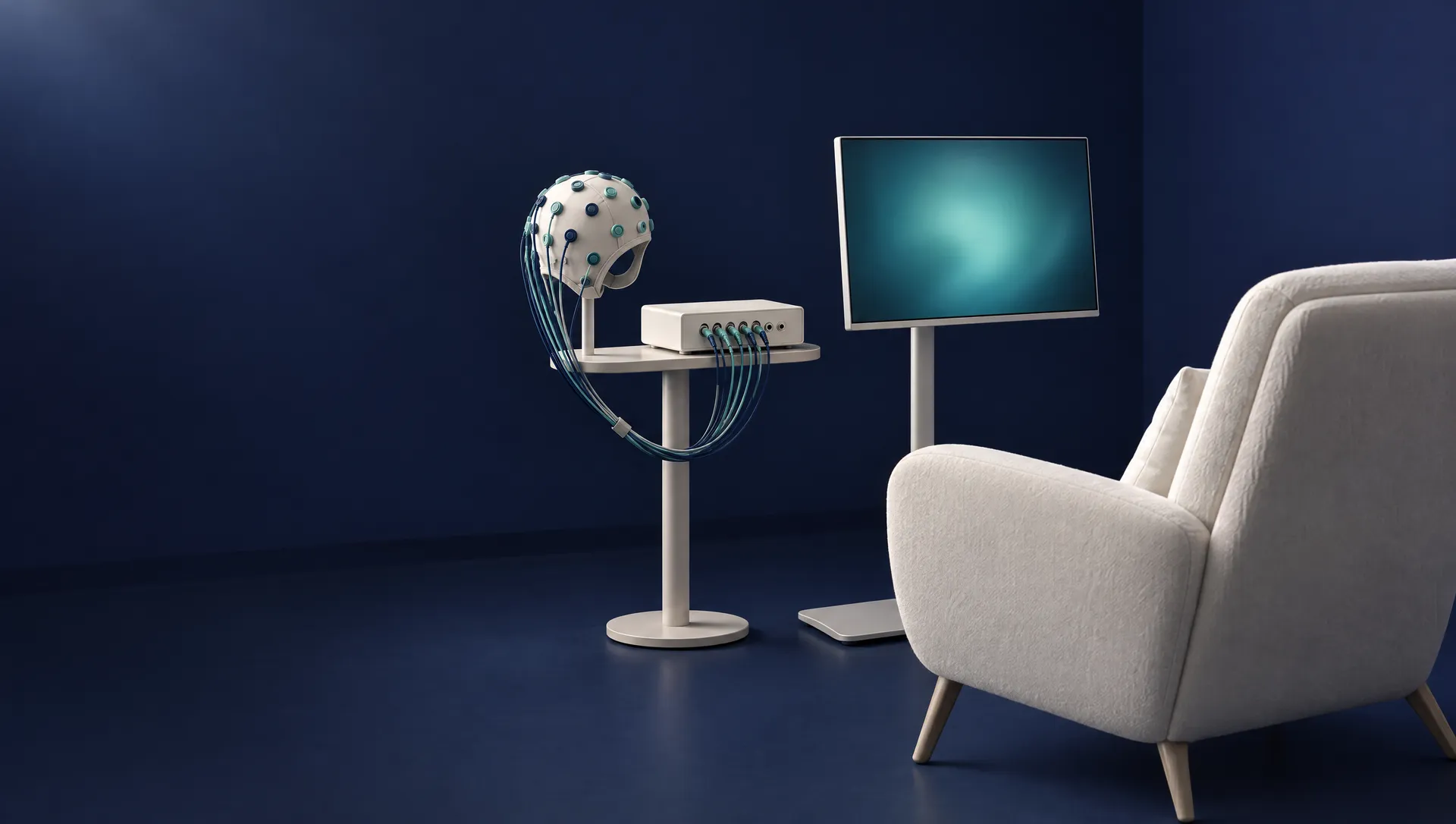
Quantitative EEG (qEEG) is a cornerstone of neuromodulation diagnostics. A standard 19-channel or 21-channel EEG is recorded and analyzed using computerized algorithms that compare the patient’s brain wave patterns to normative databases. This identifies specific frequency abnormalities in defined brain regions — for example, excessive theta activity associated with cognitive slowing, or asymmetric alpha patterns associated with depression.
Autonomic nervous system testing includes heart rate variability (HRV) analysis, tilt-table testing for orthostatic intolerance, and pupillometry. Neurocognitive assessment uses standardized tests to evaluate attention, memory, executive function, and processing speed. These metrics establish baselines against which treatment effects can be objectively measured.
Conditions Treated
- Pre-treatment neurological baseline assessment
- Neuromodulation therapy selection guidance
- Cognitive impairment evaluation
- Autonomic dysfunction assessment
- Depression and anxiety neurophysiology
- Post-COVID neurological assessment
- Treatment response monitoring
Could this belong in your plan?
That depends on your findings, not on the therapy. Send what you have with a short history; a physician reads it before the video call and tells you whether this treatment belongs in your program.
What a session feels like
- Before Come rested. A cap with electrodes goes on for the qEEG; it is painless.
- During About 2–3 hours in parts: 30–45 minutes of qEEG sitting still with eyes open and closed, 30–60 minutes of autonomic testing lying and standing, then paper and computer tasks. Nothing is invasive.
- Afterwards Our neuromodulation specialists analyse the results and go through them with you at the treatment-planning consultation.
Evidence & Safety
Quantitative EEG is supported by extensive research published in Clinical Neurophysiology, the Journal of Neurotherapy, and NeuroImage. HRV analysis is validated by studies in Circulation and the European Heart Journal. Standardized neurocognitive testing has decades of evidence supporting its reliability and validity. At St. George Hospital, these established assessment tools are combined to create a comprehensive neurological profile that guides evidence-informed treatment decisions.
Request a consultation
A video consultation in English before you travel. A physician reviews your findings first; we reply by email within one business day (Mon–Fri).
Mon–Thu 08:00–17:00, Fri 08:00–14:00 (CET/CEST)+49 8061 398-0info@clinicum-stgeorg.de
St. George Hospital is a specialist hospital, not an emergency department. In a medical emergency in Germany, dial 112.