Electromagnetic Stimulation

Transcranial Magnetic Stimulation (TMS)

TMS uses focused magnetic pulses to stimulate or inhibit specific areas of the brain. A coil placed against the scalp generates brief magnetic fields that pass painlessly through the skull and induce electrical currents in targeted brain regions.

Repetitive TMS (rTMS) can modulate cortical excitability, normalize dysfunctional neural circuits, and promote neuroplasticity. It has been approved for treatment-resistant depression and is increasingly used for chronic pain, cognitive dysfunction, and neurological rehabilitation.

  • Non-invasive and painless -- patients remain fully awake
  • Sessions last 20-40 minutes
  • Typical course: 10-20 sessions over 2-4 weeks
  • Established evidence for depression, migraine, neuropathic pain, and cognitive impairment
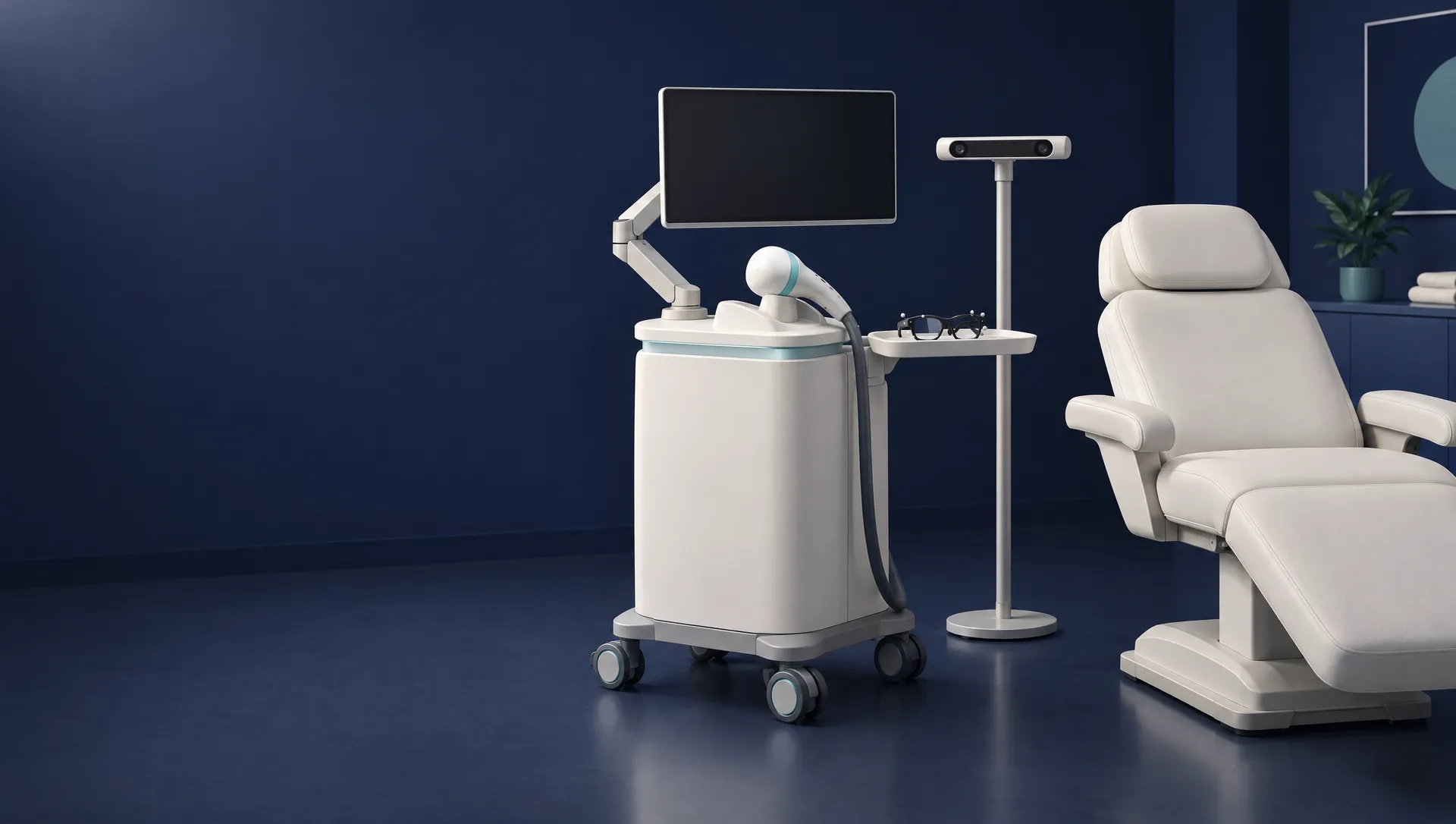
Illustration of a tps - transcranial pulse stimulation device
Illustration: transcranial pulse stimulation system (handpiece, console and 3D tracking camera). Not a photo of our department.
Cellular Regeneration

Pulsed Electromagnetic Field Therapy (PEMF)

PEMF delivers low-frequency electromagnetic pulses that penetrate deep into body tissues, stimulating cellular repair, reducing inflammation, and promoting healing at the cellular level. PEMF acts on cell membrane potential, improving ion channel function and cellular energy production.

In our clinical practice, PEMF is used for pain reduction, nerve regeneration, bone healing, wound repair, and as an adjunct to mitochondrial support therapy. It is particularly valuable for patients with chronic fatigue and post-infectious conditions where cellular energy production is impaired.

  • Whole-body or localized application depending on the target condition
  • Comfortable, relaxing sessions lasting 20-60 minutes
  • Supports mitochondrial function and ATP production
  • Reduces inflammation and accelerates tissue repair
Autonomic Restoration

Vagus Nerve Stimulation (VNS)

The vagus nerve is the primary communication highway between the brain and the body’s organ systems. It regulates heart rate, digestion, immune response, and inflammatory pathways. In many chronic conditions — including CFS, POTS, Post-COVID, and Lyme disease — vagus nerve function is impaired.

Non-invasive vagus nerve stimulation uses gentle electrical impulses applied to the ear or neck to activate vagal pathways. This reduces systemic inflammation (via the cholinergic anti-inflammatory pathway), improves autonomic balance, enhances gut motility, and supports mood regulation.

  • Auricular (ear) or cervical (neck) stimulation -- both non-invasive
  • Sessions last 15-30 minutes, typically 1-2 times daily
  • Particularly effective for dysautonomia, POTS, and chronic inflammation
  • Can be continued at home with portable devices after the initial treatment period
Abstract teal and navy visual
Additional Techniques

More Neuromodulation Methods

Neurofeedback

Real-time EEG monitoring allows patients to learn to self-regulate brain wave patterns. By providing visual or auditory feedback when the brain produces desired wave patterns, neurofeedback trains the brain to normalize its own activity. Effective for anxiety, insomnia, attention disorders, and chronic pain. Typically 15-20 sessions for meaningful improvement.

Frequency-Specific Microcurrent (FSM)

FSM delivers extremely low-level electrical current at specific frequencies targeted to different tissue types (nerve, muscle, tendon, organ). Different frequency pairs are used for inflammation, fibrosis, nerve pain, and tissue repair. The currents are sub-sensory -- patients typically feel nothing during treatment. Clinical experience shows particular effectiveness for neuropathy and myofascial pain.

Transcranial Direct Current Stimulation (tDCS)

tDCS applies a weak constant electrical current through electrodes placed on the scalp. Anodal stimulation increases cortical excitability while cathodal stimulation decreases it. Used clinically for chronic pain, depression, cognitive enhancement, and motor rehabilitation. Sessions are 20-30 minutes with effects that build cumulatively over treatment courses.

In the room

What to expect, day by day

Neuromodulation is woven into your inpatient program rather than added on top of it, typically over 2–3 weeks. This is what your course looks like from the inside:

  • A neurological assessment first, and a plan written for your condition, not for the device
  • The techniques chosen for your symptom profile, with the reasons explained to you
  • One or two short sessions a day, slotted between your other treatments
  • Parameters adjusted as you respond, not held to a fixed script
  • A formal check of your response at the mid-point and at the end
  • Training on a home device for vagus nerve stimulation or PEMF, where it makes sense for you

We look for change within the first week, and we keep measuring after you leave: the neuroplastic changes these methods set in motion typically consolidate over the 2–4 weeks after the course ends.

Related reading

Neuromodulation at St. George Hospital

Safety

Safety & Tolerability

All neuromodulation techniques used at St. George Hospital are non-invasive with well-established safety profiles. Common side effects are mild and transient.

TMS

Mild scalp discomfort or headache during/after initial sessions. Rarely causes brief dizziness. Not suitable for patients with metal implants near the treatment site or uncontrolled epilepsy.

PEMF

Generally free of side effects. Occasional mild fatigue after sessions. Not recommended for patients with active implanted electronic devices (pacemakers, insulin pumps).

VNS

Mild tingling at the stimulation site. Occasionally causes brief coughing or throat discomfort during cervical stimulation. Well tolerated by the vast majority of patients.

Request a consultation

A video consultation in English before you travel. A physician reviews your findings first; we reply by email within one business day (Mon–Fri).

Mon–Thu 08:00–17:00, Fri 08:00–14:00 (CET/CEST)+49 8061 398-0info@clinicum-stgeorg.de

St. George Hospital is a specialist hospital, not an emergency department. In a medical emergency in Germany, dial 112.

CallRequest