Vagus Nerve Modulation
taVNS: Transcutaneous auricular vagus nerve stimulation
taVNS is a non-invasive technique that stimulates the auricular branch of the vagus nerve through the ear to activate the parasympathetic nervous system, reduce systemic inflammation, and modulate autonomic function.

What Is taVNS?
The vagus nerve is the longest cranial nerve in the body, serving as the main conduit of the parasympathetic nervous system. It connects the brainstem to the heart, lungs, gut, and immune system. Stimulating the vagus nerve activates the “cholinergic anti-inflammatory pathway,” a neuroimmune circuit that reduces the production of pro-inflammatory cytokines.
Transcutaneous auricular vagus nerve stimulation (taVNS) targets the auricular branch of the vagus nerve, which is accessible at the external ear. This non-invasive approach achieves similar physiological effects to implanted vagus nerve stimulators without surgery.

How does it work?
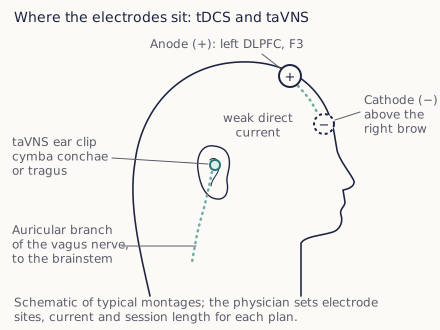
A small electrode clip is placed on the tragus or cymba conchae of the ear, areas innervated by the auricular branch of the vagus nerve. Low-intensity electrical pulses are delivered to activate vagal afferent fibers, which transmit signals to the nucleus tractus solitarius in the brainstem.
This triggers downstream effects including: reduced TNF-alpha and IL-6 production (anti-inflammatory); increased heart rate variability (improved autonomic balance); enhanced GABA signaling in the brain (anxiolytic and antidepressant effects); and modulation of the gut-brain axis.
Conditions treated
- Chronic inflammation and autoimmune conditions
- Depression and anxiety
- Autonomic dysfunction (dysautonomia)
- Post-COVID syndrome
- Chronic Lyme disease with neuroinflammation
- Irritable bowel syndrome
- Chronic pain
- Tinnitus
Is taVNS right for you?
taVNS is a gentle, well-tolerated therapy that may complement your treatment program. Our specialists will evaluate whether vagal stimulation is appropriate for your condition.
What a session feels like
- Before You sit, and a small clip electrode is placed on the outer ear. The level is turned up until you feel it, then eased back.
- During 20–60 minutes of gentle tingling at the ear. Most people read or rest; it can be done daily.
- Afterwards Nothing to recover from. A portable device lets you continue at home as part of ongoing care.
Outpatient option
taVNS as an outpatient course
Ear-based vagus nerve stimulation is also offered outside an inpatient program at the Douwes Brain Center, the outpatient neuromodulation department of our hospital in Bad Aibling.
Evidence & safety
taVNS is supported by a growing body of clinical evidence. Studies published in Brain Stimulation, Neurology, and the Journal of Clinical Investigation demonstrate its anti-inflammatory effects and therapeutic benefits in depression, epilepsy, and autonomic dysfunction. The treatment has an excellent safety profile with no serious adverse events reported. It is contraindicated in patients with active ear infections or implanted cardiac devices.
Send a free inquiry
The initial inquiry is free of charge. The International Office reviews your message and your case directly and gets back to you.
- Phone
- +49 8061 398-0
- Hours
- Mon–Thu 08:00–17:00, Fri 08:00–14:00 German time (CET/CEST); in the US Mon–Thu 2–11 a.m. ET, Fri 2–8 a.m. ET.
Munich Airport (MUC), about 60 minutes by car.