
Blood Purification
Immunoadsorption
A targeted extracorporeal blood purification procedure that selectively removes pathogenic immunoglobulins and autoantibodies from the patient’s plasma using adsorption columns.
What it is
What Is Immunoadsorption?
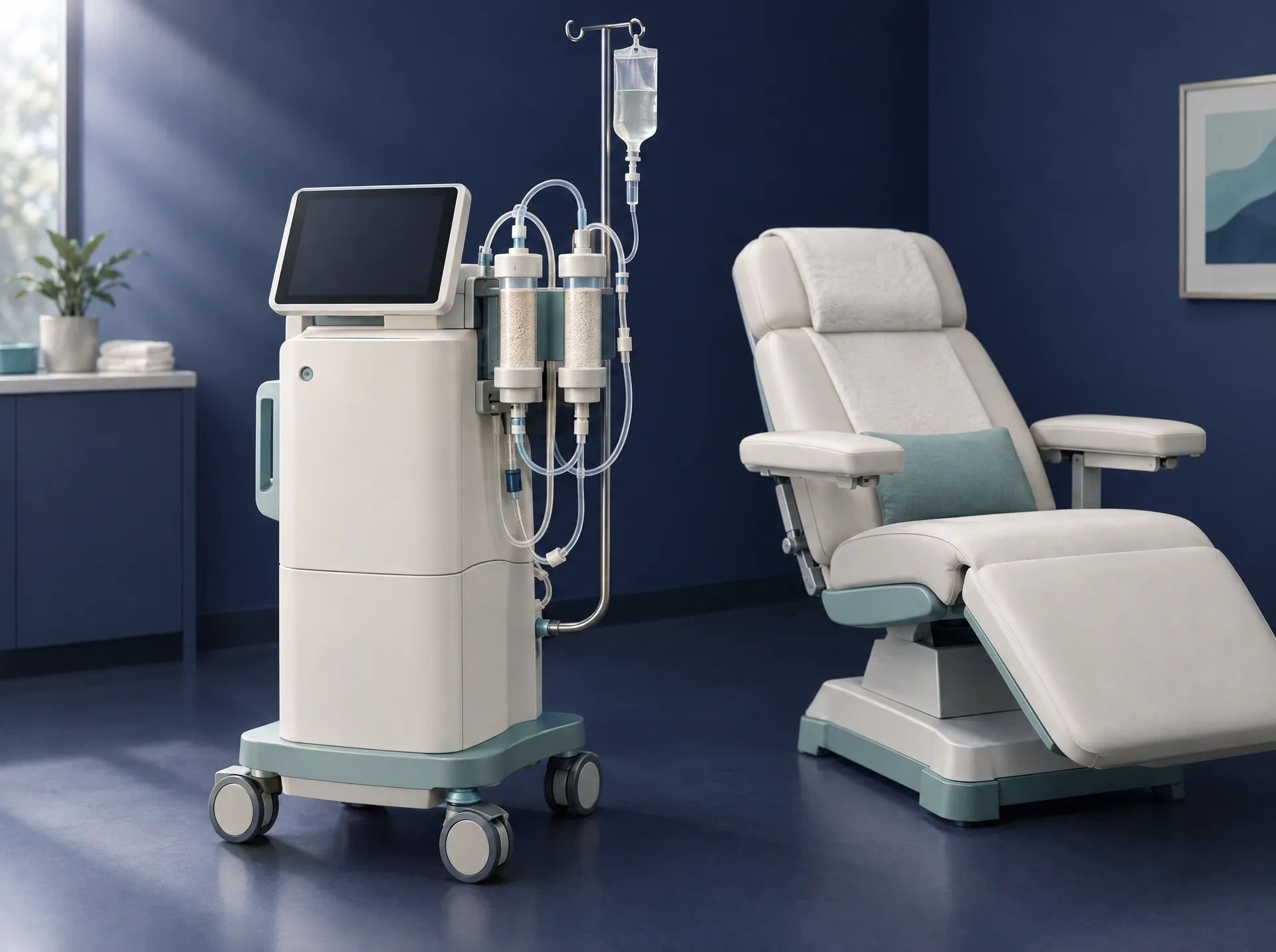
Immunoadsorption (IA) is a form of apheresis in which the patient’s blood is separated into cellular and plasma components. The plasma is then passed through a column containing protein A or antigen-specific ligands that bind immunoglobulins — particularly IgG antibodies — while other plasma proteins are largely preserved and returned to the patient.
Unlike therapeutic plasma exchange, immunoadsorption does not require replacement fluids such as donor plasma or albumin, reducing the risk of allergic reactions and transfusion-related complications.
How it works
How Does It Work?
Blood is drawn from a peripheral or central venous access and passed through a cell separator. The plasma fraction is directed through an adsorption column where immunoglobulins bind to the column matrix. The purified plasma is then recombined with the cellular components and returned to the patient.
Modern immunoadsorption columns can be regenerated during the session, allowing multiple cycles of adsorption within a single treatment. This achieves a high degree of immunoglobulin depletion — typically reducing IgG levels by 70-90% per session.
Who it is for
Conditions Treated
- Autoimmune neurological conditions (e.g., Guillain-Barre, myasthenia gravis)
- Autoimmune encephalitis
- Chronic Lyme disease with elevated autoantibody titres
- Systemic lupus erythematosus (SLE)
- Antibody-mediated transplant rejection
- Dilated cardiomyopathy with cardiac autoantibodies
- Refractory autoimmune conditions unresponsive to standard immunosuppression
Could this belong in your plan?
That depends on your findings, not on the therapy. Send what you have with a short history; a physician reads it before the video call and tells you whether this treatment belongs in your program.
In the room
What a session feels like
- Before A nurse establishes venous access, checks your vital signs and settles you into a reclining chair.
- During The session lasts 2–4 hours. Your blood passes continuously through the adsorption column, which binds antibodies, and returns to you. It is quiet work; you may feel mild fatigue or a little lightheaded, and a nurse is in the room to adjust the flow.
- Afterwards A short rest, then back to your room. A course usually means several sessions over several days, depending on what is being treated.
Evidence
Evidence & Safety
Immunoadsorption is an established treatment in neurology, nephrology, and cardiology. Clinical studies have demonstrated its efficacy in autoimmune neurological conditions, with guidelines from the European Academy of Neurology and the American Society for Apheresis supporting its use in specific indications. The procedure has a well-characterized safety profile with a low rate of serious adverse events when performed in an experienced medical setting.
Where we use it
Used in These Departments
Request a consultation
A video consultation in English before you travel. A physician reviews your findings first; we reply by email within one business day (Mon–Fri).
Mon–Thu 08:00–17:00, Fri 08:00–14:00 (CET/CEST)+49 8061 398-0info@clinicum-stgeorg.de
St. George Hospital is a specialist hospital, not an emergency department. In a medical emergency in Germany, dial 112.