
Acoustic Wave Treatment
Extracorporeal Shockwave Therapy
A non-invasive treatment that delivers focused acoustic pressure waves to musculoskeletal tissues to stimulate healing, break down calcifications, and reduce chronic pain.
What Is Shockwave Therapy?
Extracorporeal shockwave therapy (ESWT) uses high-energy acoustic waves generated outside the body and focused on specific target tissues. Originally developed for kidney stone fragmentation (lithotripsy), shockwave technology was adapted for musculoskeletal applications after physicians observed that patients with kidney stones also experienced improvement in concurrent orthopedic conditions.
At St. George Hospital, shockwave therapy is used to treat chronic tendinopathies, calcifications, and pain conditions that have not responded to conventional conservative treatment.
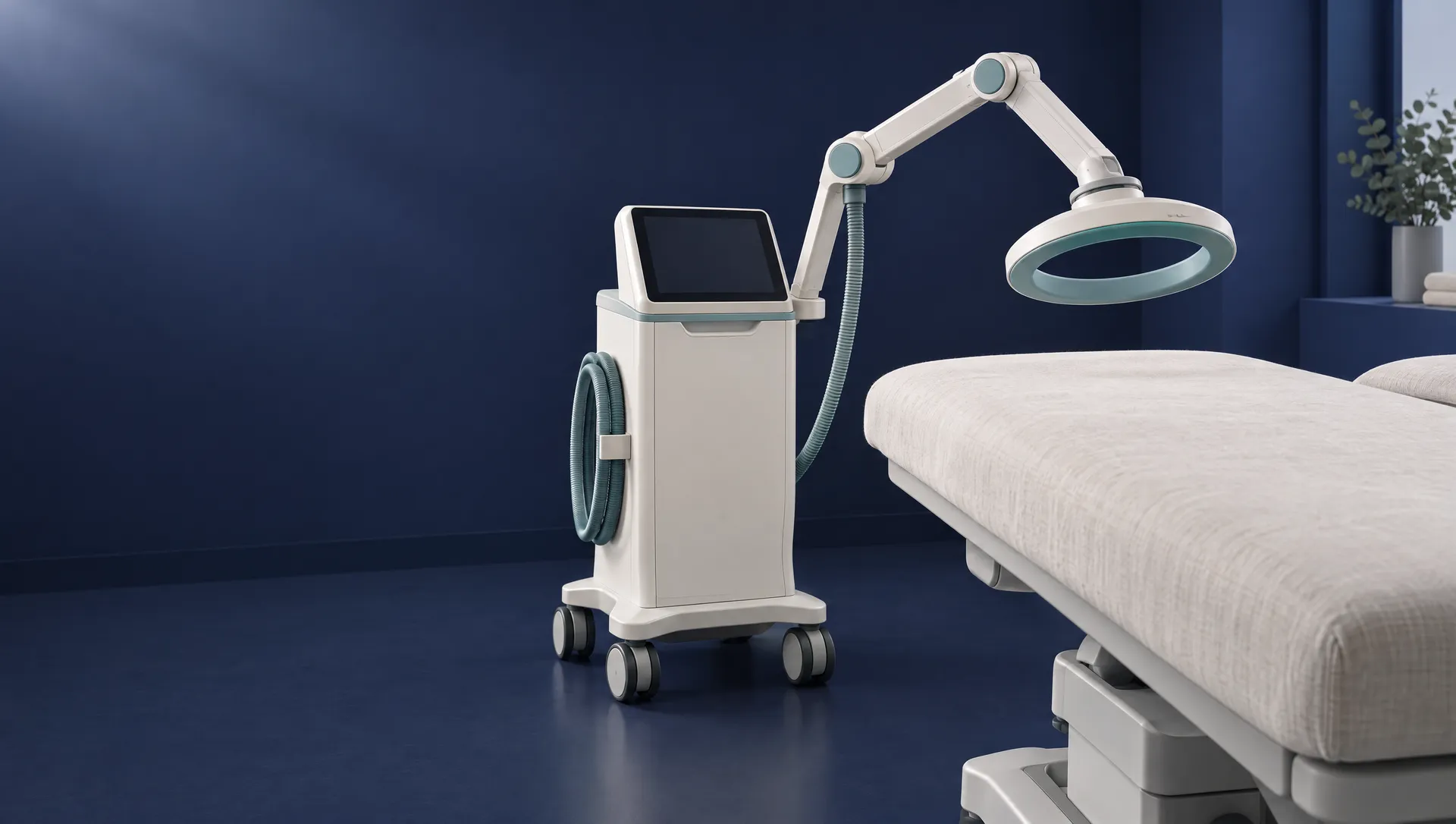
How Does It Work?
Shockwave pulses create controlled microtrauma in the target tissue, which triggers the body’s natural healing response. This includes neovascularization (new blood vessel formation), recruitment of stem cells, increased growth factor production, and dissolution of calcific deposits. The mechanical energy also directly disrupts pain-transmitting nerve fibers, providing immediate analgesic effects.
Two main types are used: focused shockwave therapy (fESWT), which delivers concentrated energy to a precise focal point, and radial pressure wave therapy (rPWT), which disperses energy over a broader area. The choice depends on the depth and nature of the pathology being treated.
Conditions Treated
- Plantar fasciitis
- Calcific tendinopathy of the shoulder
- Tennis elbow (lateral epicondylitis)
- Achilles tendinopathy
- Patellar tendinopathy
- Trigger points and myofascial pain
- Non-healing fractures
Could this belong in your plan?
That depends on your findings, not on the therapy. Send what you have with a short history; a physician reads it before the video call and tells you whether this treatment belongs in your program.
What a session feels like
- Before Coupling gel on the skin, applicator positioned over the target. No anesthesia.
- During 10–20 minutes per area. A rapid tapping or pulsing that can be mildly uncomfortable over tender spots; tell the therapist and the intensity is adjusted.
- Afterwards You carry on with your day. 3–5 sessions a week apart are usual, and improvement is gradual, typically at its fullest 6–12 weeks after the last one.
Evidence & Safety
ESWT has robust clinical evidence. Systematic reviews and meta-analyses published in the British Journal of Sports Medicine, the American Journal of Sports Medicine, and the Journal of Orthopaedic Research demonstrate efficacy for plantar fasciitis, calcific tendinopathy, and lateral epicondylitis. ESWT has received FDA clearance in the United States and CE marking in Europe. Side effects are minor and typically limited to temporary redness, swelling, or bruising at the treatment site.
Request a consultation
A video consultation in English before you travel. A physician reviews your findings first; we reply by email within one business day (Mon–Fri).
Mon–Thu 08:00–17:00, Fri 08:00–14:00 (CET/CEST)+49 8061 398-0info@clinicum-stgeorg.de
St. George Hospital is a specialist hospital, not an emergency department. In a medical emergency in Germany, dial 112.