 By Julian Douwes M.D.
The chronic Lyme disease debate
Few topics in modern medicine generate as much controversy as chronic Lyme disease. On one side, major infectious disease societies maintain that a short course of antibiotics cures Lyme disease in virtually all cases, and that persistent symptoms represent a post-infectious syndrome rather than ongoing infection. On the other side, thousands of patients and a growing body of scientific evidence point to a more complex reality — one in which Borrelia burgdorferi can persist in the body despite standard treatment, driving chronic illness that demands a more sophisticated therapeutic approach.
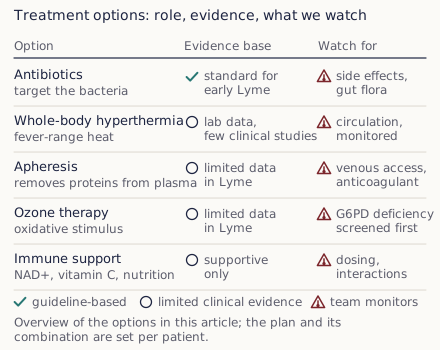
At St. George Hospital in Bad Aibling, Germany, we have run a Lyme program since 1995, long before the chronic Lyme debate reached its current intensity. Our founder, Dr. Friedrich Douwes, recognized decades ago that many Lyme patients did not recover with standard antibiotics alone. Today our hospital offers a comprehensive integrative Lyme treatment program, combining targeted antimicrobials with advanced modalities including whole-body hyperthermia, therapeutic apheresis, ozone therapy, and immune support.
Why chronic Lyme disease is more than a controversy
The question of whether Borrelia can persist after antibiotic treatment is no longer purely theoretical. A substantial and growing body of peer-reviewed research supports the biological plausibility of persistence:
Evidence for Borrelia persistence
- Animal studies: Research in mice, dogs, and non-human primates has demonstrated that Borrelia can survive standard antibiotic courses. A study published in PLoS ONE (Hodzic et al., 2014) found persisting, non-cultivable Borrelia in mice after antibiotic treatment, with a resurgence of Borrelia DNA in multiple tissues at 12 months
- Morphological variants: Borrelia can transform from its active spirochetal form into metabolically dormant round bodies (cyst forms), L-forms, and biofilm communities. These variants are resistant to the antibiotics typically prescribed for Lyme disease
- Biofilm formation: Borrelia produces protective biofilm matrices — communities of bacteria encased in an extracellular polysaccharide shield — that dramatically reduce antibiotic penetration and shield the organisms from immune detection
- Intracellular evasion: The spirochete can invade human cells (fibroblasts, endothelial cells, neurons), hiding in compartments where many antibiotics cannot reach effective concentrations
- Tissue sequestration: Borrelia has tropism for collagen-rich tissues (joints, tendons, heart valves, meninges), where antibiotic penetration is limited and immune surveillance is reduced
- Immune evasion: Borrelia can alter its surface proteins (antigenic variation), suppress immune responses, and exploit complement system vulnerabilities to evade detection
Why standard treatment often falls short
The standard Lyme disease treatment — 2-4 weeks of doxycycline or amoxicillin — was established based on studies of early, localized Lyme disease (the erythema migrans rash stage). For patients who are diagnosed and treated promptly, this approach is often effective. However, for patients with:
- Delayed diagnosis (months or years after infection)
- Disseminated disease (involvement of multiple organ systems)
- Co-infections (bartonella, babesia, anaplasma)
- Established biofilm communities
- Significant immune dysregulation
…a brief course of a single oral antibiotic is unlikely to be sufficient. This is not a fringe position — it is a recognition that complex, disseminated infections require complex, multimodal treatment.
We go into this further in our article on whether Lyme disease can come back.
Symptoms of chronic Lyme disease
Chronic Lyme disease can affect virtually every organ system. The most common symptom clusters include:
Musculoskeletal
- Migratory joint pain — moving from joint to joint, often affecting large joints (knees, shoulders, hips)
- Chronic arthritis, sometimes with joint swelling
- Muscle pain and stiffness
- Tendonitis and bursitis
Neurological
- Brain fog — impaired concentration, memory, and processing speed
- Peripheral neuropathy — numbness, tingling, burning in extremities
- Cranial nerve palsy (including Bell’s palsy)
- Radiculopathy — radiating pain along nerve paths
- Meningitis (Lyme neuroborreliosis)
- Encephalopathy
Cardiac
- Lyme carditis — AV block, palpitations, myocarditis
- Chest pain
Systemic
- Profound, disabling fatigue
- Night sweats
- Relapsing low-grade fevers
- Lymphadenopathy
- Weight fluctuations
Psychiatric
- Depression and anxiety
- Irritability and emotional lability
- Sleep disruption
- Depersonalization
How St. George Hospital approaches chronic Lyme disease
Chronic Lyme patients are admitted to the 70-bed hospital for two to three weeks so that hyperthermia, antimicrobial therapy and apheresis can be scheduled in one supervised plan. The work-up and the therapies belong to our Lyme disease program; international patients book it as inpatient Lyme disease treatment in Germany, usually for two to three weeks.
The Lyme disease program at St. George Hospital is built on the principle that chronic Lyme disease requires a multi-pronged attack — targeting the infection through multiple mechanisms while simultaneously supporting the immune system, managing inflammation, and restoring cellular function.
Whole-Body hyperthermia
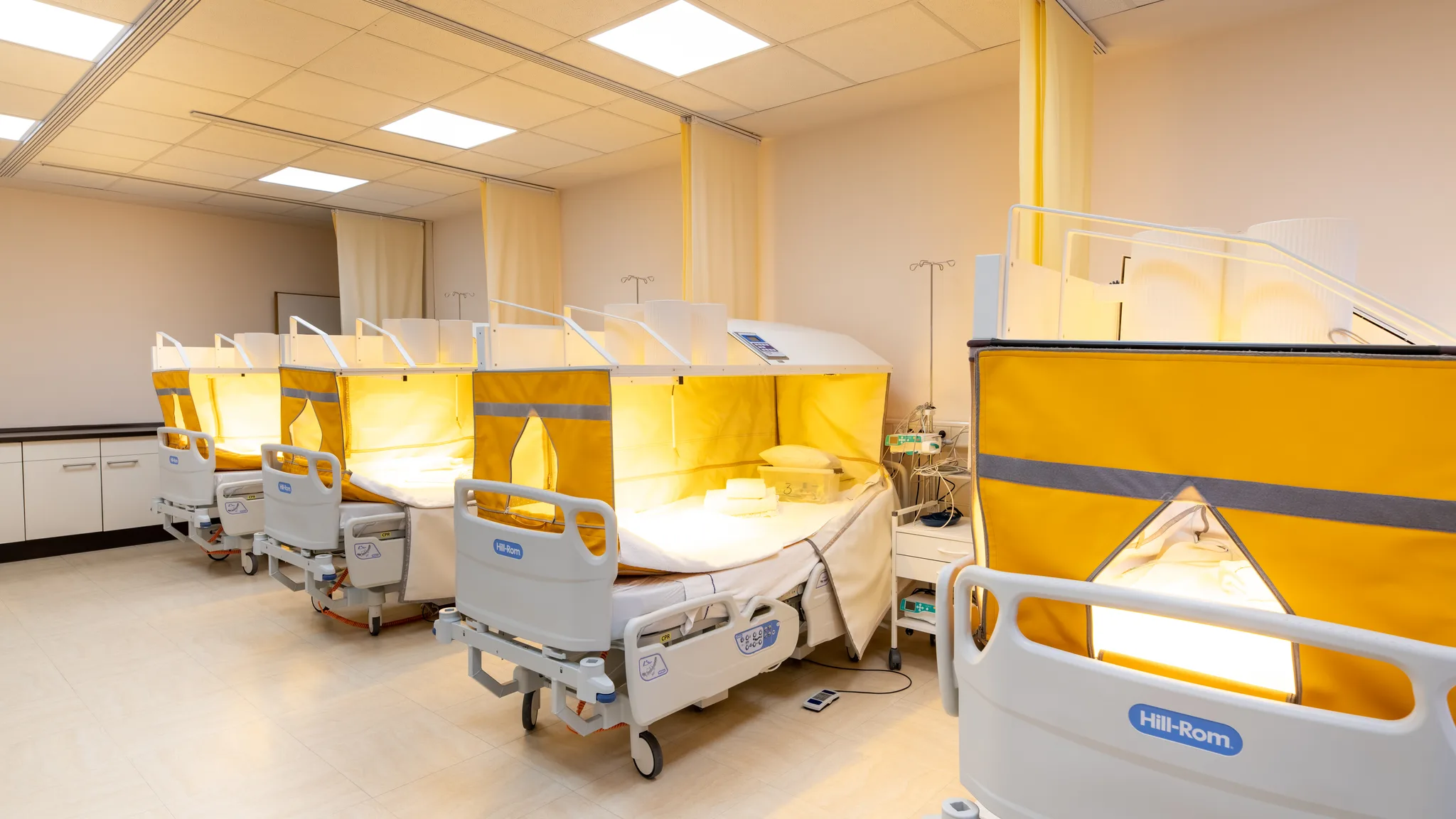
Whole-body hyperthermia is the cornerstone of our Lyme protocol. Borrelia burgdorferi is a thermolabile organism — it cannot survive prolonged exposure to temperatures above 41 °C / 105.8 °F. By carefully raising core body temperature to fever-range levels, we exploit this fundamental vulnerability.
Critically, hyperthermia reaches spirochetes wherever they are hiding — in joints, tendons, the nervous system, biofilm communities, and intracellular compartments. Unlike antibiotics, which depend on blood concentration and tissue penetration, heat is delivered universally through the bloodstream to every perfused tissue in the body.
Hyperthermia adds what antibiotics alone cannot: heat reaches tissues where Borrelia is hard to reach with drugs. Combined with targeted antimicrobials, it attacks the infection from multiple angles at once.
St. George Hospital has decades of clinical experience with hyperthermia and has performed thousands of treatments.
Therapeutic apheresis
Therapeutic apheresis serves two critical functions in chronic Lyme treatment:
- Herxheimer reaction management: When hyperthermia and antibiotics kill large numbers of spirochetes, the resulting release of bacterial debris triggers intense inflammatory responses (Herxheimer reactions). Apheresis physically removes circulating endotoxins, immune complexes, and inflammatory cytokines from the bloodstream, dramatically reducing herx severity and allowing more aggressive treatment
- Immune complex clearance: Chronic Lyme disease produces circulating immune complexes that contribute to joint inflammation, vascular damage, and systemic symptoms. Apheresis removes these complexes, reducing the inflammatory burden
Targeted antimicrobial therapy
Rather than repeating the same failed doxycycline course, our physicians select antibiotic combinations designed to:
- Penetrate intracellular compartments where Borrelia hides
- Disrupt biofilm matrices
- Target dormant round-body forms as well as active spirochetes
- Address identified co-infections (bartonella, babesia, etc.) with species-specific agents
- Achieve sustained tissue concentrations in the affected organ systems
Ozone therapy
Ozone therapy, including high-dose 10-pass ozone, provides immune stimulation, antimicrobial activity, and enhanced tissue oxygenation. It works synergistically with hyperthermia and antimicrobials to create an inhospitable environment for persistent Borrelia.
Immune system support
- NAD+ IV therapy: Restoring cellular energy production and supporting mitochondrial recovery
- High-dose vitamin C: Antioxidant protection and immune support
- Glutathione infusions: Detoxification and antioxidant defense
- Thymus peptide therapy: Supporting T-cell maturation and immune competence
- Nutritional optimization: Targeted supplementation to address deficiencies common in chronic Lyme patients
Co-Infection management
Comprehensive testing for tick-borne co-infections is standard in our program. Bartonella, babesia, anaplasma, ehrlichia, rickettsia, and reactivated viral infections (EBV, HHV-6) are identified and treated with specific protocols. Missing co-infections is one of the most common reasons patients fail to recover from chronic Lyme disease.
The inpatient treatment experience
Our chronic Lyme treatment programs are conducted on an inpatient basis in our 70-bed hospital. A typical 2-3 week treatment course includes:
- Week 1: Comprehensive diagnostic workup, baseline assessments, initiation of antimicrobial therapy, first hyperthermia and apheresis sessions, daily infusion protocols
- Week 2: Continued intensive treatment cycles — hyperthermia, apheresis, ozone, antimicrobials, immune support. Treatment is adjusted based on clinical response and tolerance
- Week 3: Final treatment sessions, outcome assessments, discharge planning, and long-term follow-up protocol design
The inpatient environment allows for daily physician oversight, immediate management of Herxheimer reactions, and the ability to administer multiple treatments per day in a coordinated sequence — something that is impossible in an outpatient setting.
There are separate articles on the Herxheimer reaction in Lyme disease and the CD57 test in Lyme disease.
Why patients travel to Germany for Lyme treatment
St. George Hospital receives Lyme disease patients from more than 60 countries. Common reasons include:
- Access to whole-body hyperthermia: This treatment is not widely available outside of Germany and a few other European countries
- Therapeutic apheresis for Lyme: Few clinics worldwide offer apheresis specifically as part of a Lyme treatment protocol
- Institutional expertise: Our hospital has run its Lyme program since 1995, with thousands of patients treated
- Integrative multimodal approach: The combination of hyperthermia, apheresis, ozone, antimicrobials, and immune support in an inpatient setting
- Physician experience: A medical team that understands chronic Lyme disease and takes it seriously
Frequently asked questions
Is chronic Lyme disease real?
The symptoms experienced by chronic Lyme patients are unquestionably real and well-documented. The scientific debate centers on the mechanism — persistent infection versus post-infectious sequelae. A growing body of evidence supports the persistence of Borrelia after standard treatment, and clinical experience at St. George Hospital over three decades supports addressing potential persistent infection rather than assuming the bacteria have been eradicated.
How is your approach different from standard Lyme treatment?
Standard Lyme treatment relies on a single oral antibiotic for 2-4 weeks. Our approach combines multiple modalities — hyperthermia to directly damage heat-sensitive spirochetes, targeted multi-drug antimicrobial regimens that address biofilms and intracellular forms, apheresis to manage inflammation, and comprehensive immune support. This multimodal strategy addresses the multiple survival mechanisms that Borrelia employs to resist treatment.
What results can I expect?
Courses differ from patient to patient. How someone responds depends on how long the illness has lasted, the extent of tissue damage, the presence of co-infections and individual factors, and no treatment produces the same result in everyone. Your physician reviews your progress with you during the stay and at follow-up, measured against the findings from your admission work-up, and tells you plainly when a protocol needs to change.
How much does chronic Lyme treatment at St. George Hospital cost?
Costs are individual per case: a package price plus individual add-ons, depending on the duration and complexity of the program. You receive a written, itemized cost overview before you travel; payment is a deposit in advance. Insurance reimbursement is never promised.
Can I receive treatment if I live outside Germany?
Absolutely. St. George Hospital has extensive experience serving international patients. We offer multilingual coordination and help with travel logistics. Treatment is self-pay; US patients can be put in touch with an independent US office that tries to recover costs from insurers after treatment (St. George Hospital is not involved and makes no promises about it). Many of our Lyme patients travel from the United States, Canada, the United Kingdom, Australia, and the Middle East.
Take the first step
If you have been living with chronic Lyme disease — whether for months or years — a structured inpatient program gives you a complete diagnostic picture and a treatment plan built on it. The physicians at St. George Hospital are ready to evaluate your case and design a treatment plan tailored to your specific needs.
Contact us:
- Phone: +49 8061 398-0
- Email: info@clinicum-stgeorg.de
- Visit: Contact page
St. George Hospital (Clinicum St. Georg) — Rosenheimer Str. 6-8, 83043 Bad Aibling, Germany
References
- Hodzic et al., 2014. PMID 24466286